



How hot should your bath water be? Some people enjoy a warm, relaxing soak, while others prefer water that feels almost boiling. While personal preference plays a role, what many homeowners don’t realise is that hot water temperature in Australia is strictly regulated for safety and health reasons.
In Victoria, setting your hot water system to the correct temperature is not just about comfort—it helps prevent harmful bacteria, reduces the risk of serious burns, and ensures your plumbing system complies with Australian standards.
At Vic Wide Emergency Plumbing, we help homeowners maintain safe and efficient hot water systems with expert inspections, repairs, and hot water solutions across Victoria.
Key Takeaways
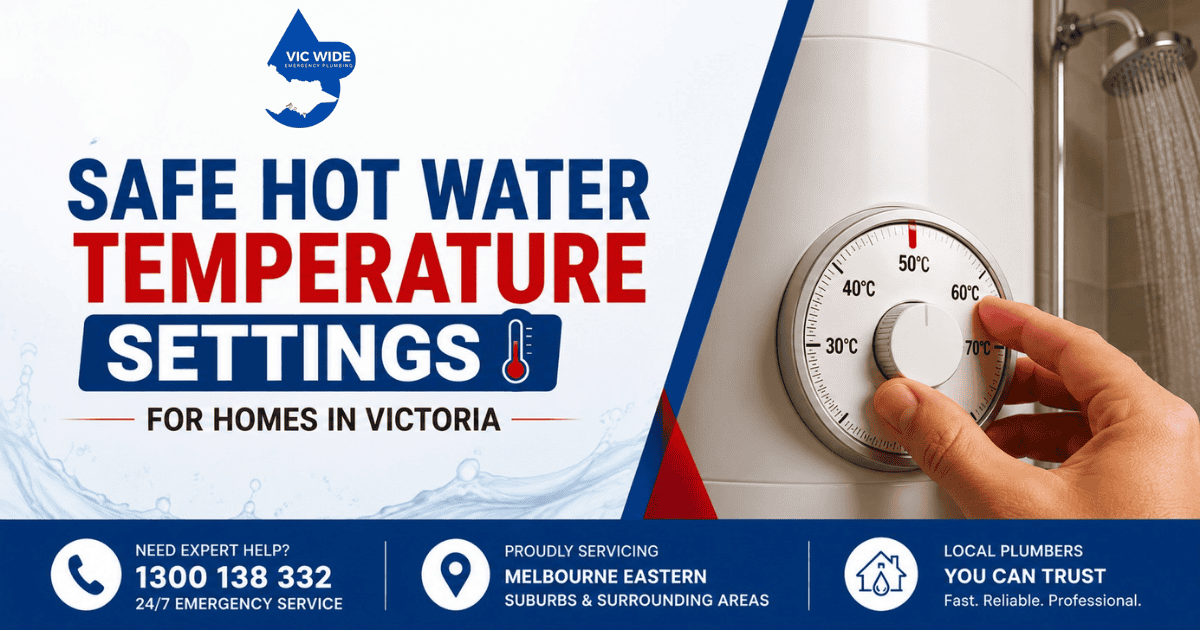
- Hot water must be stored at 60°C to prevent harmful bacteria growth
- Hot water delivered to taps should be limited to 45°C–50°C for safety
- Thousands of Australians are hospitalised every year due to serious hot water burns
- A tempering valve helps safely reduce delivery temperature while maintaining safe storage levels
Getting this balance right is essential for every home.
Understanding Hot Water Temperature Regulations in Australia
The Plumbing Code of Australia and Australian Standards set clear temperature rules for all residential hot water systems.
Plumbers must ensure that:
Storage temperature is at least 60°C
This prevents the growth of dangerous bacteria like Legionella, which can cause serious illness such as Legionnaires’ disease.
Delivery temperature is capped at 50°C
For showers, baths, and personal hygiene areas, water must not exceed 50°C to reduce the risk of scalding.
Higher temperatures may apply in commercial spaces
In kitchens and commercial settings, hot water can be delivered at higher temperatures—sometimes up to 70°C—for sanitation purposes.
Tempering valves are required
New installations must include an approved tempering valve to safely reduce water temperature before it reaches taps.
The Hidden Danger of Hot Water Burns
Many people underestimate how dangerous hot tap water can be.
Every year, thousands of Australians suffer severe burns caused by overly hot water—especially children, elderly people, and individuals with disabilities.
In many cases, these burns happen in less than one second.
The bathroom is the most common location for these injuries, especially from baths and showers.
This is exactly why hot water temperature regulations exist.
How Quickly Can Hot Water Burn?
Even a small increase in water temperature can dramatically increase burn risk.
| Water Temperature | Time to Cause Third-Degree Burn | Burn Severity |
|---|---|---|
| 70°C | Less than 1 second | Instant severe skin damage |
| 60°C | Around 5 seconds | Serious tissue damage |
| 55°C | Around 30 seconds | Painful scalding |
| 50°C | Around 5 minutes | Safer for general household use |
Important Fact:
Around 90% of scalding burns happen inside the home—and most of them occur in bathrooms.
This is why controlling hot water temperature is so important.
Recommended Hot Water Temperature Settings in Victoria
Although rules can vary slightly across Australia, Victoria generally follows these standard safety guidelines.
1. 50°C – Standard Residential Delivery Temperature
This is the maximum temperature allowed for hot water delivered from taps used for personal hygiene.
This includes:
- Bathrooms
- Showers
- Baths
- Ensuites
- Laundries
This temperature is warm enough for comfort while helping prevent serious burns.
It applies to:
- New homes
- Renovated homes
- Rental properties
- Residential buildings
2. 45°C – High-Risk Care Environments
In places where vulnerable people are present, the maximum hot water delivery temperature is even lower.
This includes:
- Aged care facilities
- Childcare centres
- Hospitals
- Schools
- Disability care homes
This extra safety measure helps protect:
- Young children
- Elderly residents
- People with reduced mobility or sensitivity
3. 60°C – Hot Water Storage Temperature
This temperature applies inside the hot water storage system—not at the tap.
Water must be stored at 60°C to stop harmful bacteria from growing inside tanks and pipes.
However, water delivered directly at 60°C would be dangerous for everyday use.
That’s why tempering valves are so important.
What Is a Tempering Valve?
A tempering valve is a plumbing safety device that mixes hot water with cold water before it reaches your taps.
It allows:
Safe storage at 60°C
while still delivering
Safe usage at 45°C–50°C
This protects your family from burns while keeping your system hygienic and legally compliant.
If your tempering valve is old, faulty, or not working correctly, your hot water could become unsafe.
Hot Water Safety Checklist
Ask yourself:
✔ Does hot water from showers and bathroom taps stay below 50°C?
✔ If children or elderly people live in the home, is water set closer to 45°C?
✔ Has your tempering valve been checked within the last 5 years?
✔ Are there no visible leaks, rust, or fluctuating temperatures?
✔ Has a licensed plumber inspected your hot water system recently?
If you answered “no” to any of these, it may be time for a professional inspection.
Need Help With Your Hot Water System?
If your water feels too hot, too cold, or your tempering valve may not be working properly, professional help is important.
At Vic Wide Emergency Plumbing, we provide expert hot water system inspections, repairs, replacements, and tempering valve services across Victoria.
We help with:
- Hot water repairs
- Tempering valve replacement
- Gas hot water systems
- Electric hot water systems
- Hot water leak repairs
- Emergency hot water services
Safe hot water starts with expert plumbing support.
Contact Vic Wide Emergency Plumbing
📞 Phone: 1300 138 332
📧 Email: info@vicwideemergencyplumbing.com.au
🌐 Website: https://vicwideemergencyplumbing.com.au
📍 Servicing Victoria & Surrounding Suburbs
🕒 Available: 24/7 Emergency Plumbing Services
Fast response. Licensed plumbers. Trusted hot water solutions.
Final Thoughts
Hot water temperature is something many homeowners overlook—until it becomes a problem.
Setting your system correctly helps protect your family, lowers the risk of serious burns, and keeps your plumbing compliant with Australian regulations.
For most Victorian homes, the safest balance is:
Store at 60°C
Deliver at 45°C–50°C
If you’re unsure whether your system is safe, Vic Wide Emergency Plumbing is here to help.
FAQs
What temperature should hot water be at the tap in Australia?
Hot water delivered to bathrooms and showers should generally not exceed 50°C.
Why must hot water be stored at 60°C?
This prevents the growth of Legionella bacteria, which can cause serious health risks.
What does a tempering valve do?
It mixes hot and cold water to safely reduce water temperature before it reaches your taps.
How often should a tempering valve be checked?
Most plumbers recommend checking or replacing it every 5 years.
Can Vic Wide Emergency Plumbing inspect my hot water system?
Yes, we provide professional hot water inspections, repairs, and tempering valve services across Victoria
-
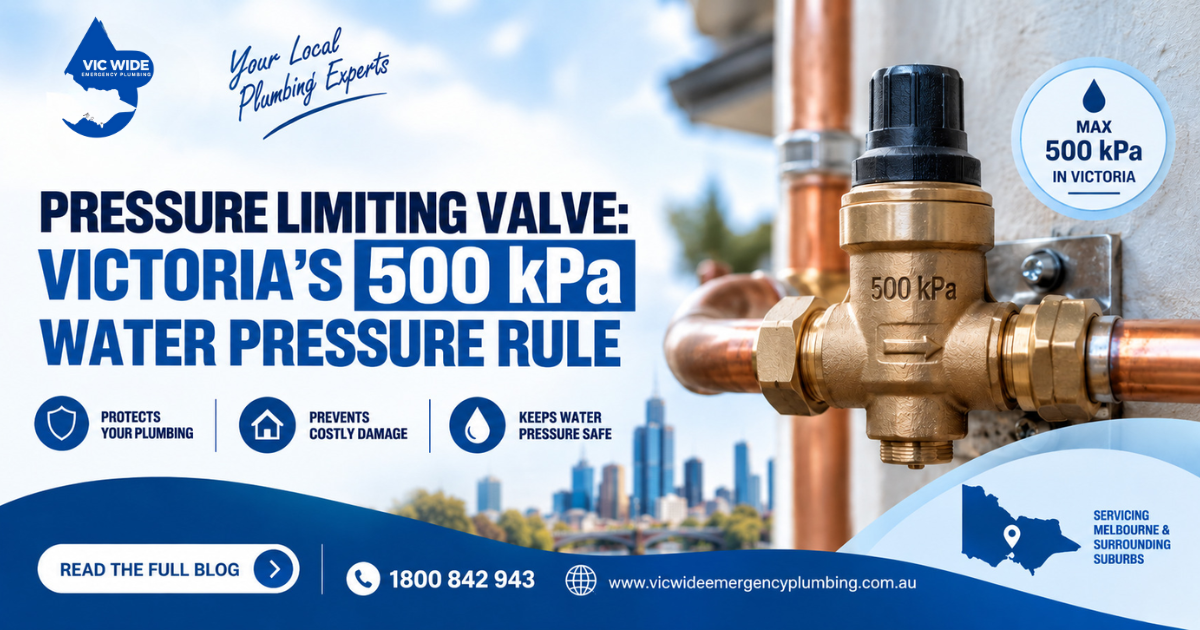 September Sep 2026Pressure Limiting Valve: Victoria’s 500 kPa Water Pressure Rule
If your taps bang when you turn them off, your plumbing fittings fail frequently, or your hot water system seems to require repairs earlier than expected, high mains water pressure could be part of the problem. In Victoria, plumbing standards place a 500 kPa maximum on static water pressure at outlets within a building, excluding […]
Read More -
 September Sep 2026Burst Pipes in Hoppers Crossing: What to Do Before the Plumber Arrives
A burst pipe can quickly turn into a major plumbing emergency. Water can spread through walls, floors and ceilings within minutes, potentially causing significant damage to your Hoppers Crossing property. Knowing what to do before the plumber arrives can help reduce the amount of water escaping and minimise the risk of further damage. What Is […]
Read More -
 September Sep 2026Why Is My Hot Water Brown? Causes and Solutions for Melbourne Homes
Turning on the tap and seeing brown water can be concerning, especially when you expect clean, clear hot water. If you are asking, “Why is my hot water brown?”, the issue may be connected to rust, sediment, corrosion or ageing components within your hot water system or plumbing. Brown hot water is more common in […]
Read More