



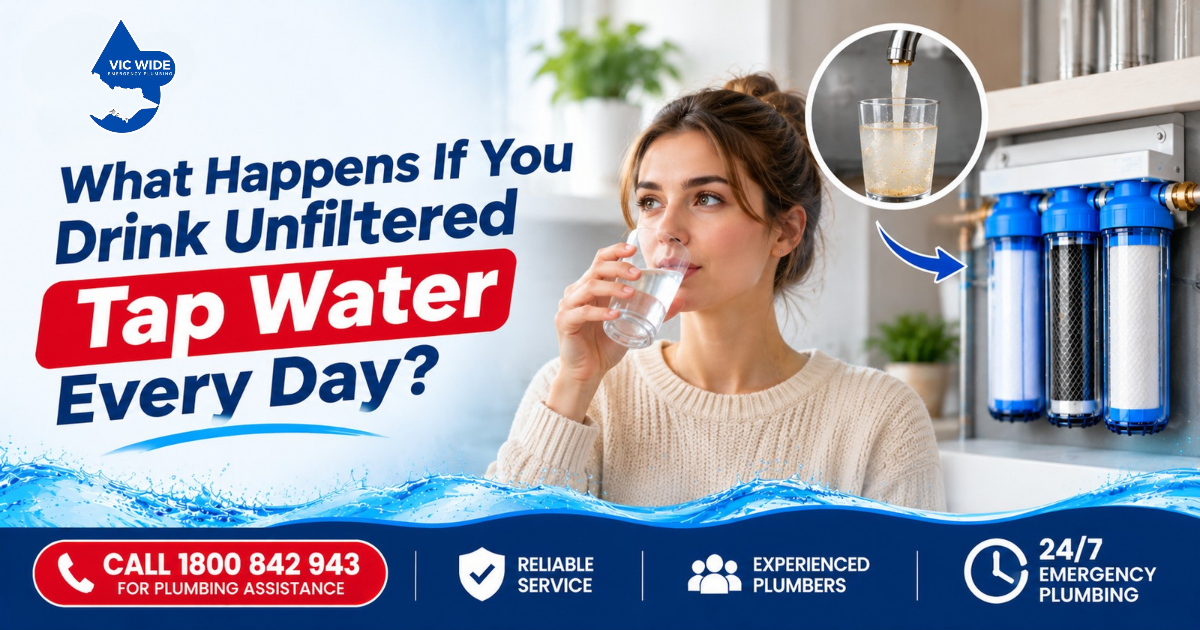
Water is an essential part of everyday life. Whether you are drinking a glass of water, preparing meals, making tea or coffee, or filling a bottle before leaving home, you probably use tap water several times a day.
But have you ever wondered what is actually present in the water coming from your kitchen tap?
In Melbourne, drinking water supplied through the public network is treated and monitored to meet applicable drinking water standards. However, water quality can still be influenced by factors such as the supply source, plumbing condition, household pipes and storage systems.
Drinking unfiltered tap water does not automatically mean you will experience health problems. However, understanding what may be present in your water and whether additional filtration is suitable can help you make informed decisions about your household water supply.
In this guide, Vic Wide Emergency Plumbing explains what happens when you regularly drink unfiltered tap water, what can affect its quality and how a suitable water filtration system may help.
Is It Safe to Drink Unfiltered Tap Water Every Day?
For most Melbourne households connected to the public drinking water network, tap water is treated and monitored before it reaches residential properties.
This means that drinking ordinary tap water without an additional household filter is generally suitable when the supply meets applicable drinking water standards.
However, water quality can be affected by other factors after treatment. For example, ageing plumbing, corrosion, plumbing disturbances or poorly maintained private water storage systems may influence the water reaching your tap.
It is also important to understand that water can look clear while still containing dissolved substances that cannot be identified by sight or smell alone.
If you are concerned about your drinking water, testing and professional assessment can help determine whether additional treatment is necessary.
What Could Be Present in Unfiltered Tap Water?
The substances found in household water depend on its source, treatment process and plumbing conditions.
Here are some common substances and materials homeowners may encounter.
1. Chlorine
Chlorine is commonly used to disinfect public drinking water supplies and help control harmful microorganisms.
Although it serves an important purpose during water treatment, some people notice a chlorine-like taste or smell when drinking tap water.
Certain activated carbon filtration systems are designed to reduce chlorine and improve the taste and odour of water.
2. Sediment and Suspended Particles
Small particles such as sand, dirt and rust may sometimes enter household water through plumbing or supply-related disturbances.
You may notice these particles when water appears cloudy, discoloured or contains visible material.
Sediment filters are designed to capture suspended particles within their specified filtration range.
3. Dissolved Minerals
Water naturally contains minerals, including calcium and magnesium. The concentration of these minerals varies depending on the water source.
Higher levels of calcium and magnesium can contribute to hard water, which may leave white deposits around taps, showerheads and household appliances.
Standard sediment and carbon filters do not necessarily remove dissolved hardness minerals. A suitable water softening system may be more appropriate if hard water is the main concern.
4. Metals From Plumbing Components
The condition and material of household plumbing can influence water quality.
Corroded or deteriorating pipes and fittings may contribute to metals entering the water, depending on the plumbing materials and conditions.
If you notice persistent discolouration or a metallic taste, it is worth investigating the plumbing rather than assuming a standard filter will resolve the issue.
5. Other Dissolved Substances
Depending on the water source and local conditions, water may contain other dissolved substances that cannot be identified through appearance alone.
Different filtration technologies are designed to target different contaminants. Water testing and product performance information are important when choosing an appropriate treatment system.
What Happens When You Drink Unfiltered Tap Water Every Day?
The effects of drinking unfiltered water depend on the quality of the water and what it contains.
If your household receives compliant treated drinking water, drinking it without an additional filter is not automatically harmful.
However, if the water supply has a contamination issue or is affected by unsuitable plumbing or storage conditions, exposure to certain contaminants may present health risks.
Here are some important considerations.
1. You May Notice an Unpleasant Taste
One of the most noticeable differences between filtered and unfiltered water is taste.
Chlorine and certain naturally occurring substances may affect how tap water tastes. Some homeowners prefer the taste of water treated through an activated carbon filter.
2. You May Experience Unpleasant Odours
A strong chemical, earthy or rotten-egg smell may indicate a water-quality or plumbing issue.
Certain filtration systems can reduce specific odour-causing substances, but the underlying cause should be identified first.
3. You Could Be Exposed to Specific Contaminants
If water contains harmful microorganisms, metals or other contaminants above applicable limits, repeated consumption may create health risks.
The possible effects depend on the particular substance, its concentration and the amount and duration of exposure.
This is why water testing is important when there is a suspected contamination issue, especially for private water supplies.
4. Mineral Deposits May Affect Household Plumbing and Appliances
Hard water may leave mineral deposits inside kettles, hot water equipment, showerheads and other appliances.
This is mainly a maintenance and performance concern rather than evidence that the water is unsafe to drink.
A suitable water softening or scale-control solution may help manage the issue.
5. You May Prefer Filtered Water for Everyday Use
Some homeowners choose filtration because they prefer the taste or want additional treatment for specific substances in their water.
A properly selected filter can help address certain water-quality concerns, but its performance depends on the technology, maintenance and product specifications.
Does Boiling Tap Water Make It Safe to Drink?
Boiling water can help destroy many disease-causing microorganisms, including certain bacteria, viruses and parasites.
However, boiling does not remove every possible contaminant.
In fact, substances such as dissolved salts and metals are not reliably removed through ordinary boiling. Some dissolved substances may become more concentrated as water evaporates.
If a water-quality notice recommends boiling water, follow the instructions issued by the relevant water authority or health department.
If contamination is suspected, do not assume that boiling alone will make the water safe for every purpose.
Can a Water Filtration System Make Tap Water Better?
A suitable water filtration system can improve specific water-quality characteristics, depending on its design and the substances it is tested to reduce.
Different filtration systems serve different purposes.
Whole House Water Filtration System
A whole house filtration system is generally installed on the main incoming water supply.
It treats water before it travels to connected taps, showers and other fixtures.
Depending on the model, it may help reduce sediment, chlorine, certain odours and other specified substances.
This option may suit households looking for filtration across multiple areas of their property.
Under-Sink Water Filter
An under-sink filtration system is installed beneath the kitchen sink and usually supplies filtered water through a dedicated drinking water tap.
It is a practical option for homeowners who mainly want to treat water used for drinking and cooking.
Multi-Stage Water Filtration System
Multi-stage systems combine different filter materials to target different substances.
A typical arrangement may include:
- Sediment filtration: Captures suspended particles such as dirt and rust within its rated capacity.
- Granular activated carbon (GAC): Helps reduce certain chlorine-related taste and odour compounds.
- Carbon block (CTO): Provides an additional filtration stage for specified substances.
The actual filtration performance depends on the product design, filter media and verified testing.
Reverse Osmosis System
Reverse osmosis systems use a specialised membrane to reduce a range of dissolved substances.
They are commonly used for drinking water applications and may include pre-filters, storage tanks and drainage connections.
Water Softener
If your main concern is hard water and recurring limescale, a water softener may be a more suitable option.
These systems are designed to reduce hardness minerals such as calcium and magnesium rather than simply capturing suspended particles.
How Do You Know If Your Tap Water Needs Additional Filtration?
You do not necessarily need a water filter simply because you drink tap water every day. However, certain changes may indicate that your water supply needs further investigation.
Look out for:
- Unusual or persistent changes in water taste.
- Strong or unpleasant smells.
- Brown, rusty or cloudy water.
- Visible particles coming from your taps.
- Recurring mineral deposits around fixtures.
- Water-quality concerns involving private tanks or bore water.
- Plumbing problems that may affect the incoming supply.
If you notice sudden discolouration, unusual smells or suspected contamination, investigate the cause and follow any relevant water authority advice before continuing to use the water for drinking.
How to Choose the Right Water Filtration System
Before purchasing a filtration system, consider what you actually want the equipment to achieve.
Here are some important factors to review.
Understand your water quality: Testing can help identify specific substances that may require treatment.
Choose the correct filtration technology: Sediment, carbon, reverse osmosis and water softening systems have different functions.
Check the filtration capacity: Make sure the unit can accommodate your household’s expected water usage.
Review water pressure and flow rate: An unsuitable system may restrict water delivery to your taps and showers.
Check replacement requirements: Find out how frequently cartridges need changing and whether compatible replacements are available.
Look for independent certifications: Check whether the product has relevant testing or certification supporting its specific contaminant-reduction claims.
Consider installation and maintenance costs: Include the initial installation, replacement cartridges and ongoing servicing.
Choosing a system based on your water-quality requirements is more useful than relying on general claims about making all water completely pure.
Why Is Professional Water Filter Installation Important?
Installing a whole house water filtration system involves connecting equipment to the property’s incoming water supply.
The existing plumbing, pipe dimensions, operating pressure, system capacity and available installation space all need to be considered.
Incorrect installation may cause leaks, restricted water flow or difficulties during future maintenance.
Professional plumbing assistance can help with:
- Identifying the main incoming water connection.
- Assessing existing pipework.
- Selecting an appropriate installation location.
- Checking filter and pipe connection compatibility.
- Installing suitable fittings and isolation valves where required.
- Testing the system for leaks and correct operation.
A properly planned installation can also make future filter replacement and maintenance easier.
Summary: Should You Drink Unfiltered Tap Water Every Day?
Drinking unfiltered tap water is not automatically unsafe. Melbourne’s public drinking water is treated and monitored to meet applicable drinking water standards.
However, household plumbing, water storage conditions and changes in water quality can influence the supply reaching your taps.
If you notice unusual tastes, unpleasant odours, visible particles or persistent discolouration, it is worth investigating the cause.
A suitable water filtration system may help reduce specific unwanted substances, but not every filter removes every contaminant. Understanding your water quality and selecting the correct filtration technology are the most important steps.
For homeowners considering whole house water filtration or requiring plumbing assistance in Melbourne, Vic Wide Emergency Plumbing can help you discuss your plumbing requirements.
Frequently Asked Questions
1. Is it safe to Drinking Unfiltered Tap Water every day in Melbourne?
Melbourne’s public drinking water is treated and monitored to meet applicable drinking water standards. For most households connected to the public network, tap water is generally suitable for drinking without an additional household filter.
2. Does Drinking Unfiltered Tap Water contain chlorine?
Chlorine is commonly used to disinfect public water supplies. Its presence can sometimes affect the taste and smell of tap water. Certain activated carbon filters are designed to reduce chlorine.
3. Can drinking unfiltered water cause health problems?
Compliant treated drinking water is generally suitable for consumption. However, water contaminated with harmful microorganisms or certain chemicals and metals may present health risks. Testing is important when contamination is suspected.
4. Does boiling tap water remove all contaminants?
No. Boiling can destroy many harmful microorganisms, but it does not reliably remove dissolved metals, salts or other chemical contaminants.
5. Is filtered water better than ordinary tap water?
It depends on the water quality and the filtration system. A suitable filter may improve taste, reduce chlorine or target specific contaminants, but additional filtration is not necessary for every household.
6. What is the best water filter for everyday drinking?
The best option depends on your water-quality requirements. Activated carbon, multi-stage and reverse osmosis systems offer different filtration capabilities. Check independent testing and product specifications before choosing one.
7. How often should drinking water filter cartridges be replaced?
Replacement intervals depend on the filter type, water quality, household consumption and manufacturer recommendations. Follow the specified maintenance schedule to help maintain filtration performance.
8. Can a whole house water filter supply filtered water to every tap?
A whole house system installed on the main incoming water supply can treat water distributed to multiple connected fixtures. Its coverage depends on the property’s plumbing layout and installation arrangement.
Contact Vic Wide Emergency Plumbing
Need assistance with plumbing work or water filtration installation in Melbourne?
Vic Wide Emergency Plumbing provides plumbing services throughout Melbourne and surrounding suburbs, with emergency plumbing assistance available 24/7.
Phone: 1800 842 943
Email: info@vicwideemergencyplumbing.com.au
Website: https://www.vicwideemergencyplumbing.com.au/
Contact Vic Wide Emergency Plumbing to discuss your plumbing requirements.
-
 November Nov 2026PFAS in Melbourne Water, What They Are and How Water Filters Can Fix It
Water quality is an important concern for Australian households, and PFAS contamination has received increasing attention in recent years. Many Melbourne homeowners are now asking what PFAS chemicals are, how they can enter drinking water and whether household filtration systems can help reduce them. PFAS stands for per- and polyfluoroalkyl substances. These are a large […]
Read More -
 November Nov 2026Do Whole House Water Filters Increase Home Value?
When homeowners consider ways to improve their property, they often think about kitchen renovations, solar panels, energy-efficient appliances and bathroom upgrades. However, one improvement that is gaining attention is a whole house water filtration system. A whole house water filter can improve the quality of water supplied throughout a property, support household plumbing and make […]
Read More -
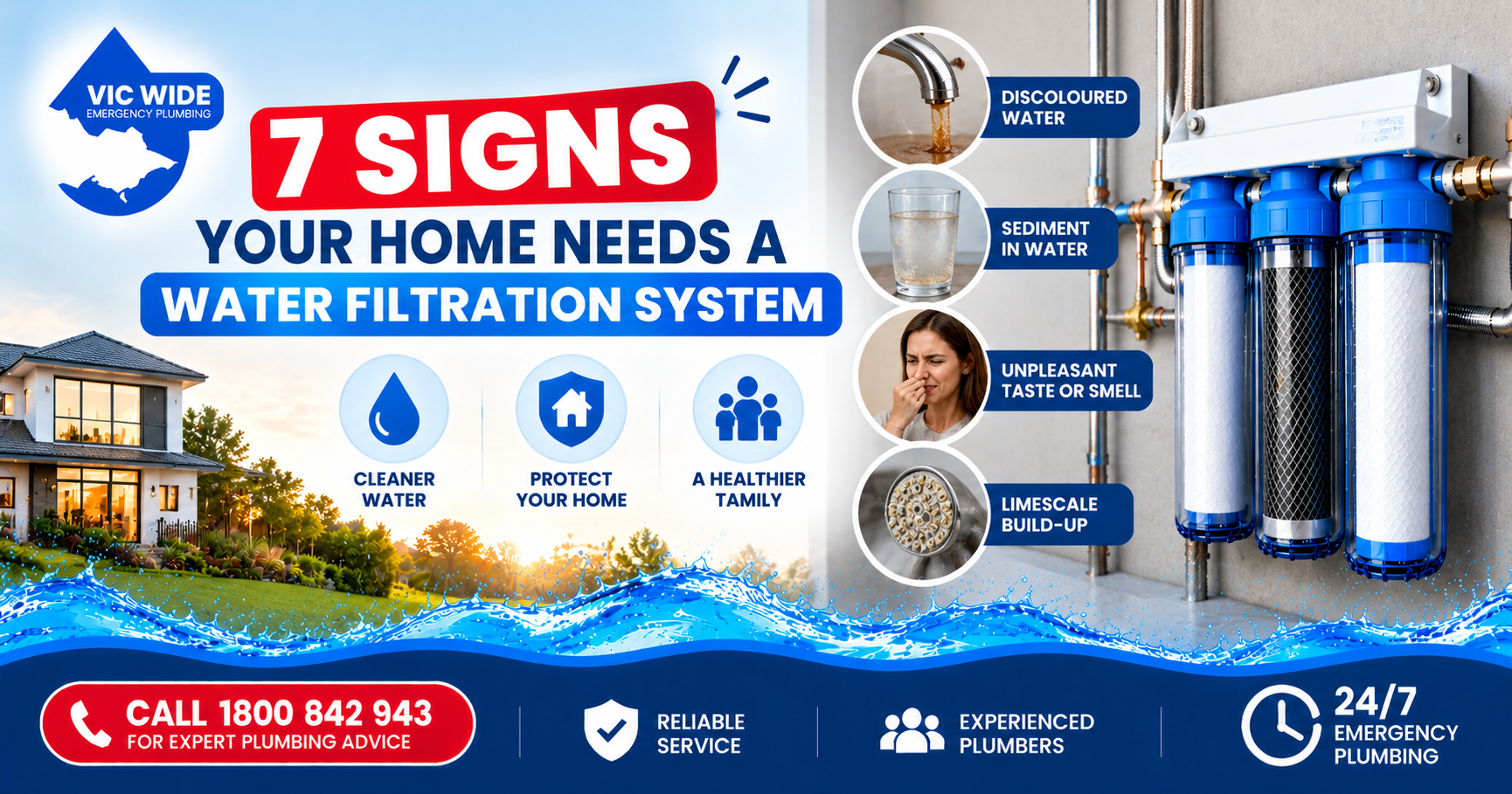 October Oct 20267 Signs Your Home Needs a Water Filtration System
Water is something we use every day, from drinking and cooking to showering, washing clothes and cleaning. While the water supplied to your property may meet applicable drinking water standards, its quality and characteristics can still vary depending on your location, plumbing condition and water source. Unusual tastes, unpleasant smells, visible particles and mineral deposits […]
Read More