




Clean water is an important part of everyday life. From showering and washing clothes to cleaning dishes and using water throughout your home, a reliable water filtration system can help improve your household water quality.
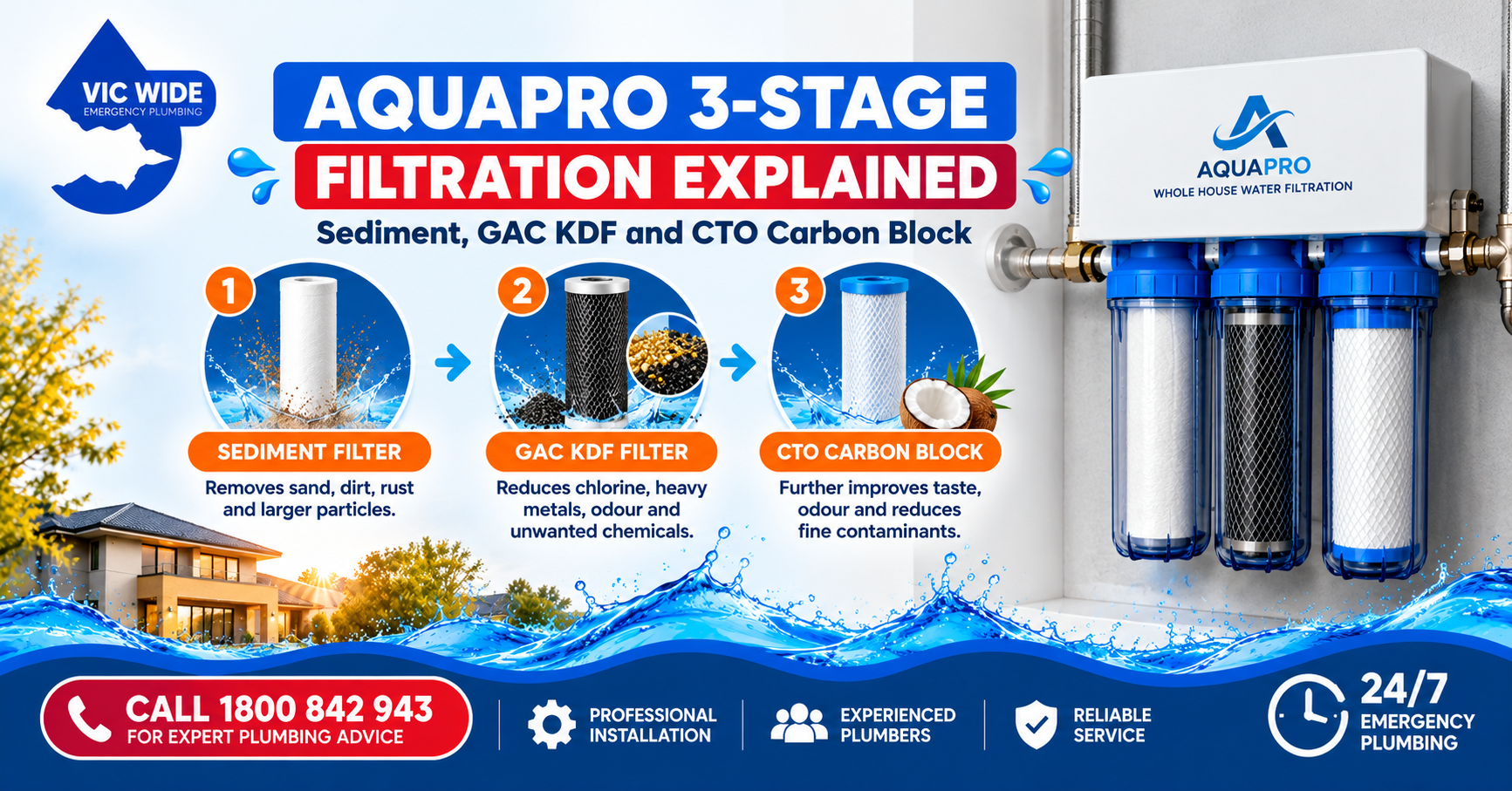
The AquaPro 3-stage whole-house water filtration system is designed to filter water as it enters your home. According to the product specifications, its three filtration stages use a sediment filter, a GAC KDF filter and a CTO carbon block filter to target different types of impurities and improve water quality.
In this guide, Vic Wide Emergency Plumbing explains how each stage works, what it is designed to reduce and why regular filter maintenance matters.
What Is a 3-Stage Whole-House Water Filtration System?
A whole-house water filtration system is installed on the incoming water supply so that filtered water can be distributed throughout the property.
Unlike a small filter attached to a single tap, a whole-house system is designed to treat water supplied to multiple fixtures, depending on the installation and system specifications.
The AquaPro system uses three filtration stages:
- Sediment filter: Targets sand, silt, dirt, rust and other suspended particles.
- GAC KDF filter: Uses granular activated carbon (GAC) and KDF media to help reduce chlorine, certain heavy metals, odours and organic contaminants.
- CTO carbon block filter: Provides additional filtration intended to reduce chlorine, improve taste and odour, and help reduce limescale-related issues as described in the product brochure.
Each stage has a different purpose, allowing the filters to work together as part of a whole-house water treatment system.
Stage 1: Sediment Filter – Reducing Dirt, Sand and Rust
The first stage is the sediment filter. Its primary purpose is to capture suspended particles before the water passes through the later filtration stages.
Depending on the incoming water quality, these particles may include:
- Sand and silt
- Dirt and other suspended material
- Rust particles from plumbing or the water supply
- Larger visible impurities
The AquaPro brochure describes a three-layer sediment filter with filtration of up to 1 micron.
Why Is Sediment Filtration Important?
Sediment can affect water clarity and contribute to the accumulation of particles within plumbing fixtures and appliances. Removing suspended particles at the first stage also helps protect the subsequent filter media from becoming clogged too quickly.
However, sediment filtration alone does not remove every type of contaminant. Dissolved substances and microorganisms require different treatment methods.
Stage 2: GAC KDF Filter – Targeting Chlorine, Metals and Odours
The second stage combines Granular Activated Carbon (GAC) and KDF media.
These materials have different filtration functions. Activated carbon can adsorb certain chemicals, while KDF media uses a copper-zinc-based medium designed to help reduce particular contaminants under suitable operating conditions.
According to the AquaPro brochure, this stage is intended to help reduce:
- Chlorine
- Certain heavy metals
- Unwanted odours
- Selected organic contaminants
How Does Activated Carbon Work?
Activated carbon has a porous structure that provides a large surface area for adsorption. As water passes through the filter, certain compounds can attach to the carbon surface.
This can help improve the taste and smell of water, particularly when chlorine or other compounds affecting these qualities are present.
What Is the Role of KDF Media?
KDF media is used in some water filtration systems to help reduce certain dissolved metals and chlorine, depending on the media configuration and water conditions.
Actual performance depends on the specific filter, the contaminant being targeted, water chemistry, flow rate and maintenance. The brochure’s claims should therefore be considered in the context of the manufacturer’s testing and specifications.
Stage 3: CTO Carbon Block – Additional Filtration and Taste Improvement
The third stage uses a CTO carbon block filter. CTO commonly refers to chlorine, taste and odour reduction.
This stage provides another opportunity to treat water as it passes through the system. The AquaPro brochure describes the CTO filter as a high-quality activated carbon block designed to further reduce chlorine and improve taste and odour.
The brochure also identifies limescale reduction as a benefit of this stage. The extent of any limescale reduction depends on the filter’s actual media, design and verified performance specifications.
Why Add a Final Carbon Block Stage?
A final carbon block can provide additional contact with activated carbon media after the earlier stages. This may help improve certain taste and odour characteristics and provide further reduction of contaminants specified for that cartridge.
It is important to remember that not every carbon filter removes every contaminant. A standard sediment and carbon-based system should not automatically be assumed to remove bacteria, viruses, dissolved salts or all heavy metals.
If you have a specific concern about your water, choose a system with independently verified performance for the contaminant you need to address.
How the Three Filtration Stages Work Together
The three filters are arranged in sequence so that water passes through each stage before being distributed around the home.
| Filtration stage | Main purpose |
|---|---|
| Stage 1: Sediment | Reduces suspended particles such as dirt, sand, silt and rust |
| Stage 2: GAC KDF | Helps reduce chlorine, selected metals, odours and certain organic contaminants |
| Stage 3: CTO carbon block | Provides further filtration for chlorine, taste and odour, with limescale-related claims dependent on verified specifications |
The first filter targets particles, while the later stages focus on selected chemical and water-quality concerns. The overall result depends on the filter configuration, incoming water conditions and correct installation.
How Often Should AquaPro Filters Be Replaced?
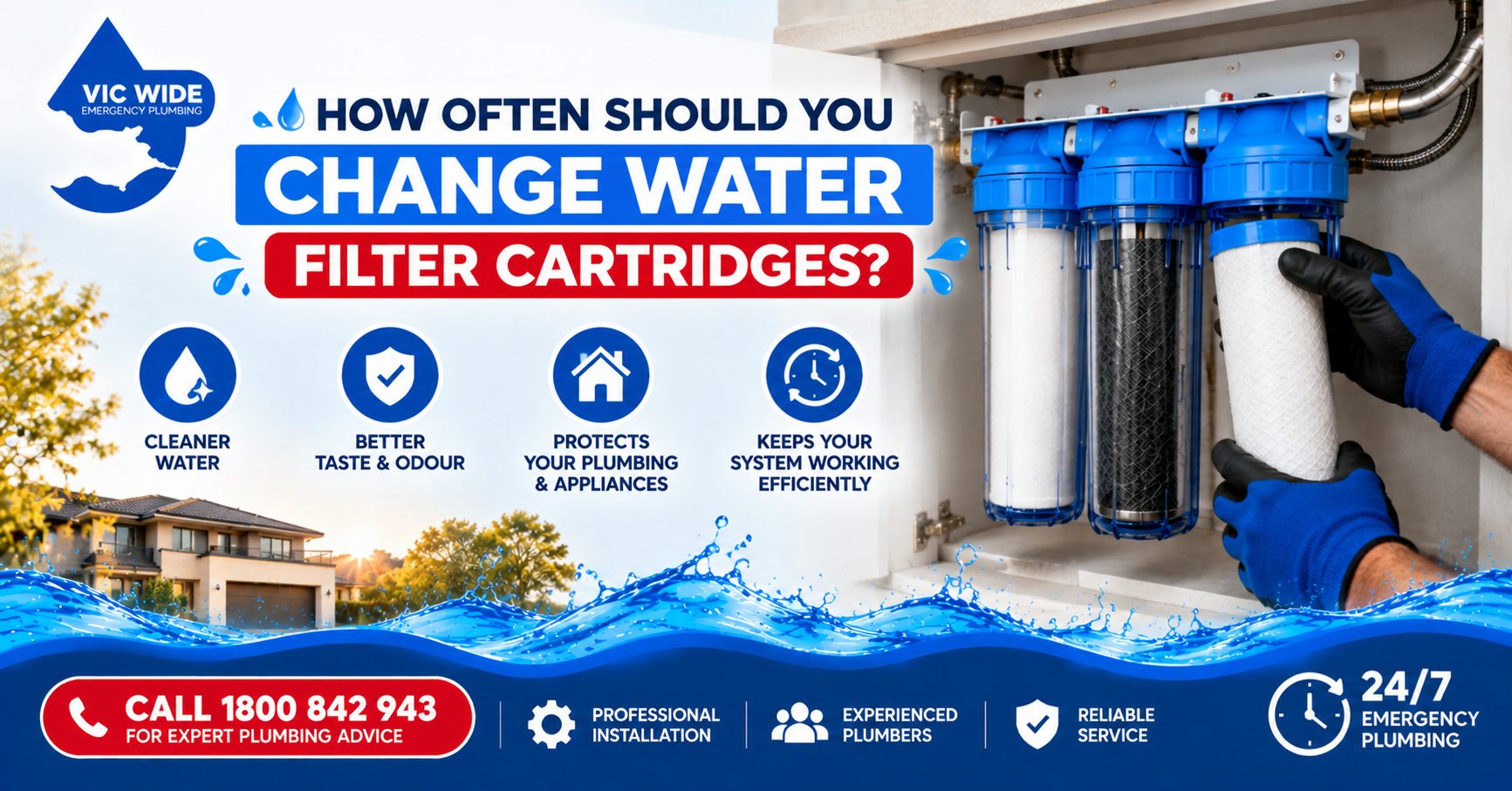
Filter cartridges need regular maintenance to continue performing as intended. The replacement interval depends on water quality, household usage and the manufacturer’s recommendations.
The AquaPro brochure lists the following replacement guidance for its three stages:
- Recommended replacement: Every 12 months
- Maximum interval stated in the brochure: 18 months
These are the intervals stated in the supplied brochure. They should be checked against the instructions for the exact model and cartridge installed. Filters may need replacing sooner if water quality or usage causes them to reach their capacity earlier.
Signs Your Water Filters May Need Attention
Look out for the following signs:
- Reduced water flow or a noticeable pressure change
- A return of unwanted chlorine taste or odour
- Visible sediment or particles in the water
- A cartridge that has reached its recommended replacement date
- Leakage or damage around the filtration housing
A change in water pressure can have several causes, so it should not automatically be attributed to the filters. If the issue persists, have the system inspected.
Is a Whole-House Water Filtration System Suitable for Your Melbourne Home?
A whole-house filtration system may be worth considering if you want water treatment at multiple outlets rather than at a single tap.
Before choosing a system, consider:
- Your water concerns: Identify whether you want to target sediment, chlorine, taste, odour or a particular contaminant.
- Household water usage: The system must be suitable for the number of occupants and expected demand.
- Water pressure and flow: Check that the system is compatible with your property’s operating conditions.
- Filter replacement costs: Consider cartridge availability, replacement frequency and ongoing maintenance.
- Installation requirements: The location, plumbing connections and access for future servicing should be assessed.
- Verified performance: Check the manufacturer’s specifications and independent test results for the contaminants you want to reduce.
The AquaPro brochure identifies the FHWR-3S1-20 model and lists an operating flow rate of 50–60 litres per minute. Actual flow in a home will depend on installation conditions, supply pressure, filter condition and simultaneous water demand.
A suitable system should be selected based on your property’s requirements rather than on the number of filtration stages alone.
Why Professional Installation Matters
Correct installation helps ensure that the filtration system is connected appropriately to the incoming water supply and can be maintained safely.
A professional assessment can help determine:
- The most suitable installation location
- Whether the system is compatible with existing pipework
- Whether water pressure and flow requirements can be met
- How to access cartridges for future replacement
- Whether any additional plumbing work is required
In Victoria, plumbing work that falls within regulated plumbing categories must be completed by an appropriately licensed or registered plumbing professional. The requirements depend on the nature of the work.
Vic Wide Emergency Plumbing can help homeowners discuss their plumbing needs and determine the next steps for a suitable installation or plumbing inspection.
Frequently Asked Questions
1. What are the three stages in the AquaPro filtration system?
The system described in the brochure uses a sediment filter, a GAC KDF filter and a CTO carbon block filter. Each stage targets different types of particles or selected contaminants.
2. Does the sediment filter remove chlorine?
The main purpose of the sediment filter is to reduce suspended particles such as sand, silt, dirt and rust. Chlorine reduction is associated with the system’s carbon-based filtration stages.
3. What does GAC KDF mean?
GAC stands for Granular Activated Carbon. KDF refers to a copper-zinc-based filtration media used in some systems to help reduce selected contaminants. The performance of the combined stage depends on its design and operating conditions.
4. What does CTO mean in a carbon block filter?
CTO commonly stands for chlorine, taste and odour. A CTO carbon block is designed to help reduce these issues, subject to the cartridge’s verified performance specifications.
5. How often should the AquaPro filter cartridges be changed?
The supplied AquaPro brochure recommends replacement every 12 months and states a maximum interval of 18 months. Always follow the instructions for your exact model and replace cartridges earlier if required.
6. Can a three-stage filtration system remove all contaminants?
No. Filtration performance depends on the media and system design. A three-stage system should not be assumed to remove every microorganism, dissolved salt, chemical or heavy metal. Check verified performance data for specific contaminants.
7. Can a whole-house filtration system improve water taste and odour?
Carbon-based filtration can help reduce chlorine and certain compounds responsible for unwanted tastes and odours. The results depend on the incoming water and the filter’s rated performance.
8. Does a whole-house filtration system need professional installation?
The installation requirements depend on the system and the plumbing work involved. Where regulated plumbing work is required in Victoria, an appropriately licensed or registered professional must carry it out.
Conclusion
The AquaPro 3-stage whole-house water filtration system uses three different filtration stages to address different water-quality concerns. The sediment filter targets suspended particles, the GAC KDF stage helps reduce selected contaminants, and the CTO carbon block provides further filtration aimed at improving taste and odour.
Choosing the right system involves more than looking at the number of stages. Water conditions, verified filtration performance, flow requirements, correct installation and regular cartridge replacement all matter.
If you are considering whole-house water filtration for your Melbourne property, Vic Wide Emergency Plumbing can help you discuss your plumbing requirements and explore suitable next steps.
Contact Vic Wide Emergency Plumbing
Need help with your plumbing system or want to discuss a water filtration installation?
Vic Wide Emergency Plumbing
- Phone: 1800 842 943
- Email: info@vicwideemergencyplumbing.com.au
- Website: https://www.vicwideemergencyplumbing.com.au/
- Service area: Melbourne and surrounding suburbs
- Emergency plumbing: Available 24/7
Contact our team to discuss your plumbing needs.
-
 October Oct 2026When to Change Water Filter Cartridges: A Complete Guide for Melbourne Homes
A water filtration system can help improve the taste and odour of water in your home, but regular maintenance is essential to keep it working as intended. One of the most important maintenance tasks is replacing the filter cartridges at the right time. So, how often should you change water filter cartridges? The answer depends […]
Read More -
 October Oct 2026How Much Does Whole House Water Filtration Cost in Melbourne
Are you considering installing a whole-house water filtration system in your Melbourne home? Before making a decision, it is important to understand the potential costs, installation requirements and ongoing maintenance involved. Whole-house water filtration systems are designed to treat incoming water before it reaches connected household outlets. Depending on the system and plumbing layout, this […]
Read More -
 October Oct 2026One of the Best Whole House Water Filtration Installation Options in Melbourne
Clean water is an essential part of everyday life. From drinking and cooking to showering, washing clothes and cleaning, Melbourne households rely on water throughout the day. If you are looking to improve water quality across your home, a whole-house water filtration system may be worth considering. Unlike an under-sink filter that typically treats water […]
Read More