




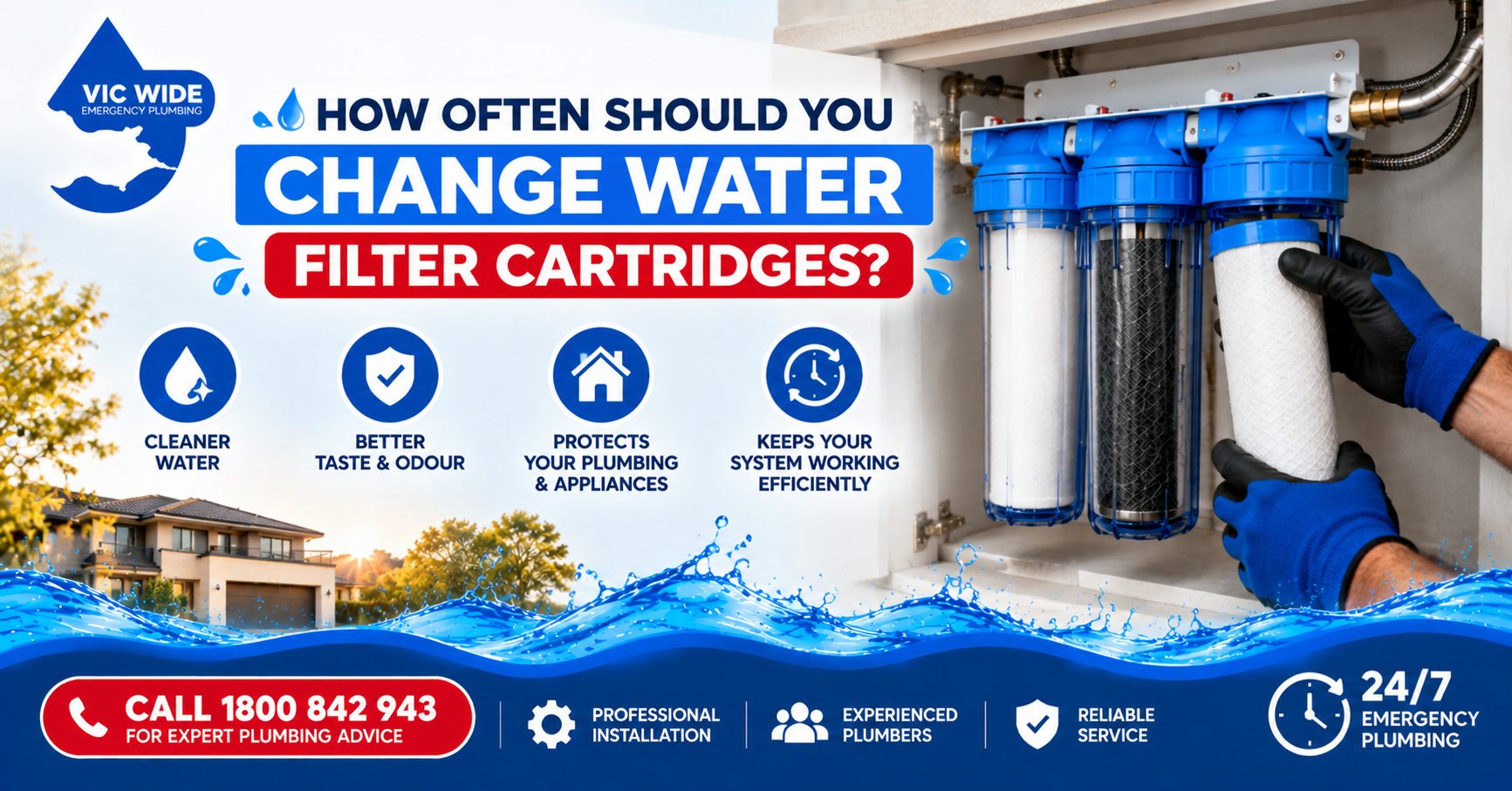
A water filtration system can help improve the taste and odour of water in your home, but regular maintenance is essential to keep it working as intended. One of the most important maintenance tasks is replacing the filter cartridges at the right time.
So, how often should you change water filter cartridges? The answer depends on the type of filtration system, household water consumption, incoming water quality and the manufacturer’s recommendations.
For homeowners in Melbourne, understanding when to replace water filter cartridges can help maintain water flow, support filtration performance and prevent avoidable maintenance issues.
In this guide, Vic Wide Emergency Plumbing explains how frequently different water filter cartridges may need replacing, the warning signs to look for and how to care for your filtration system.
How Often Should You Replace Water Filter Cartridges?
There is no single replacement schedule for every water filter. Each cartridge has a different function and service life.
The following timeframes are general estimates only. Always check your system’s manual for the recommended replacement interval and rated capacity.
- Sediment filter cartridges: Often replaced every 3–6 months.
- Activated carbon filters: Commonly replaced every 6–12 months.
- Under-sink water filters: Many models require cartridge replacement every 6–12 months.
- Whole-house water filters: Replacement frequency varies according to the system and may range from a few months to a year or longer.
- Reverse osmosis filters: Pre-filters, post-filters and membranes can all have different replacement schedules.
These intervals can change depending on water quality and how much water passes through the system. A cartridge may need replacing sooner if it collects substantial sediment or reaches its rated capacity before the expected date.
For the best results, follow the manufacturer’s maintenance instructions rather than relying on a general timeframe.
What Affects the Lifespan of Water Filter Cartridges?
Several factors determine how long a water filter cartridge will continue to perform effectively.
1. Household Water Consumption
A household that uses large volumes of filtered water may need to replace its cartridges more frequently than a household with lower water consumption.
Whole-house systems can process water for multiple taps, showers and appliances, which may increase the workload on the filtration system.
2. Incoming Water Quality
Water containing higher levels of sediment or other particles that a cartridge is designed to capture can shorten its service life.
For example, a sediment filter may become clogged more quickly when the incoming water contains substantial suspended material.
3. Type of Filtration System
Different cartridges are designed to address different water-quality concerns. Sediment filters capture particles, while activated carbon filters may reduce certain compounds affecting taste and odour.
Reverse osmosis systems use additional filtration components, each with its own maintenance requirements.
4. Filter Capacity
Most cartridges have a rated capacity or recommended service interval. Once a cartridge reaches its specified limit, it may no longer provide the intended performance.
Check the product specifications to understand how much water the cartridge is designed to process.
5. Maintenance and Installation
Correct installation and regular inspections help you identify problems before they become more serious. Damaged seals, incorrect cartridges or poorly fitted housings may affect system performance.
Keeping a record of replacement dates can also help you stay on top of routine maintenance.
Signs Your Water Filter Cartridge Needs Replacing
Your water filter may show several warning signs when a cartridge needs attention.
Reduced Water Flow
If filtered water begins flowing more slowly than usual, the cartridge may be clogged or reaching the end of its service life.
However, low water flow can also result from plumbing issues, a faulty valve or another problem with the system.
Unusual Taste or Odour
A change in the taste or smell of filtered water may indicate that a cartridge needs replacing. However, other water-quality issues can cause similar changes, so investigate persistent problems rather than assuming the filter is responsible.
Visible Particles in Filtered Water
If you notice unusual particles in your water, inspect the system according to the manufacturer’s instructions. The cartridge, filter housing or another part of the water supply may need attention.
A Replacement Indicator or Warning
Some filtration systems include an indicator that alerts you when maintenance is due. Follow the manufacturer’s instructions to understand the warning and reset the indicator after replacement, where applicable.
The Recommended Replacement Date Has Passed
A cartridge may need replacing even when the water looks clear and tastes normal. Some changes in filtration performance are not visible, which is why following the manufacturer’s schedule is important.
What Happens If You Do Not Replace Water Filter Cartridges?
Putting off filter replacement can affect your filtration system in several ways.
Reduced Filtration Performance
A cartridge that has reached its rated capacity may no longer reduce the substances it was designed to target as effectively.
Restricted Water Flow
Particles can accumulate in some filters over time, restricting the flow of water through the system.
Changes in Water Taste and Odour
An overdue cartridge may contribute to unwanted changes in taste or odour, depending on the filter type and the condition of the system.
Increased Maintenance Concerns
Neglecting routine maintenance can make it harder to identify issues such as worn seals, damaged housings or leaking connections.
Replacing cartridges on schedule and checking the system regularly can help maintain its intended operation.
How to Maintain Your Water Filtration System
Simple maintenance habits can help you keep your water filter in good working condition.
1. Follow the manufacturer’s instructions
Check the recommended cartridge replacement schedule and use compatible replacement parts.
2. Keep a maintenance record
Write down the installation date and the next expected replacement date for each cartridge. This is particularly useful for multi-stage filtration systems.
3. Check for leaks
Inspect the filter housing and visible connections for signs of moisture. If a leak persists, arrange a professional assessment.
4. Use the correct replacement cartridges
Always check that the replacement cartridge matches your filtration system. An incompatible filter may not fit properly or deliver the intended performance.
5. Flush the system when required
Some cartridges need to be flushed before the filtered water is used. Follow the manufacturer’s instructions for the specific product.
6. Seek professional assistance when needed
If the housing is difficult to open, connections are damaged, leaks continue or water flow remains low after cartridge replacement, a qualified professional can help identify the cause.
Can You Replace Water Filter Cartridges Yourself?
Many household filtration systems are designed to allow homeowners to replace cartridges by following the product instructions.
However, the process varies between systems. Some require the water supply to be isolated and pressure released before the cartridge can be removed. Others may involve connections that require additional care.
Before starting:
- Read the manufacturer’s instructions carefully.
- Confirm that you have the correct replacement cartridge.
- Turn off the water supply if instructed.
- Release pressure according to the product manual.
- Inspect the seals and fittings for damage.
- Flush the system as directed before returning it to use.
Never force a filter housing or ignore a leaking connection. If the work involves regulated plumbing in Victoria, or you are unsure how to proceed safely, contact an appropriately licensed or registered plumber.
How Often Should You Change Whole-House Water Filter Cartridges?
Whole-house water filtration systems supply filtered water to multiple connected outlets throughout a property. As a result, their cartridges may process considerably more water than those in a small drinking-water filter.
However, the replacement schedule depends on the filter’s design, capacity, household consumption and incoming water quality.
Some whole-house systems contain several stages, with each cartridge performing a different function. These cartridges may not all require replacement at the same time.
Check the manufacturer’s recommendations for each stage. If cartridges repeatedly become blocked or water flow drops soon after replacement, consider arranging an assessment to determine whether the system is suitable for your household’s water demand.
Frequently Asked Questions
1. How often should I change my water filter cartridge?
Many household cartridges require replacement every 3–12 months, but some systems have different schedules. Check the manufacturer’s instructions and consider the filter’s rated capacity and your household’s water usage.
2. How can I tell if my water filter needs replacing?
Common signs include reduced water flow, unusual taste or odour, visible particles and a replacement indicator alert. However, some cartridges may lose effectiveness without obvious warning signs.
3. Can I continue using a cartridge after its recommended replacement date?
It is best to follow the manufacturer’s replacement schedule. An overdue cartridge may no longer provide the intended filtration performance, even if the water appears normal.
4. Do all cartridges in a three-stage water filter need to be changed together?
Not necessarily. Each stage may have a different function and service life. Refer to the manufacturer’s instructions for the replacement schedule of each cartridge.
5. Do whole-house water filters need more frequent maintenance?
They may require more frequent replacement if they process large volumes of water or collect substantial sediment. The actual interval depends on the system’s design and operating conditions.
6. Will replacing my water filter cartridge improve water pressure?
It may improve flow if a clogged cartridge is causing the restriction. If the problem continues after replacement, other plumbing or system issues may need investigation.
7. Can I replace my water filter cartridge without a plumber?
Some systems are designed for homeowner maintenance. Follow the manufacturer’s instructions, and seek professional help if you encounter damaged fittings, persistent leaks or work that falls under regulated plumbing requirements.
8. Do water filter cartridges remove all contaminants?
No. Different filters are designed to reduce different substances. Check the manufacturer’s specifications and relevant certifications to understand what your particular system can remove or reduce.
Summary
Changing water filter cartridges at the right time is essential for maintaining your filtration system. While many household cartridges need replacement every few months, others are designed to last longer.
The correct replacement schedule depends on the filter type, water usage, incoming water quality and manufacturer recommendations. Watch for reduced water flow, unusual taste or odour and replacement alerts, but remember that a cartridge can require replacement even when the water appears normal.
For Melbourne homeowners, regular filter maintenance can help support filtration performance, maintain water flow and identify potential plumbing problems early.
If your water filter is leaking, repeatedly becoming blocked or not working as expected, professional advice can help identify the cause.
Contact Vic Wide Emergency Plumbing
Need help with your home’s water filtration system or plumbing? Contact Vic Wide Emergency Plumbing to discuss your requirements.
Vic Wide Emergency Plumbing
- Phone: 1800 842 943
- Email: info@vicwideemergencyplumbing.com.au
- Website: https://www.vicwideemergencyplumbing.com.au/
- Service area: Melbourne and surrounding suburbs
- Emergency plumbing: Available 24/7
Get in touch to discuss your plumbing concerns and arrange an assessment if required.
-
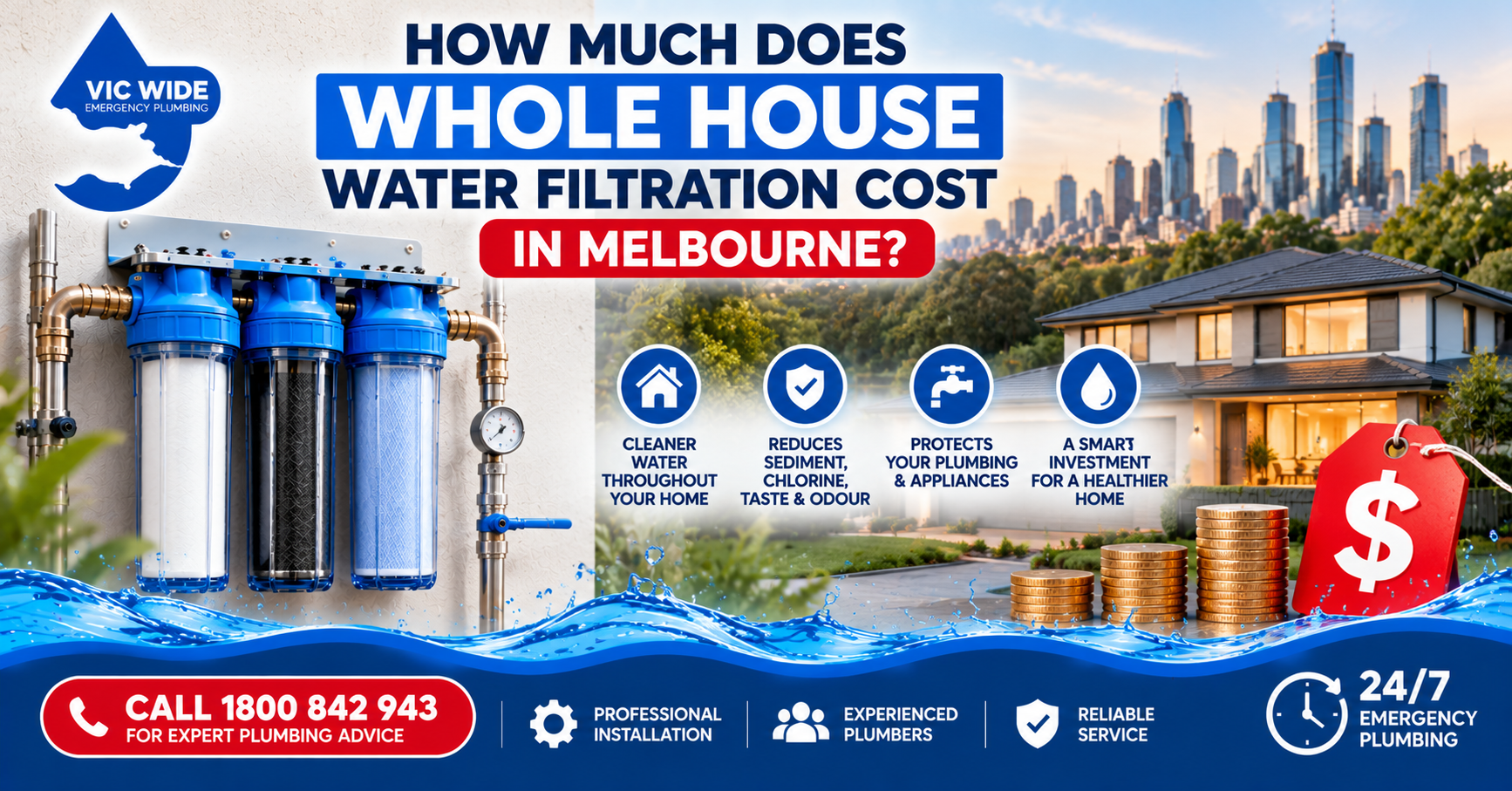 October Oct 2026How Much Does Whole House Water Filtration Cost in Melbourne
Are you considering installing a whole-house water filtration system in your Melbourne home? Before making a decision, it is important to understand the potential costs, installation requirements and ongoing maintenance involved. Whole-house water filtration systems are designed to treat incoming water before it reaches connected household outlets. Depending on the system and plumbing layout, this […]
Read More -
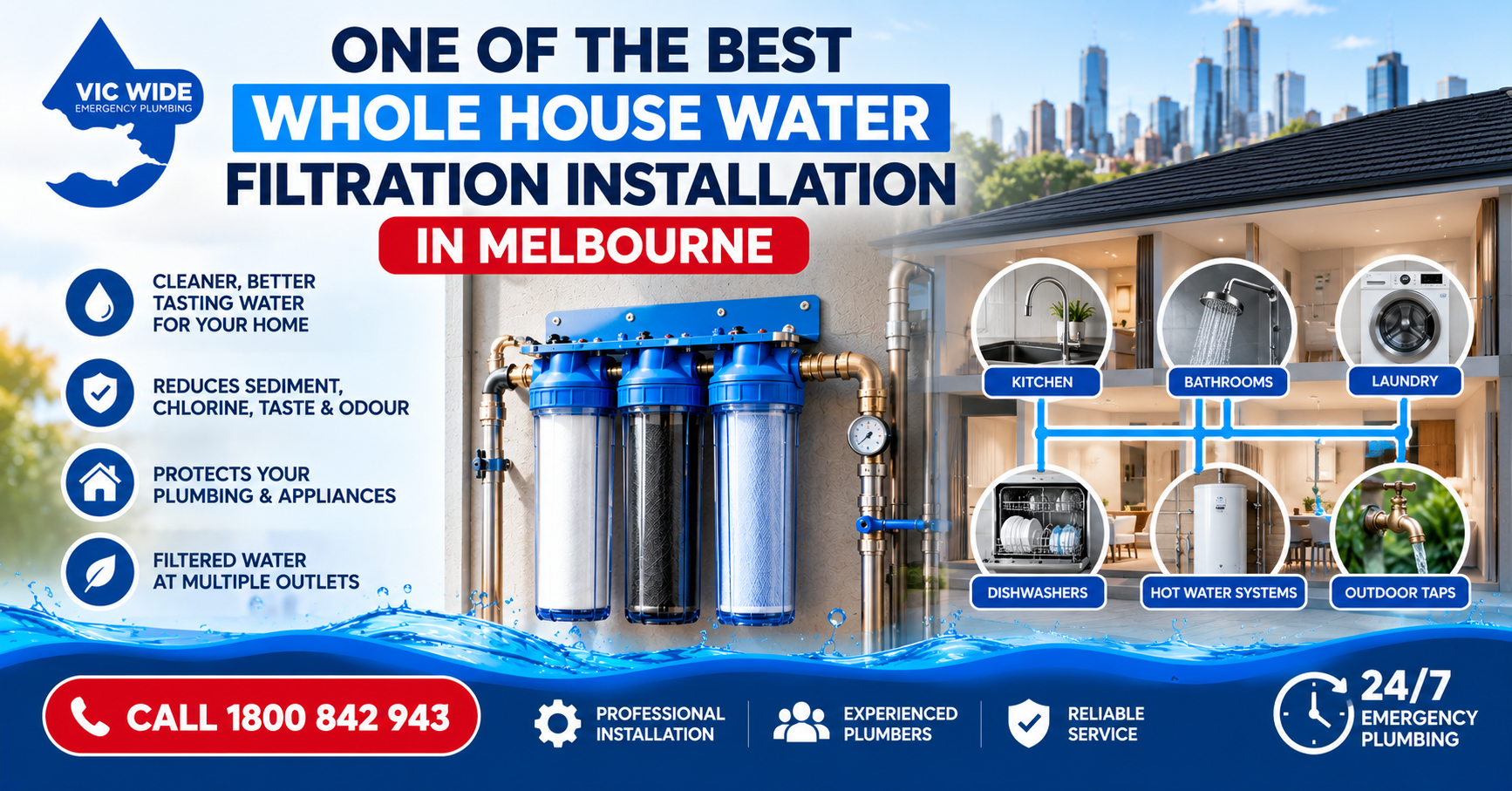 October Oct 2026One of the Best Whole House Water Filtration Installation Options in Melbourne
Clean water is an essential part of everyday life. From drinking and cooking to showering, washing clothes and cleaning, Melbourne households rely on water throughout the day. If you are looking to improve water quality across your home, a whole-house water filtration system may be worth considering. Unlike an under-sink filter that typically treats water […]
Read More -
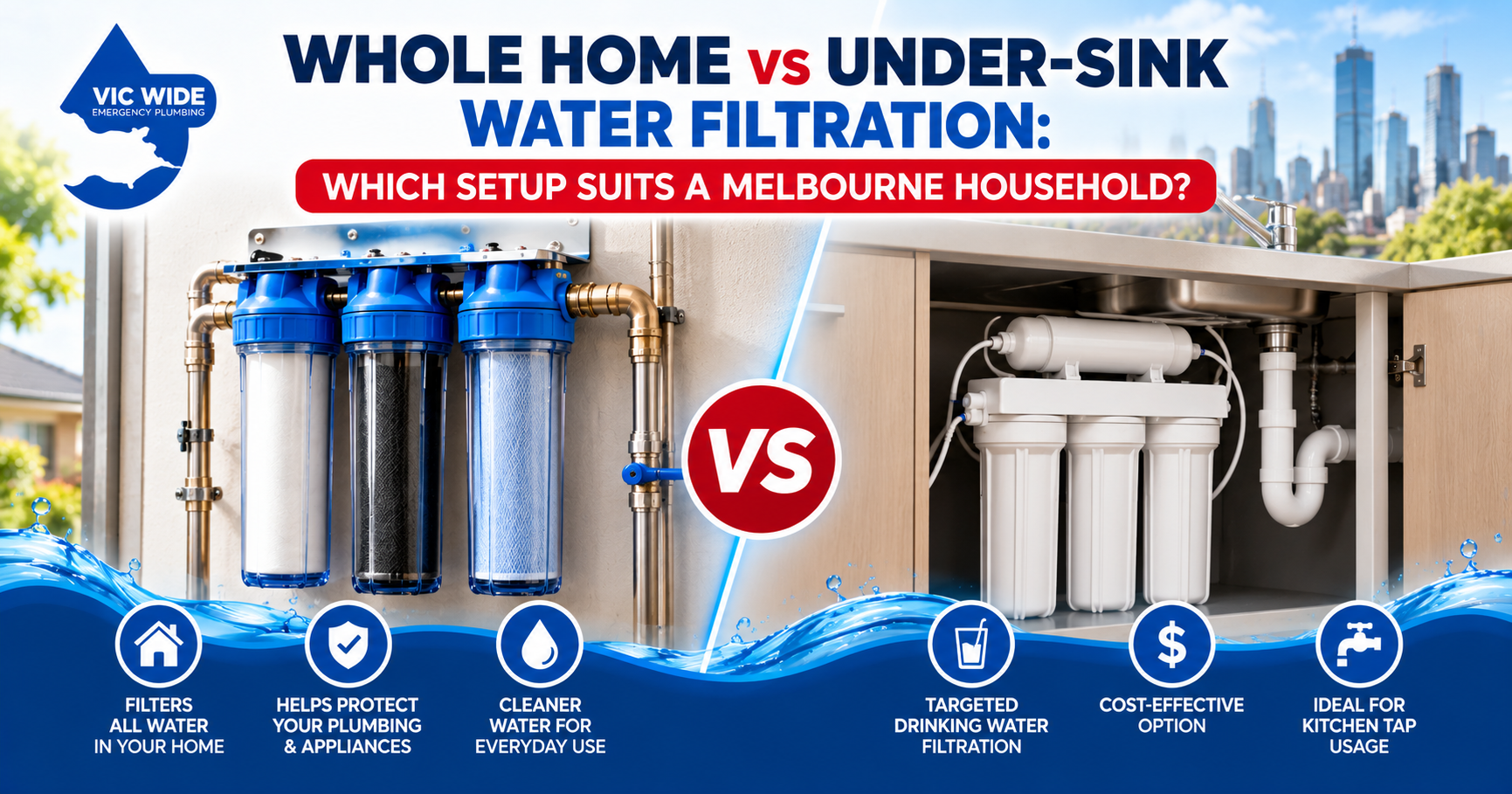 October Oct 2026Whole Home vs Under-Sink Water Filtration: Which Setup Suits a Melbourne Household?
Choosing a water filtration system involves more than selecting the right filter. You also need to consider where the water will be filtered, which household outlets require treatment, and how much maintenance the system will need. For Melbourne homeowners, two common options are whole-home water filtration and under-sink water filtration. Both can be useful, but […]
Read More