




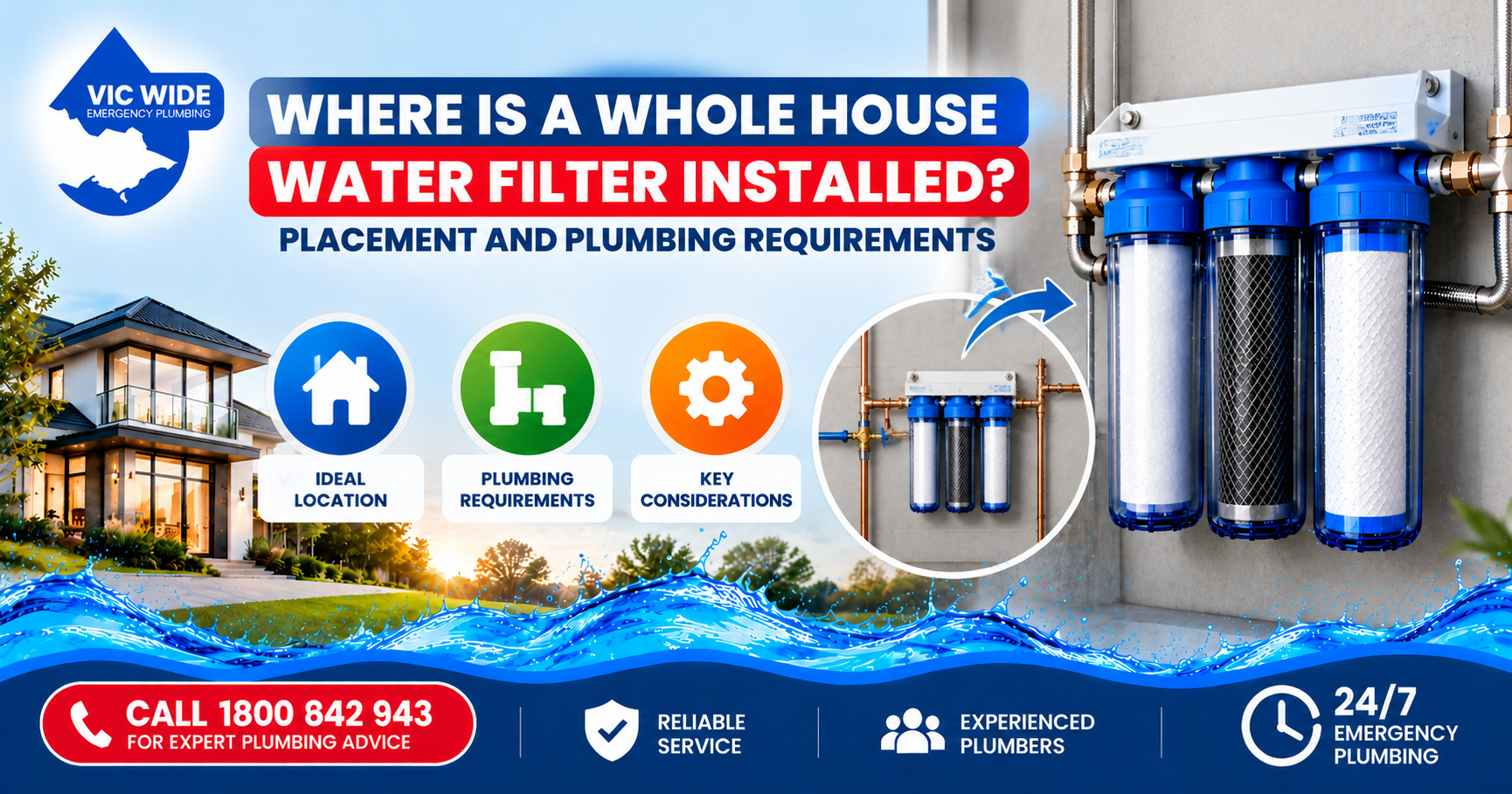
A whole house water filtration system can help improve the quality of water supplied to taps, showers, washing machines and other connected fixtures throughout your home. However, choosing the right filtration unit is only part of the process. Knowing where a whole house water filter should be installed is equally important for effective operation, convenient maintenance and reliable water flow.
For Melbourne homeowners considering a whole house water filtration system, understanding the installation location, plumbing requirements and available space can help make the process smoother. In this guide, Vic Wide Emergency Plumbing explains the usual installation points, factors to consider and when to seek professional plumbing assistance.
What Is a Whole House Water Filter?
A whole house water filter is designed to treat water entering your property before it is distributed through the home’s plumbing network. Unlike a point-of-use filter installed beneath a kitchen sink or attached to a single tap, a whole house system is generally connected to the main incoming water supply.
Depending on the model and filter cartridges selected, the system may help reduce sediment, chlorine, unpleasant tastes, odours or other specified contaminants. Its capabilities depend on the product’s design and verified performance specifications.
The primary benefit is that filtration can be provided to multiple water outlets across the property rather than just one fixture.
Where Is a Whole House Water Filter Usually Installed?
The most common installation point is on the main water supply line where it enters the property. The exact position depends on the home’s plumbing layout, the filtration system’s requirements and the space available.
1. Near the Main Water Inlet
Many whole house filtration systems are installed close to the property’s main incoming water pipe, often near the water meter or the point where the supply enters the building.
Installing the system at this point allows incoming water to pass through the filter before being distributed around the house.
Before choosing this location, a plumber should check that there is sufficient room for the unit, pipe connections and future cartridge replacement.
2. In an External Service Area
Some properties have suitable outdoor locations near the water entry point. A filtration system may be installed against an exterior wall or within a designated service area if the product is suitable for those conditions.
The location should provide protection from direct weather exposure, excessive heat, freezing conditions where relevant and accidental damage. An outdoor installation may require a suitable enclosure, depending on the manufacturer’s instructions.
3. Inside a Utility or Service Area
Where outdoor space is limited or the system requires indoor protection, an appropriate utility area may be considered. This could be a service space near the incoming water supply, provided the plumbing layout allows the system to be connected correctly.
The area should be accessible for inspections, servicing and filter changes. It should also have suitable ventilation and protection against water damage where necessary.
4. In a Garage or Suitable Plant Area
A garage or dedicated plant area can sometimes provide a practical installation location, particularly where the main water line enters nearby.
However, the system should not be placed somewhere that blocks access, creates a trip hazard or is exposed to unsuitable temperatures. The pipe route and distance from the incoming supply also need to be assessed.
Important: The best location is not necessarily the most convenient-looking spot. The system should be positioned according to its manufacturer’s specifications and the property’s actual plumbing arrangement.
How Does a Whole House Water Filter Connect to Your Plumbing?
A typical whole house filtration system is installed in line with the incoming water supply. Water passes through the filter before continuing into the property’s distribution pipes.
The installation generally involves the following steps:
- Identify the incoming water line: Locate the main supply pipe and determine a suitable connection point.
- Assess the plumbing layout: Check the pipe size, water pressure, available flow rate and space for the filtration unit.
- Prepare the installation area: Ensure the system can be securely mounted or supported and accessed for maintenance.
- Install the required connections: Fit compatible pipework, isolation valves and any other components specified by the manufacturer or required by the plumbing design.
- Check for leaks: After connecting the system, inspect fittings and connections and test the installation.
- Confirm operation: Check that water flows correctly and that the system operates within the manufacturer’s specified pressure and flow limits.
The exact process varies according to the filtration system, pipe material and existing plumbing. Some installations may require modifications to the incoming water line.
Plumbing Requirements to Consider Before Installation
Before installing a whole house water filter, several practical and technical factors should be checked.
Water Pressure and Flow Rate
A filtration system can affect water pressure and flow, particularly if it is undersized, clogged or unsuitable for the property’s water demand.
The selected system should be capable of supplying the home’s expected flow rate while operating within its specified pressure range. Larger households or properties with several bathrooms may need a system designed for higher simultaneous demand.
Pipe Size and Compatibility
The filter’s inlet and outlet connections must be compatible with the existing plumbing or connected using appropriate fittings. Pipe size, material and the condition of the supply line should be assessed before work begins.
Incorrect connections can cause leaks, restrict flow or create maintenance problems.
Isolation Valves and Maintenance Access
Isolation valves can allow the filtration system to be shut off for servicing without unnecessarily disrupting other plumbing. Whether and how these valves are fitted will depend on the system and installation requirements.
There should also be enough room to remove filter housings or cartridges safely. A system installed in a cramped space can make routine maintenance more difficult.
Drainage and Water Spillage
Some filtration systems require a drain connection, while others do not. This depends on the type of unit and its operating method.
Where drainage or flushing provisions are required, they must be arranged according to the manufacturer’s instructions and applicable plumbing requirements. The installation area should also be assessed for the risk of leaks or water spillage.
Protection From Environmental Conditions
Outdoor filters may need protection from sunlight, rain, physical impact and temperature extremes. Indoor systems should be installed in an area suitable for plumbing equipment and protected from avoidable damage.
Always check the manufacturer’s requirements before deciding between an indoor and outdoor location.
Compliance With Plumbing Requirements
Work on the main water supply should be completed in accordance with applicable Victorian plumbing requirements. A licensed or appropriately qualified plumber can assess the installation and determine whether any additional requirements apply to the property.
Can You Install a Whole House Water Filter Yourself?
Some compact filtration products are designed for straightforward installation, but connecting a whole house system to the main water supply is more involved than fitting a basic tap filter.
The work may require cutting or modifying pipework, selecting compatible fittings, managing water pressure and ensuring connections are secure. Mistakes can lead to leaks, reduced water flow or damage to surrounding areas.
Using a qualified plumber is a sensible option when the installation involves alterations to fixed water supply pipework or when you are unsure about the system’s requirements.
Professional assistance can also help confirm whether the chosen filter is appropriate for your home’s plumbing and expected water usage.
How Much Space Does a Whole House Water Filter Need?
There is no single space requirement for every whole house filtration system. Dimensions vary according to the number of filter stages, cartridge size, mounting arrangement and additional components.
Before installation, check:
- The overall height and width of the unit.
- The clearance required to remove and replace cartridges.
- The room needed for pipework and fittings.
- Access to valves and connection points.
- Whether the unit can be securely supported.
- Whether the area is protected from weather or accidental damage.
Planning for future servicing is important. A filter that fits into a small space but cannot be maintained comfortably may not be the most practical choice.
How Often Should a Whole House Water Filter Be Maintained?
Maintenance frequency depends on the filter type, water quality, household consumption and manufacturer’s recommendations.
Sediment cartridges may need replacement sooner in properties with higher sediment levels, while carbon filters have their own service-life limits. Some systems also include pressure indicators or other features that help identify when maintenance is needed.
To keep the system operating as intended:
- Follow the manufacturer’s cartridge replacement schedule.
- Inspect visible fittings and connections for leaks.
- Monitor any changes in water flow.
- Check the system after filter replacements.
- Arrange servicing if you notice persistent problems.
Avoid waiting until water flow becomes severely restricted before checking the filter. A blocked or overdue cartridge can affect system performance.
Common Mistakes to Avoid When Choosing an Installation Location
Several installation decisions can create unnecessary difficulties later.
Installing the unit too far from the incoming supply: This may require additional pipework and make the layout more complicated.
Ignoring cartridge replacement clearance: Filter housings need adequate room to be opened and serviced.
Choosing an unsuitable outdoor location: Exposure to weather, direct sunlight or accidental impact may damage equipment not designed for those conditions.
Overlooking water pressure: A filter that cannot meet the property’s flow requirements may affect water delivery to showers and taps.
Selecting a filter based on broad claims alone: Confirm which contaminants the system is tested and certified to reduce, where applicable, rather than assuming every filter removes all impurities.
Skipping leak and flow checks: The installation should be checked carefully before being put into normal use.
When Should You Contact a Plumber?
You may need professional plumbing assistance if you are planning a new filtration system, replacing an existing unit or experiencing problems after installation.
Consider arranging an assessment if you notice:
- Leaks around filter housings or pipe connections.
- A significant reduction in water pressure or flow.
- Difficulty isolating the system for maintenance.
- Uncertainty about the correct connection point.
- Damaged or corroded pipework near the incoming supply.
- Repeated cartridge blockages or unexplained performance changes.
Addressing these concerns early can help prevent minor plumbing issues from becoming more disruptive.
Final Thoughts
A whole house water filter is generally installed on the main incoming water supply, before water is distributed to the rest of the property. However, the ideal location depends on the filtration unit, available space, water pressure, pipe compatibility and maintenance requirements.
For the best results, choose a suitable system, follow the manufacturer’s installation instructions and ensure the plumbing connections are completed and checked correctly. Taking these steps can help support reliable water flow and make future filter maintenance easier.
If you need assistance with plumbing work in Melbourne, Vic Wide Emergency Plumbing can help you understand your plumbing needs and arrange appropriate professional support.
Frequently Asked Questions
1. Is a whole house water filter installed before or after the water meter?
The correct position depends on the property’s plumbing arrangement, local requirements and the filter manufacturer’s instructions. A plumber can assess the incoming supply and identify an appropriate installation point.
2. Can a whole house water filter be installed outside?
Yes, some systems are suitable for outdoor installation. The unit must be rated for the conditions or adequately protected, with suitable access for servicing.
3. Does a whole house water filter reduce water pressure?
It can create some pressure loss. The amount depends on the filter design, cartridge condition, pipe sizing and flow demand. Selecting a properly sized system helps minimise unwanted restrictions.
4. Does a whole house water filter need a drain?
Not every system requires a drain. Some filtration units operate without one, while other types may need drainage or flushing provisions. Always check the product specifications.
5. How long does whole house water filter installation take?
Installation time varies with the filter type, accessibility of the incoming water line and whether pipework modifications are needed. A plumber can provide a more accurate estimate after inspecting the site.
6. Can one whole house filter supply every tap in the home?
A correctly sized system installed on the main incoming supply can treat water distributed to multiple connected fixtures. The actual coverage depends on the plumbing layout and how the system is installed.
Contact Vic Wide Emergency Plumbing
Need help with plumbing installation, leaks or water supply concerns in Melbourne?
- Phone: 1800 842 943
- Email: info@vicwideemergencyplumbing.com.au
- Website: https://www.vicwideemergencyplumbing.com.au/
- Service area: Melbourne and surrounding suburbs
- Emergency plumbing: Available 24/7
Contact Vic Wide Emergency Plumbing for professional assistance with your plumbing needs.
SEO Details
Meta Title:
Meta Description: Learn where a whole house water filter is installed, plumbing requirements, ideal placement, water pressure considerations and maintenance access.
Focus Keyphrase: Whole House Water Filter Installation
URL Slug: whole-house-water-filter-installation
Image Alt Text: Whole house water filtration system installed on a home’s main water supply pipe.
-
 November Nov 2026PFAS in Melbourne Water, What They Are and How Water Filters Can Fix It
Water quality is an important concern for Australian households, and PFAS contamination has received increasing attention in recent years. Many Melbourne homeowners are now asking what PFAS chemicals are, how they can enter drinking water and whether household filtration systems can help reduce them. PFAS stands for per- and polyfluoroalkyl substances. These are a large […]
Read More -
 November Nov 2026Do Whole House Water Filters Increase Home Value?
When homeowners consider ways to improve their property, they often think about kitchen renovations, solar panels, energy-efficient appliances and bathroom upgrades. However, one improvement that is gaining attention is a whole house water filtration system. A whole house water filter can improve the quality of water supplied throughout a property, support household plumbing and make […]
Read More -
 November Nov 2026What Happens If You Drink Unfiltered Tap Water Every Day?
Water is an essential part of everyday life. Whether you are drinking a glass of water, preparing meals, making tea or coffee, or filling a bottle before leaving home, you probably use tap water several times a day. But have you ever wondered what is actually present in the water coming from your kitchen tap? […]
Read More