




Water conservation is becoming increasingly important for Australian households. With changing weather conditions, rising water costs and growing awareness of sustainability, many homeowners are exploring smarter ways to reduce water consumption.
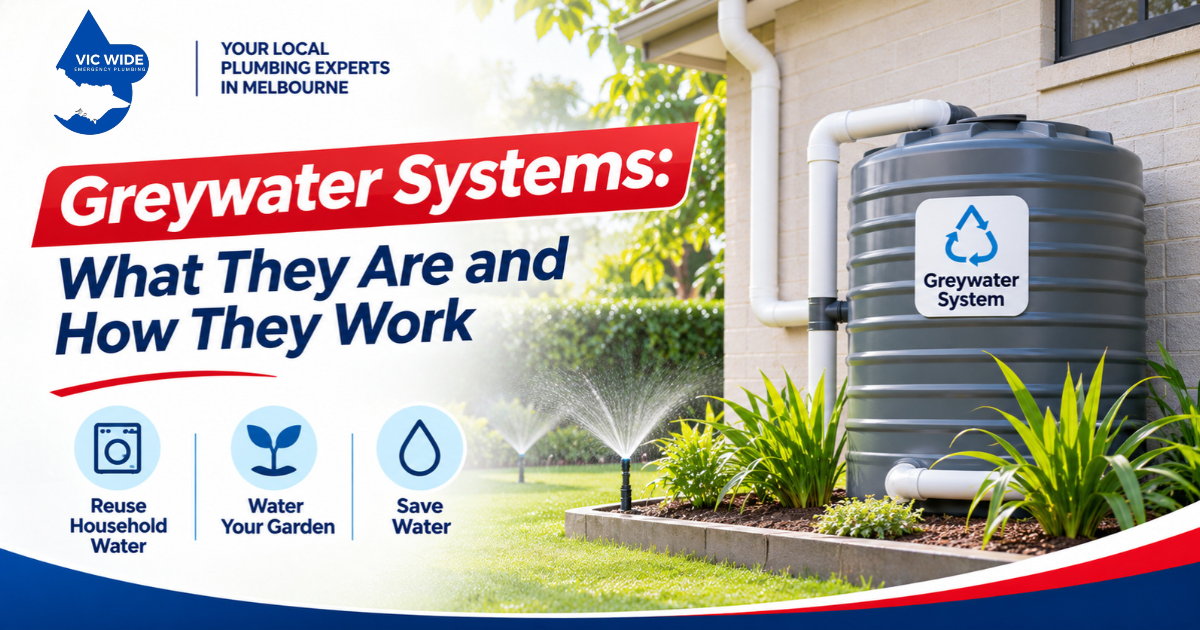
One solution gaining attention is a greywater system. These systems collect and reuse wastewater from selected household activities, helping reduce the amount of fresh drinking water used for certain purposes around the home.
Whether you’re considering watering your garden, reducing household water waste or making your property more water-efficient, understanding how greywater systems work is a good place to start.
At Vic Wide Emergency Plumbing, we understand the importance of efficient plumbing solutions. In this guide, we’ll explain what greywater is, how greywater systems operate, their benefits, different system types, installation considerations and important safety requirements.
What Is Greywater?
Greywater is wastewater collected from household activities that do not involve toilets. It generally comes from sources such as:
- Showers and bathtubs
- Bathroom basins
- Washing machines
- Other approved household water outlets, depending on the system
Greywater is different from blackwater, which contains human waste from toilets.
Kitchen wastewater containing food particles, grease and oils is generally excluded from simple greywater systems because it can contain higher levels of contaminants.
Although greywater is not drinking water, it may be suitable for certain non-drinking purposes when collected, managed and treated appropriately.
Why Should Homeowners Consider a Greywater System?
A greywater system can help households make better use of the water they already consume rather than sending all suitable wastewater directly into the sewer.
Key Benefits of Greywater Recycling
1. Reduce Household Water Consumption
Reusing suitable wastewater can reduce the amount of fresh mains water needed for activities such as garden irrigation.
2. Support Garden Irrigation
Treated or appropriately managed greywater can be directed towards suitable garden areas, trees and landscaping, subject to local requirements.
3. Potentially Lower Water Bills
Using recycled household water for approved applications may reduce reliance on mains water and help manage ongoing water expenses.
4. Encourage Sustainable Living
Greywater recycling supports more responsible water use and can help reduce unnecessary wastewater discharge.
5. Make Better Use of Household Resources
Instead of treating all household wastewater as waste, a suitable greywater system gives certain water sources another useful purpose.
Different Types of Greywater Systems
Greywater systems come in different designs depending on the property’s plumbing arrangement, intended use, household water consumption and available installation space.
1. Gravity-Fed Greywater Systems
Gravity-fed systems redirect suitable wastewater from a household outlet, such as a washing machine, towards an approved garden irrigation area.
Common features include:
- Relatively simple plumbing arrangements
- Limited mechanical components
- Gravity-assisted water movement
- Potentially lower installation complexity
- Suitable applications for laundry-to-landscape systems
These systems may be appropriate for properties with suitable garden layouts and drainage conditions.
2. Treatment-Based Greywater Systems
Treatment-based systems use additional equipment to process greywater before it is reused.
Depending on the design, they may include:
- Filtration units
- Pumps
- Treatment components
- Disinfection systems
- Storage and distribution equipment
Some approved systems may allow treated greywater to be used for applications such as toilet flushing or other designated non-drinking purposes.
These installations generally require more detailed planning, professional installation and compliance with applicable plumbing and building requirements.
How Does a Greywater System Work?
Although system designs vary, most greywater systems follow a similar process.
Step 1: Collecting Household Wastewater
Water is collected from approved sources, such as showers, bathroom basins or washing machines.
Step 2: Filtering the Water
The collected water passes through suitable filters to remove materials such as lint, hair and other particles.
Step 3: Treating the Water
Depending on the system and intended use, additional treatment or disinfection may be required.
Step 4: Pumping or Diverting the Water
The processed water is directed towards an approved reuse point. Gravity may be sufficient in some systems, while others require pumps.
Step 5: Reusing or Disposing of Excess Water
The water is supplied to its approved application, such as subsurface garden irrigation. Any unused or excess water must be managed through an appropriate disposal arrangement.
Important: Untreated greywater should not be stored for extended periods. Systems must be designed to manage water safely and prevent odours, contamination and unintended exposure.
Common Uses of Greywater Around the Home
Depending on the treatment level, system design and local regulations, greywater may be suitable for several non-drinking applications.
| Greywater Application | Potential Water Source | Important Consideration |
|---|---|---|
| Garden irrigation | Showers and laundry | Use an approved irrigation method |
| Tree and shrub watering | Bathroom outlets and laundry | Follow soil and plant suitability requirements |
| Toilet flushing | Approved treated greywater | Requires a compliant treatment and plumbing arrangement |
| Other outdoor applications | Approved greywater sources | Confirm the intended use is permitted |
Greywater must never be treated as drinking water or used for an application that requires potable water.
Greywater System: Important Do’s and Don’ts
Correct usage and maintenance are essential for keeping a greywater system safe and effective.
What You Should Do
- Choose suitable, low-impact detergents and cleaning products.
- Arrange regular inspections and filter maintenance.
- Use greywater only for approved purposes.
- Keep recycled water plumbing clearly identified.
- Follow the manufacturer’s maintenance instructions.
- Check local plumbing and environmental requirements.
- Arrange professional assistance if you notice leaks, blockages or unusual odours.
What You Should Avoid
- Using toilet wastewater in a greywater system.
- Using untreated kitchen wastewater in a basic greywater arrangement.
- Storing untreated greywater for prolonged periods.
- Allowing recycled water to pool around the property.
- Directly spraying greywater onto edible parts of plants.
- Connecting greywater pipes to drinking-water plumbing incorrectly.
- Allowing excess greywater to enter stormwater drains.
Greywater System Installation: Legal and Safety Requirements in Victoria
Before installing a greywater system in Melbourne or elsewhere in Victoria, homeowners should understand the relevant plumbing, building and environmental requirements.
Important considerations include:
Plumbing Compliance: The system must be installed in accordance with applicable Victorian plumbing requirements and relevant standards.
Approved System Design: The proposed system must be suitable for the property and its intended water reuse application.
Licensed Plumbing Work: Plumbing work should be carried out by an appropriately licensed or registered plumbing professional.
Cross-Connection Prevention: Recycled water must be kept separate from drinking-water supplies to prevent contamination.
Safe Water Disposal: Excess water must be directed to an approved disposal point without creating pooling, drainage or environmental problems.
Requirements can vary depending on the system type and intended application. Homeowners should confirm the relevant requirements with the appropriate Victorian authorities and a qualified plumbing professional before proceeding.
What Does It Cost to Install a Greywater System?
The cost of installing a greywater system depends on the type of equipment, property layout, plumbing modifications and treatment requirements.
Some factors that influence installation costs include:
- Type and capacity of the system
- Number of household water sources connected
- Filtration and treatment equipment
- Pumping and storage requirements
- Existing plumbing configuration
- Garden irrigation arrangements
- Labour and compliance requirements
A simple diversion arrangement may involve less installation work than a fully integrated treatment system.
For an accurate estimate, homeowners should arrange a property assessment and obtain a quote based on their specific requirements.
How Can Vic Wide Emergency Plumbing Help?
Installing or modifying a greywater system requires careful attention to plumbing connections, drainage arrangements and water safety.
Vic Wide Emergency Plumbing provides professional plumbing services across Metro Melbourne, helping homeowners maintain safe and reliable plumbing systems.
Our plumbing services include:
- General plumbing repairs
- Drainage and pipework services
- Blocked drain solutions
- Leak detection and repairs
- Plumbing inspections
- Water pipe repairs
- Hot water system services
- Plumbing maintenance
- Emergency plumbing assistance
If you’re considering a greywater system or need help with your existing plumbing, our team can help you understand your plumbing requirements and arrange appropriate professional assistance.
Frequently Asked Questions About Greywater Systems
1. What is the difference between greywater and blackwater?
Greywater comes from selected household sources such as showers, bathroom basins and washing machines. Blackwater contains wastewater from toilets and human waste, which requires different treatment and disposal.
2. Can greywater be used to water a garden?
Yes, appropriately managed greywater can be used for certain garden irrigation applications. The system must follow relevant health, environmental and plumbing requirements.
3. Can greywater be used for toilet flushing?
Some treatment-based systems allow recycled greywater to be used for toilet flushing. The system must have the appropriate treatment, plumbing separation and regulatory approval.
4. Is greywater safe to use around plants?
Greywater can be suitable for certain plants when managed correctly. However, detergent ingredients, water quality, soil conditions and irrigation methods must be considered.
5. Can I install a greywater system myself?
Some simple diversion arrangements may appear straightforward, but plumbing work and system installations must comply with applicable requirements. It is best to consult an appropriately licensed plumbing professional before starting.
6. Does greywater need to be filtered?
Filtration requirements depend on the system design and intended use. Treatment-based systems may require several filtration or disinfection stages.
7. How often should a greywater system be maintained?
Maintenance frequency depends on the manufacturer’s recommendations and system design. Filters, pumps, connections and treatment components should be inspected and maintained as required.
8. Are greywater systems permitted in Melbourne?
Greywater systems may be installed in Victoria, provided the proposed system and its use comply with applicable Victorian plumbing, building and environmental requirements. Check the requirements for your particular installation before proceeding.
9. Can greywater reduce household water bills?
It can help reduce mains water consumption when suitable recycled water replaces fresh water for approved applications. Actual savings depend on household usage, system costs and installation requirements.
Summary: Is a Greywater System Worth Considering?
Greywater systems offer homeowners an opportunity to make better use of household wastewater while supporting more sustainable water consumption.
From garden irrigation to approved indoor reuse applications, these systems can help reduce reliance on fresh mains water when designed and maintained correctly.
However, choosing the right system involves more than simply redirecting wastewater. Proper filtration, treatment, plumbing connections, drainage and regulatory compliance are all important.
If you’re considering a greywater system for your Melbourne property, getting professional plumbing advice can help you understand the available options and installation requirements.
Vic Wide Emergency Plumbing is here to assist with your plumbing needs across Metro Melbourne.
Contact Vic Wide Emergency Plumbing
Need professional plumbing assistance in Melbourne?
Vic Wide Emergency Plumbing
- Phone: 1800 842 943
- Website: www.vicwideemergencyplumbing.com.au
- Email: info@vicwideemergencyplumbing.com.au
- Service Area: Metro Melbourne
- Emergency Plumbing: Available 24/7
Contact our team for reliable plumbing assistance and professional support with your plumbing requirements.
-
 November Nov 2026Signs of a Blocked Drain: 7 Warning Signs Every Melbourne Homeowner Should Know
A blocked drain is one of the most common plumbing problems faced by homeowners. It can start with something as simple as water draining slowly from your kitchen sink, but if left unattended, the blockage may become more serious and lead to unpleasant odours, overflowing water or damage to your plumbing system. Recognising the early […]
Read More -
 November Nov 2026Do Plumbers in Melbourne Offer Same-Day Service? What to Expect
Plumbing problems rarely happen at a convenient time. A leaking pipe, blocked toilet, overflowing drain or faulty hot water system can interrupt your daily routine and may cause further damage if left unattended. When something goes wrong, most homeowners want the problem fixed as quickly as possible. This often leads to an important question: do […]
Read More -
 November Nov 2026Who Pays for Plumbing Repairs in a Victorian Rental? Landlord or Tenant?
Plumbing problems can happen in any rental property. A leaking tap, blocked drain, burst pipe or broken hot water system can quickly become stressful for both tenants and landlords. But when a repair is needed, one important question often comes up: who is responsible for paying? In Victoria, rental repair responsibilities are generally determined by […]
Read More