


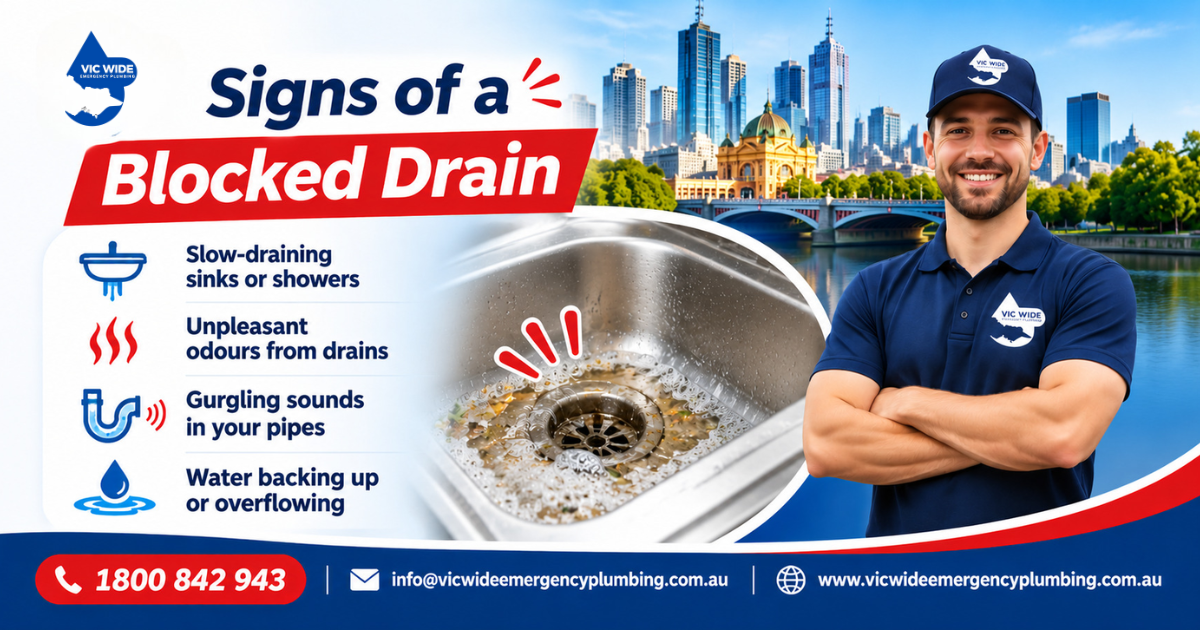
A blocked drain is one of the most common plumbing problems faced by homeowners. It can start with something as simple as water draining slowly from your kitchen sink, but if left unattended, the blockage may become more serious and lead to unpleasant odours, overflowing water or damage to your plumbing system.
Recognising the early warning signs can help you arrange professional plumbing assistance before the problem gets worse.
Whether you are experiencing a blocked kitchen sink, a slow-draining shower or unusual noises coming from your pipes, understanding what to look for is important.
In this guide, Vic Wide Emergency Plumbing explains seven common signs of a blocked drain, what may cause them and when to call a professional plumber.
1. Water Drains Slowly
One of the earliest signs of a blocked drain is water taking longer than usual to disappear.
You might notice:
- Water collecting around the kitchen sink while washing dishes.
- The shower floor filling with water during use.
- Bathroom basins taking longer to empty.
- Water remaining in the bathtub after use.
Slow drainage often occurs when grease, soap residue, hair, food scraps or other debris gradually build up inside the pipes.
If several fixtures are draining slowly at the same time, the blockage may be further down the drainage system.
2. Unpleasant Smells Coming from Drains
Bad smells coming from your sink, shower or floor waste can indicate a drainage problem.
Food waste, grease, hair and other organic materials can collect inside pipes and begin to break down, producing unpleasant odours.
You may notice:
- Rotten or sewage-like smells from kitchen sinks.
- Musty smells around bathroom drains.
- Persistent unpleasant odours near outdoor drainage points.
Cleaning the visible drain opening may not resolve the issue if the material causing the smell is deeper inside the pipe.
3. Gurgling Sounds in Pipes
Do you hear bubbling or gurgling noises when water drains from your sink, toilet or shower?
These sounds can indicate that air is becoming trapped or displaced because water is struggling to move through the drainage system.
Common situations include:
- Gurgling sounds after flushing the toilet.
- Bubbling noises when the kitchen sink empties.
- Unusual sounds from nearby drains when another fixture is being used.
Gurgling can have several causes, including a partial blockage or a drainage ventilation issue. A plumber can inspect the system to identify the source.
4. Water Backing Up into Sinks or Showers
Water flowing back into a sink, shower or bathtub is a more serious warning sign.
Instead of moving away through the pipes, wastewater may return through another drainage opening.
For example:
- Water appears in the shower when the toilet is flushed.
- Dirty water rises in the kitchen sink.
- Water backs up through a bathroom floor waste.
- Multiple drains begin overflowing.
This may indicate a blockage in a shared or main drainage line. Stop using affected fixtures where possible and arrange a plumbing inspection promptly.
5. Toilets That Flush Slowly or Overflow
A toilet that takes longer than normal to flush may have a blockage in its waste pipe or connected drainage system.
Other warning signs include:
- Water rising unusually high in the toilet bowl.
- Weak or incomplete flushing.
- Bubbling noises after flushing.
- Wastewater returning into the toilet bowl.
Avoid repeatedly flushing a toilet that is already close to overflowing. This can cause additional water to spill onto your bathroom floor.
6. Frequent Drain Blockages
If the same drain keeps becoming blocked, there may be an underlying issue that basic cleaning cannot fix.
Recurring blockages can be associated with:
- Grease and fat accumulating inside pipes.
- Tree roots entering underground drainage lines.
- Damaged, cracked or misaligned pipes.
- Foreign objects caught inside the drainage system.
- Excessive buildup of hair, soap and other debris.
A professional inspection can help determine whether the problem is caused by a local obstruction or a deeper issue within the pipework.
7. Wet Patches or Unusual Water Around Outdoor Drains
Blocked or damaged underground pipes can sometimes cause water to collect around outdoor drainage areas.
Look out for:
- Unexpected wet patches in the garden.
- Water pooling near outdoor drain openings.
- Persistent foul smells around the yard.
- Overflowing stormwater drains during rainfall.
These symptoms may indicate a blockage, damaged pipe or drainage capacity issue. A professional assessment is recommended to identify the cause.
What Causes Drains to Become Blocked?
Drain blockages can develop gradually as different materials collect inside pipes.
Some common causes include:
Grease and cooking oil: Liquid grease can cool and stick to the inside of pipes, trapping other waste.
Hair and soap residue: Hair combines with soap deposits and can form stubborn blockages in bathroom drains.
Food scraps: Food particles, coffee grounds and other kitchen waste can accumulate inside pipes.
Tree roots: Roots can enter underground pipes through small cracks or joints and restrict wastewater flow.
Foreign objects: Wet wipes, sanitary products and other unsuitable items can obstruct toilets and drainage lines.
Pipe damage: Cracked, collapsed or incorrectly aligned pipes can interrupt normal water flow and cause repeated blockages.
What Should You Do When You Notice a Blocked Drain?
Taking the right steps early can help prevent further plumbing problems.
- Stop adding water: If water is backing up, avoid using the affected sink, shower or toilet.
- Remove visible debris: If it is safe, clear hair or other material that can be reached around the drain opening.
- Avoid harsh chemical cleaners: Some chemical products can damage plumbing components and create hazards, particularly if mixed.
- Check other drains: Notice whether the problem affects one fixture or multiple areas of your property.
- Contact a professional plumber: If the blockage persists, keeps returning or causes wastewater to back up, arrange an inspection.
Avoid attempting to remove deep blockages with sharp tools, as this may damage the pipes.
How Can a Professional Plumber Clear a Blocked Drain?
The right solution depends on the location, cause and severity of the blockage.
A professional plumber may use different methods, including:
CCTV Drain Inspection
A specialised camera is inserted into the drainage line to identify blockages, tree root intrusion, cracks and other pipe problems.
Drain Snaking
A drain machine or suitable plumbing snake can help break up or retrieve obstructions inside pipes.
High-Pressure Water Jetting
Hydro jetting uses high-pressure water to clear certain types of buildup, including grease, sludge and debris. The method must be suitable for the condition and type of pipe.
Pipe Repairs
If an inspection identifies damaged or collapsed pipework, repairs or replacement may be necessary to restore proper drainage.
When Should You Call an Emergency Plumber?
Not every slow drain requires an emergency callout. However, some symptoms need prompt attention.
Contact a plumber urgently if you experience:
- Sewage backing up into your home.
- A toilet or drain overflowing.
- Wastewater affecting multiple fixtures.
- Significant water pooling due to a drainage problem.
- A suspected damaged or blocked main sewer line.
If wastewater is entering your property, avoid contact with it and keep children and pets away from the affected area.
Blocked Drain Services in Melbourne – Vic Wide Emergency Plumbing
Dealing with a blocked drain can interrupt your daily routine and create unpleasant conditions around your home or business.
Vic Wide Emergency Plumbing provides plumbing assistance across Melbourne and surrounding suburbs. Whether you have a slow-draining sink, a blocked toilet or a more serious drainage issue, a professional inspection can help identify the cause and determine the appropriate solution.
Our plumbing services include:
- Blocked drain clearing.
- Toilet and kitchen drain blockages.
- CCTV drain inspections.
- High-pressure water jetting.
- Drainage repairs.
- General and emergency plumbing assistance.
If you notice any warning signs of a blocked drain, do not wait for the problem to become worse. Contact Vic Wide Emergency Plumbing for assistance.
Summary: Key Signs of a Blocked Drain
A blocked drain can develop gradually, so recognising the warning signs early is important.
Here are seven symptoms to watch for:
- Water draining slowly from sinks or showers.
- Unpleasant smells coming from drains.
- Gurgling or bubbling sounds in pipes.
- Water backing up into sinks, toilets or showers.
- Toilets flushing slowly or overflowing.
- Frequent blockages in the same drain.
- Wet patches or pooling water around outdoor drains.
If you experience recurring blockages, wastewater backups or overflowing drains, arrange a professional plumbing inspection.
Frequently Asked Questions
1. What are the first signs of a blocked drain?
Slow-draining water is one of the most common early signs. You may also notice unpleasant smells, gurgling noises or water collecting around sinks and showers.
2. Can a blocked drain cause a bad smell in my house?
Yes. Food scraps, grease, hair and other organic materials can accumulate inside pipes and produce unpleasant odours as they break down.
3. Why does my drain make a gurgling noise?
Gurgling noises can occur when air is trapped or displaced as water moves through a restricted drainage system. A blockage or ventilation issue may be responsible.
4. Can I clear a blocked drain myself?
You may be able to remove minor blockages caused by visible hair or debris near the drain opening. However, recurring or deep blockages should be inspected by a qualified plumber.
5. What causes drains to keep getting blocked?
Common causes include grease buildup, hair, soap residue, tree roots, foreign objects and damaged underground pipes.
6. Is a blocked drain an emergency?
It depends on the severity. A minor slow drain may not be an emergency, but sewage backups, overflowing toilets and wastewater entering your property require prompt attention.
7. How do plumbers find blockages inside pipes?
Plumbers may use CCTV drain cameras to inspect the inside of pipes and identify obstructions, tree roots, cracks or other damage.
8. Can tree roots block underground drains?
Yes. Tree roots can enter underground pipes through small cracks or joints. As they grow, they may restrict water flow and cause repeated blockages.
9. Does high-pressure water jetting clear blocked drains?
High-pressure water jetting can remove many types of buildup, including grease and debris. A plumber should first assess whether the pipe is suitable for this method.
10. How can I prevent blocked drains?
Avoid pouring cooking grease down sinks, use suitable drain strainers, dispose of food scraps in the bin and avoid flushing wipes or sanitary products down toilets. Regular attention to drainage issues can also help prevent recurring problems.
Contact Vic Wide Emergency Plumbing
Need help with a blocked drain in Melbourne?
Vic Wide Emergency Plumbing
- Phone: 1800 842 943
- Email: info@vicwideemergencyplumbing.com.au
- Website: https://www.vicwideemergencyplumbing.com.au/
- Service Area: Melbourne and surrounding suburbs
- Availability: 24/7 Emergency Plumbing
Contact our team for professional plumbing assistance.
-
 November Nov 2026Greywater Systems: A Homeowner’s Guide to Reusing Water Efficiently
Water conservation is becoming increasingly important for Australian households. With changing weather conditions, rising water costs and growing awareness of sustainability, many homeowners are exploring smarter ways to reduce water consumption. One solution gaining attention is a greywater system. These systems collect and reuse wastewater from selected household activities, helping reduce the amount of fresh […]
Read More -
 November Nov 2026Do Plumbers in Melbourne Offer Same-Day Service? What to Expect
Plumbing problems rarely happen at a convenient time. A leaking pipe, blocked toilet, overflowing drain or faulty hot water system can interrupt your daily routine and may cause further damage if left unattended. When something goes wrong, most homeowners want the problem fixed as quickly as possible. This often leads to an important question: do […]
Read More -
 November Nov 2026Who Pays for Plumbing Repairs in a Victorian Rental? Landlord or Tenant?
Plumbing problems can happen in any rental property. A leaking tap, blocked drain, burst pipe or broken hot water system can quickly become stressful for both tenants and landlords. But when a repair is needed, one important question often comes up: who is responsible for paying? In Victoria, rental repair responsibilities are generally determined by […]
Read More