




Choosing a water filtration system involves more than selecting the right filter. You also need to consider where the water will be filtered, which household outlets require treatment, and how much maintenance the system will need.
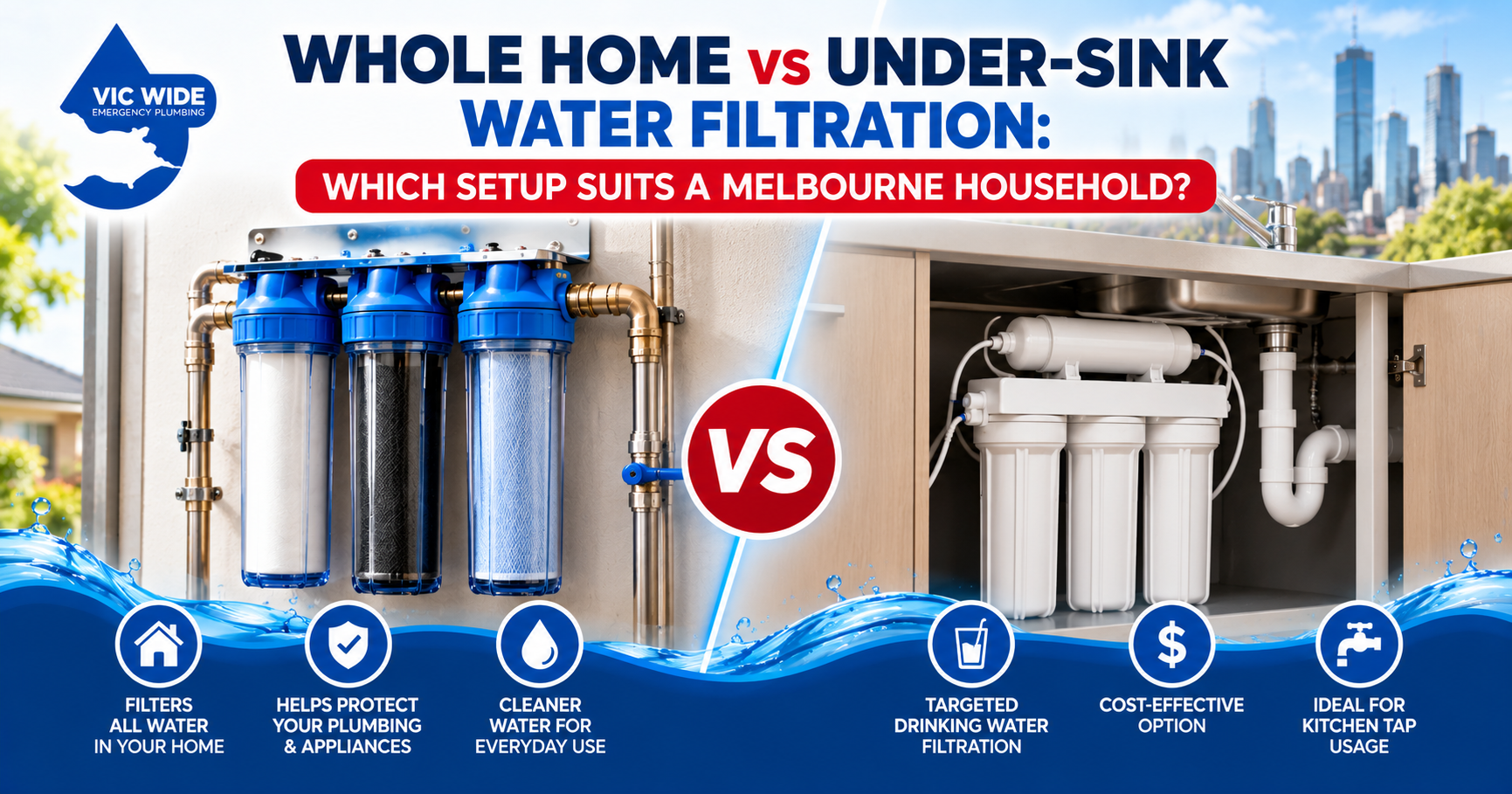
For Melbourne homeowners, two common options are whole-home water filtration and under-sink water filtration. Both can be useful, but they serve different purposes. An under-sink system generally treats water at one selected outlet, while a whole-home system filters incoming water before it reaches connected taps and fixtures.
Understanding these differences can help you decide which setup is more suitable for your home, lifestyle and budget.
Which Water Filtration System Should You Choose?
The right choice depends on your household’s priorities.
- Choose under-sink filtration if your main goal is filtered water for drinking and cooking at a particular kitchen tap.
- Consider whole-home filtration if you want water filtered before it reaches multiple connected outlets, including bathrooms, kitchens and laundries.
- Consider both systems if you want broader household filtration alongside additional treatment for drinking water.
Whole-home filtration generally involves a wider installation scope, whereas under-sink filtration is more localised. Before choosing either option, consider your plumbing layout, water quality concerns, installation requirements and ongoing servicing costs.
1. Understand Where Each System Filters Water
The main difference between these systems is the number and location of the outlets they serve.
Whole-home water filtration
A whole-home filtration system is typically installed near the property’s incoming water supply. Water passes through the filtration system before travelling through the home’s internal plumbing.
Depending on the installation, this may provide filtered water to:
- Kitchen taps
- Bathroom basins
- Showers and baths
- Laundry taps
- Washing machines
- Dishwashers
- Hot water systems
- Other connected fixtures
The actual coverage depends on the plumbing arrangement and how the system is installed.
Under-sink water filtration
An under-sink system is generally installed inside the kitchen cabinet and connected to a selected tap or dedicated drinking-water outlet.
It is commonly used for:
- Drinking water
- Cooking and food preparation
- Making tea and coffee
- Filling reusable bottles
- Washing fruit and vegetables
Because it treats water at a specific point, an under-sink system does not normally filter water supplied to showers, laundry taps or other rooms.
2. Match the System to Your Household’s Needs
Before comparing products, identify what you want to achieve.
| Household requirement | Option to consider |
|---|---|
| Filtered drinking water from one kitchen tap | Under-sink filtration |
| Filtration across several connected household outlets | Whole-home filtration |
| A smaller, localised installation | Under-sink filtration |
| Sediment reduction before water enters internal plumbing | Whole-home filtration |
| Filtration for showers and laundry outlets | Whole-home filtration |
| Additional treatment at the kitchen drinking-water tap | Under-sink or combined filtration |
This comparison is a starting point rather than a guarantee of performance. Different systems remove different substances, so check the manufacturer’s specifications before selecting a product.
Water filtration should not be assumed to provide medical benefits or prevent illness.
3. How Does a Whole-Home Water Filtration System Work?
A whole-home system is connected to the incoming water line. Water flows through the installed filtration stages before being distributed to the connected outlets around the property.
The purpose of each stage depends on the specific product and filter media.
Stage 1: Sediment filtration
A sediment filter is designed to capture particles such as sand, silt, dirt and certain rust particles. This can reduce selected suspended material passing further into the plumbing system.
Stage 2: Mineral-particle reduction
Some filtration systems include a stage designed to reduce particular mineral particles or other specified contaminants. The actual effect depends on the technology used.
Not all filters remove dissolved minerals or prevent limescale. Check the product documentation to understand what the second stage is designed to treat.
Stage 3: Chlorine, taste and odour improvement
Depending on the filter media, the final stage may help reduce chlorine-related taste and odour, improving the sensory quality of the treated water.
Performance varies according to the filtration system, incoming water conditions, household consumption and cartridge condition.
A three-stage system should not automatically be considered capable of removing every contaminant. If you have a specific water-quality concern, confirm that the selected product is tested and rated for it.
4. How Does Under-Sink Filtration Work?
An under-sink filtration system treats water at a selected outlet, usually in the kitchen. Depending on the product, it may connect to the existing tap or use a separate drinking-water tap.
This setup can be practical for households that primarily want filtered water for everyday drinking and cooking.
Its main advantages include:
- A targeted installation
- Less equipment spread around the property
- Convenient access to filtered drinking water
- Potentially simpler cartridge servicing, depending on the design
However, under-sink filtration does not provide property-wide coverage. Water used for showers, laundry and other fixtures remains untreated by that unit.
The filter type, replacement schedule and treatment capabilities vary between products. Always follow the manufacturer’s guidance.
5. Compare Installation Requirements
Installation is another important factor when choosing between the two options.
Whole-home installation
Because the system connects to the main water supply, the installer needs to assess the incoming pipework and the proposed location.
Important considerations include:
- Access to the main water line
- Space for the filtration unit
- Existing pipework and connection points
- Safe access for future maintenance
- Weather protection if installed outdoors
- Bypass arrangements, where applicable
- Any plumbing modifications required
The installation should also allow sufficient room to replace cartridges and service the system safely.
Under-sink installation
Under-sink filtration usually requires less extensive plumbing work, but the cabinet must have enough room for the unit, pipe connections and cartridge replacement.
If you live in an apartment or townhouse, check whether shared plumbing, body corporate requirements or common-property restrictions affect the proposed installation.
A qualified plumbing professional can help assess the site and identify any installation considerations.
6. Consider Maintenance and Filter Replacement
Both whole-home and under-sink systems need ongoing maintenance. The servicing process depends on the unit’s design and how much water passes through it.
For a whole-home system, ensure the installation location provides easy access to the filter housing, isolation valves and bypass components where fitted.
For an under-sink system, make sure the cabinet remains accessible and that stored items do not obstruct cartridge changes.
Maintenance requirements can depend on:
- Incoming water conditions
- Household water consumption
- Filter media and cartridge capacity
- Manufacturer recommendations
- The system’s intended use
- Site-specific servicing conditions
Avoid assuming that every cartridge needs replacement at the same interval. Follow the product documentation and arrange servicing when required.
7. Can Whole-Home Filtration Help Protect Plumbing and Appliances?
One reason homeowners consider whole-home filtration is that it treats water before it reaches multiple connected fixtures.
Where the selected system effectively reduces certain sediment particles, it may help limit the amount of that material reaching tapware, shower fittings and water-using appliances.
Potentially affected fixtures and appliances include:
- Kitchen and bathroom taps
- Shower fittings
- Washing machines
- Dishwashers
- Hot water systems
- Other connected plumbing fixtures
However, filtration is not a substitute for general plumbing maintenance. It cannot guarantee scale-free pipes, prevent every appliance fault or resolve all water-quality issues.
The result depends on what the filter is designed to remove. If hardness or limescale is the main concern, check whether the system specifically addresses it.
An under-sink filter normally offers less protection for the wider plumbing network because it treats water at a single outlet.
8. Is It Worth Installing Both Systems?
Some households may benefit from using whole-home filtration alongside an under-sink drinking-water filter.
For example, whole-home filtration could address selected water-quality concerns across connected household outlets, while a separate kitchen filter provides additional treatment for drinking and cooking water.
A combined setup may be worth considering if you want:
- Filtration across multiple rooms
- Additional treatment at a drinking-water tap
- Different treatment capabilities for different uses
- A setup tailored to specific water-quality requirements
However, installing both systems is not always necessary. The best arrangement depends on the products selected and whether their filtration functions overlap.
Before investing in a combined system, ask a plumbing professional to explain the purpose, performance and maintenance requirements of each unit.
9. Is Renovation a Good Time to Install Water Filtration?
Renovations can provide a convenient opportunity to plan a water filtration installation because plumbing access and equipment locations may be easier to coordinate before the work is completed.
For whole-home filtration, planning ahead can help determine:
- The location of the incoming water supply
- Where the filtration unit will sit
- Pipe routing and access
- Space needed for servicing
- Protection from outdoor conditions
- Coordination with hot water equipment
For under-sink filtration, you can plan the cabinet layout, tap position and plumbing connections before the kitchen is finished.
Discussing filtration early in the renovation process can help avoid unnecessary changes later.
10. Compare the Total Cost, Not Just the Equipment Price
The cheapest system is not necessarily the most suitable option for your home. Compare the full installation and ownership costs before making a decision.
Ask for a clear breakdown covering:
- The filtration unit supplied
- The purpose of each filtration stage
- Installation labour
- Required plumbing modifications
- Valves and bypass arrangements, where applicable
- Cartridge replacement costs
- Routine servicing requirements
- Warranty conditions
- Product support and exclusions
- Any additional site-specific charges
Also confirm which taps and appliances will receive filtered water. This helps ensure you are comparing systems that meet the same household requirements.
Why Contact Vic Wide Emergency Plumbing?
Vic Wide Emergency Plumbing provides plumbing services across Melbourne and surrounding suburbs. If you are considering a water filtration installation, understanding your property’s plumbing layout and filtration goals is a useful starting point.
Our team can discuss your plumbing requirements and help you understand the installation considerations involved in choosing a suitable setup.
When comparing whole-home and under-sink filtration, it is worth considering:
- Whether you need filtration at one outlet or across multiple connected outlets
- The available installation space
- Access to existing pipework
- Cartridge replacement and servicing access
- The filtration system’s documented capabilities
- The scope of work included in the quote
Water filtration suitability depends on the property and the product selected. Whole-home filtration should not be assumed to qualify for a Victorian Energy Upgrades (VEU) rebate or other government incentive.
Final Thoughts Whole Home vs Under-Sink Water Filtration Melbourne
Both whole-home and under-sink water filtration can be useful, but they are designed for different needs.
An under-sink system is generally suitable when your priority is filtered water from a selected kitchen tap. Whole-home filtration may be more appropriate when you want treatment before water reaches multiple connected outlets around the property.
The best choice comes down to your household’s goals, plumbing layout, product specifications and long-term maintenance costs. Comparing these factors before installation can help you choose a system that makes sense for your Melbourne home.
Considering water filtration for your property?
Contact Vic Wide Emergency Plumbing to discuss your plumbing requirements.
- Phone: 1800 842 943
- Website: https://www.vicwideemergencyplumbing.com.au/
- Email: info@vicwideemergencyplumbing.com.au
- Service area: Melbourne and surrounding suburbs
Frequently Asked Questions Whole Home vs Under-Sink Water Filtration Melbourne
Is whole-home filtration better than an under-sink filter?
Neither option is automatically better. Whole-home filtration treats water supplied to multiple connected outlets, while under-sink filtration focuses on one selected outlet. Your household’s needs should determine the choice.
Does whole-home filtration provide filtered water to showers and laundries?
It can, provided those outlets are connected downstream of the filtration system and the installation is designed to serve them.
Can I install whole-home and under-sink filtration together?
Yes, a combined setup may be possible. Whether it is worthwhile depends on the filtration requirements, the products selected and whether their functions overlap.
Does Vic Wide Emergency Plumbing service Melbourne households?
Vic Wide Emergency Plumbing provides plumbing services across Melbourne and surrounding suburbs. Contact the team to discuss your requirements and confirm whether the service you need is available.
Is whole-home water filtration covered under the VEU program?
Do not assume it is. Whole-home water filtration should not be represented as a VEU-rebate product. Check official program eligibility requirements for any upgrade you are considering.
-
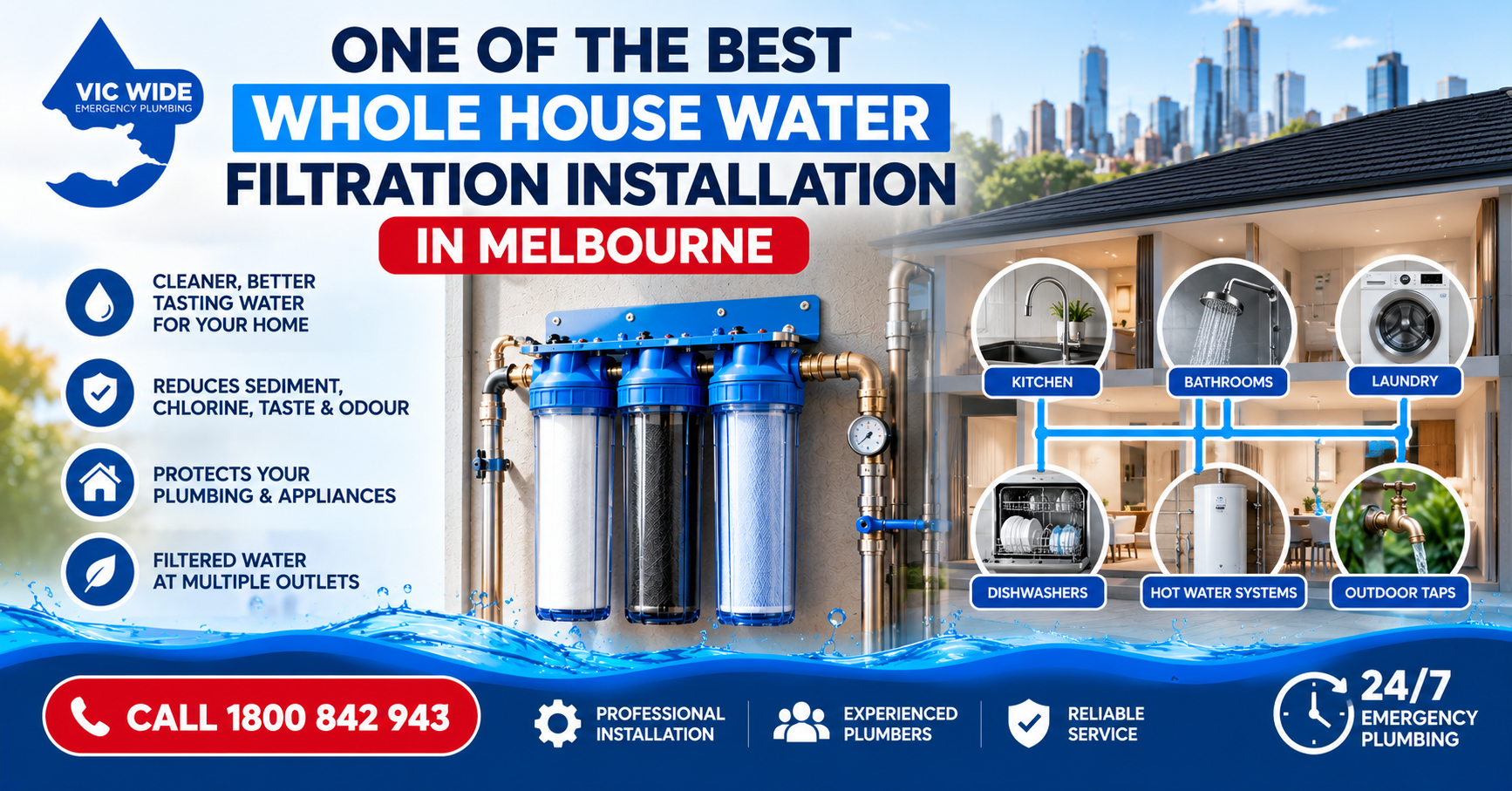 October Oct 2026One of the Best Whole House Water Filtration Installation Options in Melbourne
Clean water is an essential part of everyday life. From drinking and cooking to showering, washing clothes and cleaning, Melbourne households rely on water throughout the day. If you are looking to improve water quality across your home, a whole-house water filtration system may be worth considering. Unlike an under-sink filter that typically treats water […]
Read More -
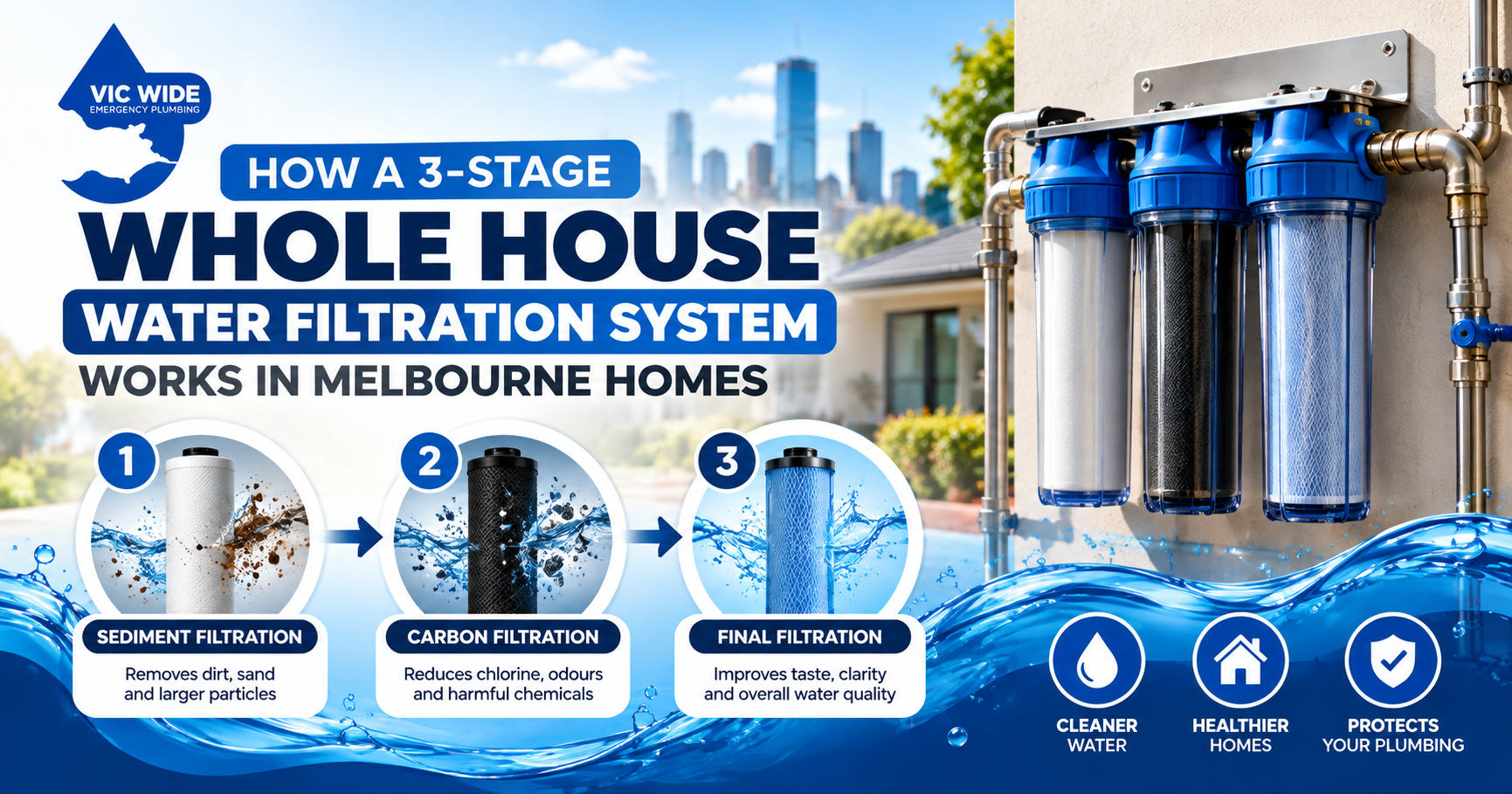 October Oct 2026How a 3-Stage Whole House Water Filtration System Works in Melbourne Homes
Melbourne’s tap water is generally safe to drink, but that doesn’t mean it’s perfect by the time it reaches your kitchen. Chlorine taste and smell, fine sediment from ageing pipes and the occasional cloudy flush after mains work are common complaints across Melbourne homes. A whole house water filtration system tackles these issues at the […]
Read More -
 October Oct 2026Common Plumbing Problems Requiring a Plumber in Melbourne
Plumbing problems can occur unexpectedly and quickly disrupt your daily routine. From leaking pipes and blocked drains to hot water failures and low water pressure, even a minor issue can become more serious if it is left unresolved. For homeowners, landlords and business owners, knowing when to contact a professional plumber can help prevent further […]
Read More