


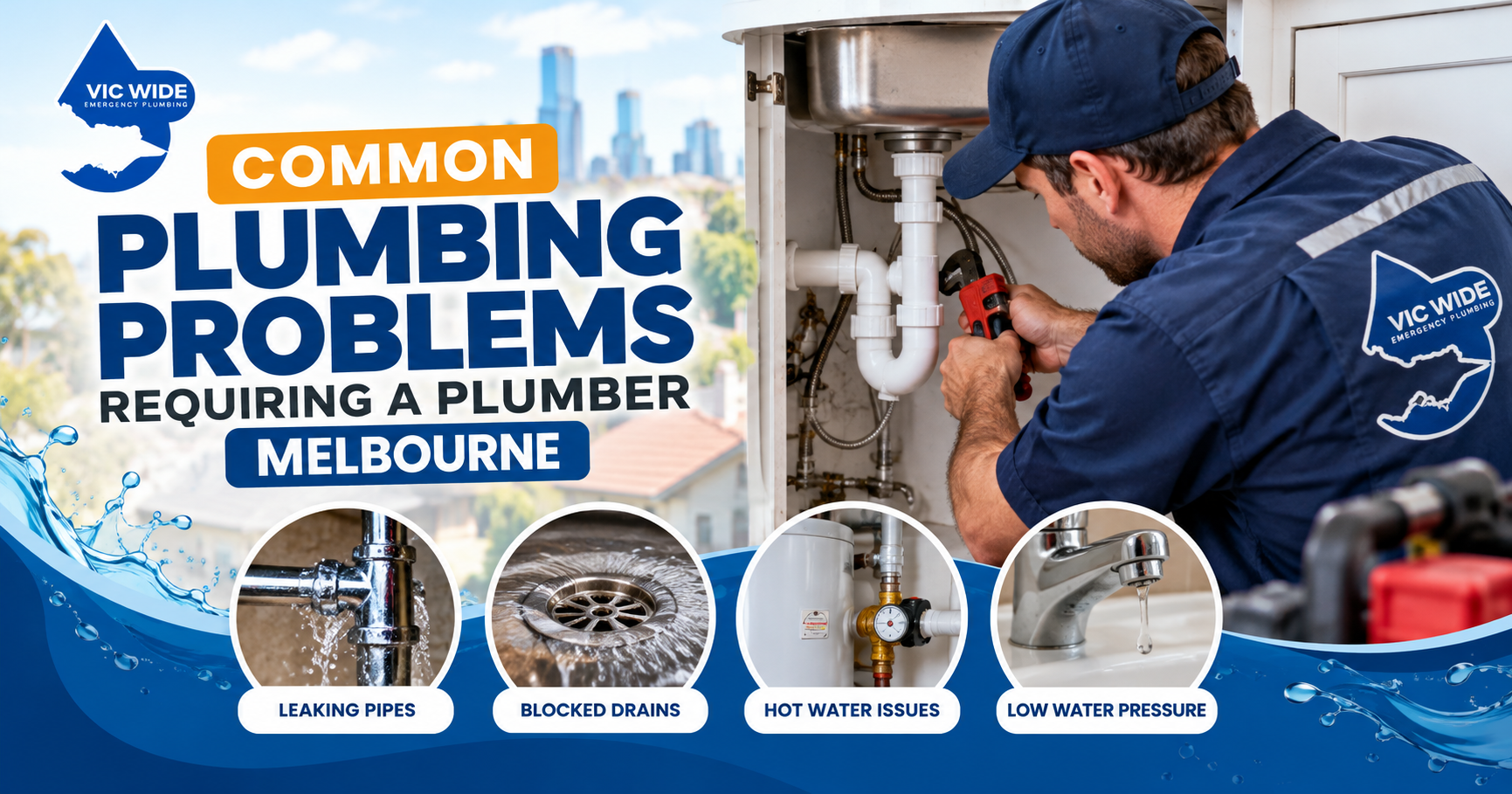
Plumbing problems can occur unexpectedly and quickly disrupt your daily routine. From leaking pipes and blocked drains to hot water failures and low water pressure, even a minor issue can become more serious if it is left unresolved.
For homeowners, landlords and business owners, knowing when to contact a professional plumber can help prevent further damage and unnecessary repair costs.
Vic Wide Emergency Plumbing provides plumbing assistance across Melbourne and surrounding suburbs, helping customers address plumbing issues and urgent water-related problems.
In this guide, we explore common plumbing problems that may require professional attention, the warning signs to look for and when to call a plumber.
1. Leaking Pipes and Water Connections
Leaking pipes are one of the most common plumbing problems in residential and commercial properties. Leaks can develop around pipe joints, taps, fixtures and ageing plumbing components.
Although a small drip may seem harmless, ongoing leaks can waste water and damage nearby surfaces.
Common Signs of a Plumbing Leak
-
Water dripping from pipes or fittings
-
Damp patches on walls or ceilings
-
Water stains or peeling paint
-
Unexplained increases in water usage
-
Musty smells around plumbing areas
-
Water pooling beneath sinks or appliances
When Should You Call a Plumber?
A plumber should inspect persistent leaks, concealed pipe leaks and damaged connections. If a pipe bursts or water begins spreading rapidly, turn off the water supply if it is safe to do so and arrange urgent plumbing assistance.
2. Blocked Drains
Blocked drains can affect kitchen sinks, bathroom basins, showers, toilets and outdoor drainage systems. Blockages often develop when grease, soap residue, hair, food scraps or other materials accumulate inside pipes.
Outdoor drains can also become blocked by leaves, dirt, tree roots and other debris.
Warning Signs of a Blocked Drain
Look out for:
-
Water draining slowly
-
Gurgling noises from pipes
-
Unpleasant drain odours
-
Water backing up into sinks or showers
-
Repeated blockages in the same drain
-
Multiple fixtures draining poorly at once
How Can a Plumber Help?
Depending on the blockage, a plumber may use suitable drain-cleaning equipment, CCTV drain inspections or hydro jet cleaning to investigate and clear the obstruction.
Recurring blockages should be assessed to identify the underlying cause rather than repeatedly treating the symptoms.
3. Hot Water System Problems
A faulty hot water system can affect everyday activities such as showering, washing dishes and cleaning. Problems may occur because of a faulty component, a system malfunction, a leak or an issue with the energy supply.
Signs Your Hot Water System Needs Attention
-
No hot water
-
Water that does not stay hot
-
Inconsistent water temperature
-
Leaking around the system
-
Unusual noises from the unit
-
Discoloured or unusual-smelling hot water
When Should You Contact a Plumber?
If your hot water system repeatedly fails, leaks or produces inconsistent temperatures, a qualified professional can inspect the system and determine whether a repair or replacement is appropriate.
Do not attempt to dismantle gas components or electrical parts yourself. If you smell gas, leave the affected area and contact the appropriate emergency service or gas emergency provider from a safe location.
4. Low Water Pressure
Low water pressure can make showers less effective, slow down taps and affect the performance of household plumbing fixtures.
The cause may be a partially closed valve, a blocked fixture, a leaking pipe, a faulty pressure regulator or an issue with the property’s water supply.
Common Symptoms
-
Weak water flow from taps
-
Reduced shower pressure
-
Pressure changes between fixtures
-
Sudden drops in water flow
-
Low pressure affecting several taps at once
What Should You Do?
If only one tap is affected, the issue may be limited to that fixture. However, if several taps experience low pressure or the problem appears suddenly, a plumber can investigate the supply, pipework and relevant plumbing components.
Avoid ignoring a sudden pressure change, especially if you also notice damp patches or unexplained water usage.
5. Burst Pipes
A burst pipe can release large amounts of water in a short period, potentially damaging floors, walls, ceilings and personal belongings.
Pipe damage can result from corrosion, deteriorating materials, excessive water pressure, damaged joints or accidental impact.
Signs of a Burst Pipe
-
Sudden water pooling
-
A significant drop in water pressure
-
Water stains appearing quickly
-
Unusual sounds from concealed pipes
-
Water flowing where it should not
-
Unexpectedly high water consumption
What to Do Before the Plumber Arrives
-
Turn off the main water supply if it is safe to access.
-
Keep away from wet electrical equipment and affected electrical areas.
-
Move valuables away from the water where possible.
-
Contain the water only if it is safe to do so.
-
Contact a plumber for urgent assistance.
If water is near electrical equipment, do not enter the affected area. Seek appropriate emergency assistance.
6. Leaking Taps and Toilets
A dripping tap or running toilet may appear to be a minor inconvenience, but persistent leaks can waste water and increase household water bills.
Common causes include worn washers, damaged seals, faulty cartridges, leaking connections and malfunctioning toilet cistern components.
Signs to Look For
-
Taps that continue dripping when turned off
-
Toilets that keep refilling
-
Water running into the toilet bowl
-
Dampness around the toilet base
-
Loose or leaking tap connections
A plumber can inspect the fixture, identify the faulty component and determine whether a repair or replacement is required.
7. Sewer and Stormwater Drainage Problems
Problems with sewer or stormwater drainage can affect the safe and effective removal of wastewater and rainwater from a property.
Sewer blockages may be associated with accumulated waste, tree roots or damaged pipes. Stormwater issues may result from debris, blocked drainage points or damaged pipework.
Warning Signs
-
Multiple drains backing up
-
Sewage odours around the property
-
Water overflowing from outdoor drains
-
Pooling water after rainfall
-
Repeated drainage problems
-
Gurgling sounds from several fixtures
These issues may require professional inspection to establish whether the problem involves the property’s drainage system or another part of the network.
Avoid contact with sewage-contaminated water and arrange professional assistance if wastewater is backing up into the property.
8. Leaking Toilets, Showers and Bathroom Fixtures
Bathrooms contain several plumbing connections that can develop leaks over time. Water may escape around shower fittings, taps, toilets, waste outlets or concealed connections.
Sometimes the leak is easy to see. In other cases, water can travel beneath tiles or behind walls before visible damage develops.
Common Signs of Bathroom Leaks
-
Loose or leaking shower fittings
-
Water pooling near the toilet
-
Damp bathroom walls
-
Peeling paint in nearby rooms
-
Persistent moisture around fixtures
-
Water stains on ceilings below bathrooms
A professional assessment can help identify whether the problem is related to plumbing, drainage, seals or waterproofing.
When Should You Call an Emergency Plumber?
Not every plumbing problem requires an immediate emergency response. However, some situations should be addressed urgently to reduce the risk of injury or property damage.
Contact a plumber promptly if you experience:
-
A burst pipe or rapidly spreading leak
-
Water entering electrical or unsafe areas
-
Sewage backing up into your property
-
A serious leak that cannot be controlled
-
A sudden loss of water associated with suspected pipe damage
-
A major plumbing failure affecting the property
For suspected gas leaks, leave the area, avoid flames and electrical switches, and contact the appropriate gas emergency service from a safe location.
How Can You Prevent Common Plumbing Problems Melbourne?
Regular checks and timely repairs can help reduce the likelihood of unexpected plumbing issues.
Consider these practical steps:
-
Repair dripping taps and visible leaks promptly.
-
Avoid pouring cooking grease into kitchen drains.
-
Use suitable drain covers to catch hair and debris.
-
Keep outdoor drainage points clear of leaves.
-
Monitor unusual changes in water pressure.
-
Arrange inspections if blockages keep returning.
-
Check visible pipework and plumbing connections for leaks.
-
Seek professional advice when hot water systems repeatedly malfunction.
Preventative maintenance cannot eliminate every plumbing problem, but it can help identify developing issues before they become more disruptive.
Why Choose Vic Wide Emergency Plumbing For Common Plumbing Problems Melbourne?
When a plumbing issue affects your home or business, it is important to understand the cause and identify the appropriate repair.
Vic Wide Emergency Plumbing assists customers across Melbourne and surrounding suburbs with plumbing problems and urgent water-related issues.
Services include assistance with:
-
Blocked drains
-
Burst pipe repairs
-
Leak detection
-
Hot water plumbing
-
General plumbing problems
-
Sewer and stormwater drainage issues
The appropriate service will depend on the nature of the problem and the condition of the plumbing system.
Frequently Asked Questions Common Plumbing Problems Melbourne
What are the most common plumbing problems in Melbourne homes?
Common problems include leaking pipes, blocked drains, dripping taps, faulty hot water systems, low water pressure, running toilets and drainage issues.
Can I fix a blocked drain myself?
Minor surface obstructions may sometimes be removed safely, but recurring or severe blockages require professional assessment. Avoid using chemicals that may damage pipes or create hazards.
How do I know if I have a hidden water leak?
Possible signs include unexplained water usage, damp patches, peeling paint, musty smells and water stains. A plumber can investigate the source using appropriate leak detection methods.
Should I call a plumber for low water pressure?
Yes, if the pressure problem is persistent, affects several fixtures or develops suddenly. Professional inspection can help determine whether the cause is a fixture issue, plumbing fault or supply problem.
When should I call an emergency plumber?
Seek urgent plumbing assistance for burst pipes, uncontrolled leaks, serious drainage backups and other problems that risk immediate property damage or disruption.
Contact Vic Wide Emergency Plumbing Common Plumbing Problems Melbourne
Plumbing problems can become more expensive and disruptive when they are left unresolved. Recognising the warning signs and arranging appropriate professional assistance can help protect your property.
If you need help with a plumbing issue in Melbourne, contact Vic Wide Emergency Plumbing.
Vic Wide Emergency Plumbing
-
Phone: 1800 842 943
-
Website: www.vicwideemergencyplumbing.com.au
-
Email: info@vicwideemergencyplumbing.com.au
-
Service area: Melbourne and surrounding suburbs
-
Availability: 24/7 emergency plumbing
Need a plumber? Contact Vic Wide Emergency Plumbing for assistance.
-
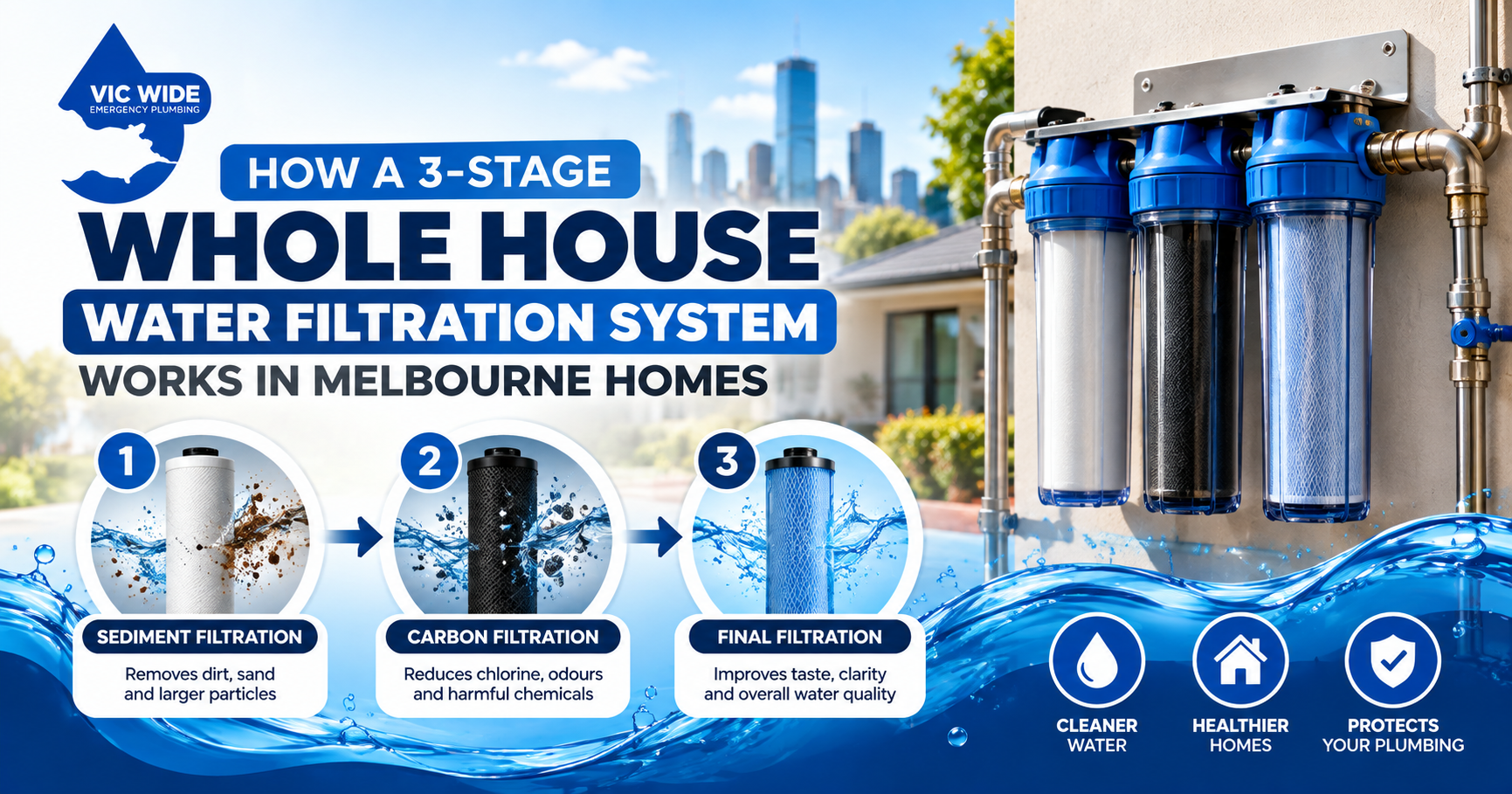 October Oct 2026How a 3-Stage Whole House Water Filtration System Works in Melbourne Homes
Melbourne’s tap water is generally safe to drink, but that doesn’t mean it’s perfect by the time it reaches your kitchen. Chlorine taste and smell, fine sediment from ageing pipes and the occasional cloudy flush after mains work are common complaints across Melbourne homes. A whole house water filtration system tackles these issues at the […]
Read More -
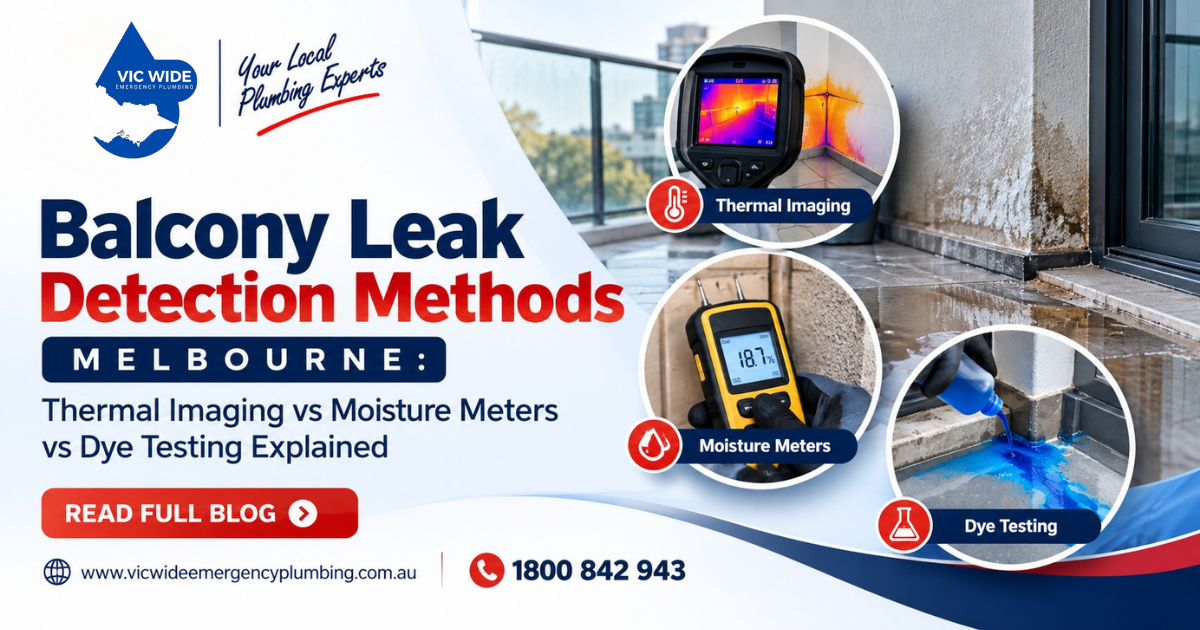 October Oct 2026Balcony Leak Detection Methods Melbourne: Thermal Imaging vs Moisture Meters vs Dye Testing
Balcony leaks can be difficult to identify, especially in Melbourne apartments, townhouses and multi-storey properties. Water can travel beneath tiles, through grout, membranes and concrete slabs before appearing as a damp patch somewhere else. This makes accurate balcony leak detection in Melbourne important. Instead of immediately removing tiles or damaging surfaces, professional leak detection methods […]
Read More -
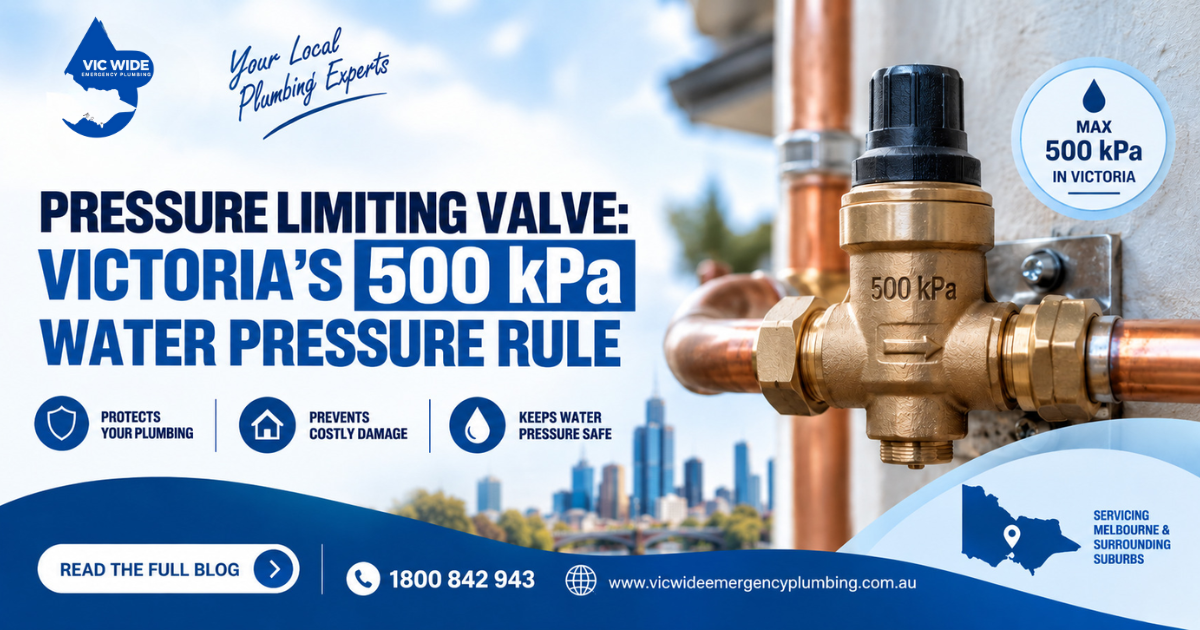 September Sep 2026Pressure Limiting Valve: Victoria’s 500 kPa Water Pressure Rule
If your taps bang when you turn them off, your plumbing fittings fail frequently, or your hot water system seems to require repairs earlier than expected, high mains water pressure could be part of the problem. In Victoria, plumbing standards place a 500 kPa maximum on static water pressure at outlets within a building, excluding […]
Read More