


vic wide services

Why Is My Hot Water Brown? Causes and Solutions for Melbourne Homes

  • Home Why Is My Hot Water Brown? Causes and Solutions for Melbourne Homes
September 15, 2026
Book Now
Vic Wide Emergency Plumber Team Working
drops-image
Hot Water Brown

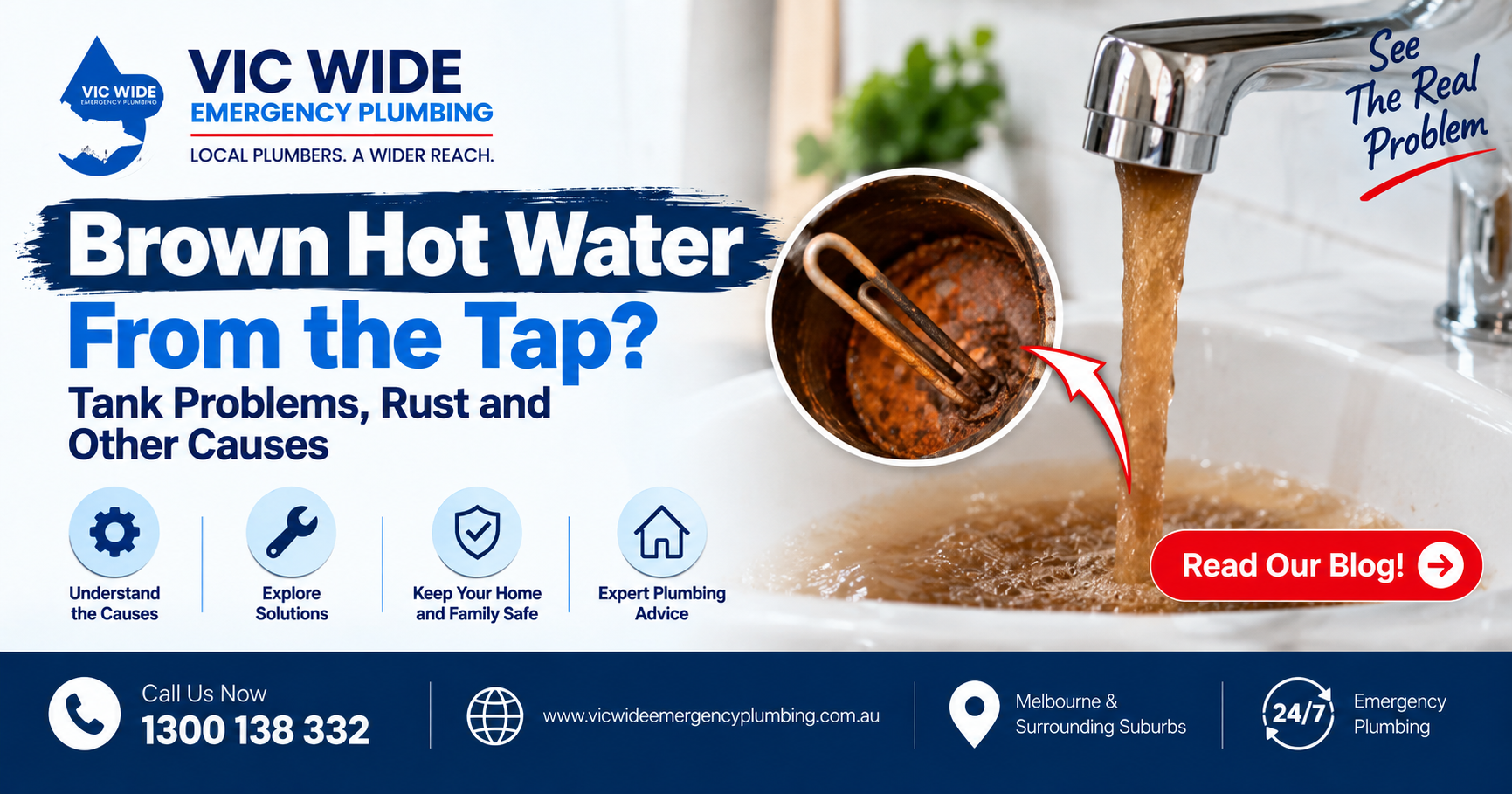
Turning on the tap and seeing brown water can be concerning, especially when you expect clean, clear hot water. If you are asking, “Why is my hot water brown?”, the issue may be connected to rust, sediment, corrosion or ageing components within your hot water system or plumbing.

Brown hot water is more common in older properties and systems that have not been serviced regularly. Although the discolouration may initially appear minor, it can indicate an underlying problem that may eventually lead to leaks, reduced performance or hot water system failure.

In this guide, we explain the common causes of brown water from hot taps, the warning signs to watch for and when to contact a licensed Melbourne plumber.

Is Brown Hot Water Dangerous?

Brown hot water should not be ignored. The discolouration may be caused by rust particles, sediment or corrosion inside the hot water system or connected pipework.

If your hot water is brown but your cold water is clear, the problem is often isolated to the hot water system rather than the main water supply. In some cases, the water may contain rust particles or sediment that have collected inside the tank.

Brown water can also stain:

  • Sinks
  • Showers
  • Bathtubs
  • Laundry fixtures
  • Clothing and other materials

Until the cause has been identified, it is best to avoid using discoloured hot water for drinking, cooking or bathing. A licensed plumber can inspect the system and determine whether the issue is minor or requires urgent attention.

Common Causes of Brown Water From the Hot Tap

Several plumbing problems can cause brown water to come from hot taps in Melbourne homes.

1. Rust Inside the Hot Water Tank

One of the most common causes of rusty hot water is corrosion inside a storage hot water tank.

Over time, steel components may begin to deteriorate, particularly in older systems. As rust develops, particles can mix with the water and create a brown or reddish appearance.

Severe internal corrosion may eventually cause the tank to leak or fail, making professional inspection important.

2. Sediment Buildup

Minerals and other particles can settle at the bottom of a hot water tank. Over time, this sediment may build up and become disturbed when the system operates.

Sediment can contribute to:

  • Brown or cloudy hot water
  • Reduced system efficiency
  • Unusual popping or banging noises
  • Increased wear on internal components
  • Restricted water flow

Regular servicing can help identify excessive sediment before it causes more serious problems.

3. A Deteriorating Anode Rod

Many storage hot water systems contain a sacrificial anode rod. Its purpose is to help protect the tank from corrosion.

As the anode rod wears down, the tank may become more vulnerable to rust. A deteriorating anode rod can therefore contribute to brown hot water, particularly when the cold water supply remains clear.

A plumber can inspect the system and determine whether the anode rod needs to be replaced.

4. Corroded Plumbing Pipes

Older Melbourne properties may contain ageing galvanised or metal plumbing pipes. These pipes can corrode internally and release rust particles into the water.

If brown water is coming from several hot taps throughout the property, corroded pipework may be contributing to the problem.

The solution may involve inspecting the pipework, identifying the affected sections and determining whether repairs or replacement are required.

5. Water Supply Disturbances

Water main works, maintenance or interruptions to the local water supply can sometimes cause temporary discolouration.

However, if the brown water only appears when using hot taps, the issue is more likely to be associated with the hot water system or internal plumbing rather than the mains supply.

If both hot and cold water are discoloured, contact your water provider or a licensed plumber for further advice.

6. Discolouration After a New Installation

Brown water may occasionally appear after a hot water system has been installed or plumbing work has been completed.

Possible causes include:

  • Installation debris
  • Mineral residue
  • Sediment being disturbed
  • Existing pipe corrosion
  • Debris within connected pipework

If the discolouration continues, the system should be inspected by a qualified plumber rather than assuming it will resolve on its own.

Why Is My Hot Water Brown but Cold Water Clear?

This is one of the most common questions homeowners ask.

When cold water is clear but hot water appears brown, the issue is usually linked to the hot water system or the pipes carrying heated water.

Possible causes include:

  • Rust inside the hot water tank
  • Sediment buildup
  • A worn anode rod
  • Corroded internal components
  • Rusty hot water pipework
  • A deteriorating storage tank

Because cold water generally bypasses the hot water tank, clear cold water can indicate that the problem is isolated to the hot water side of the plumbing system.

A professional inspection can help identify the exact source.

Why Has My Hot Water Suddenly Turned Brown?

If your hot water changes colour suddenly, it may indicate that an existing issue has become more serious.

Sudden brown hot water can be associated with:

  • Rust breaking away from inside the tank
  • Sediment being disturbed
  • Internal component failure
  • Recent plumbing or water supply works
  • Corrosion inside ageing pipes
  • A hot water system approaching the end of its service life

Pay close attention if the discolouration is accompanied by:

  • Unusual smells
  • Strange noises
  • Leaks
  • Fluctuating water temperature
  • Reduced water pressure
  • Increasingly frequent discolouration

These signs may indicate that the system requires professional attention.

Warning Signs Your Hot Water System May Be Failing

Brown water is not always the only indication of a problem. Other warning signs may include the following.

Strange Noises

Popping, banging or rumbling noises may be caused by sediment collecting inside the tank. These sounds should be assessed if they continue or become more noticeable.

Leaking Around the Unit

Water pooling around the hot water system may indicate corrosion, a damaged component, a pressure issue or a failing tank.

Inconsistent Water Temperature

If the water changes between hot and cold or does not reach the expected temperature, the system may have an internal fault.

Reduced Water Pressure

Rust, sediment or damaged pipework can restrict water flow and reduce hot water pressure.

Increasingly Frequent Brown Water

If brown water appears more often or becomes darker over time, it may indicate progressing corrosion or deterioration.

What Should You Do When Your Hot Water Is Brown?

If brown water is coming from your hot tap, avoid attempting to dismantle or repair the hot water system yourself.

Instead, you should:

Stop Using the Discoloured Hot Water

Avoid using the water for drinking, cooking, bathing or laundry until the cause has been assessed.

Check the Cold Water

Run a cold tap separately to see whether the cold water is clear. This may help determine whether the issue is isolated to the hot water system.

Look for Other Warning Signs

Check for leaks, unusual noises, changes in water pressure, inconsistent temperatures or signs of corrosion around the unit.

Contact a Licensed Plumber

A licensed plumber can inspect the hot water system, identify the source of the discolouration and recommend an appropriate repair or replacement solution.

Do not attempt to open the tank, adjust gas components or carry out electrical repairs yourself.

When Should You Call a Melbourne Plumber?

You should arrange a professional inspection if:

  • Brown hot water continues after a short period
  • The water has a metallic smell or taste
  • The hot water system is leaking
  • Rusty water keeps returning
  • The system is old or showing signs of deterioration
  • Water pressure suddenly decreases
  • The water temperature becomes inconsistent
  • Strange noises are coming from the unit
  • Brown water appears from several hot taps

Early attention may help identify the issue before it develops into a larger plumbing problem.

How Can Brown Hot Water Be Prevented?

Not every hot water issue can be prevented, but regular maintenance may help reduce the risk of corrosion, sediment buildup and premature system failure.

Arrange Routine Hot Water Servicing

Professional servicing can help identify worn components, sediment accumulation and early signs of corrosion.

Inspect the Anode Rod

For systems that use a sacrificial anode rod, checking its condition can help protect the storage tank from corrosion.

Replace Ageing Systems When Necessary

Older hot water systems are more likely to experience corrosion, leaks and declining performance. Replacing an outdated unit may improve reliability and efficiency.

Address Problems Early

Leaks, strange noises, poor water pressure and temperature fluctuations should be checked promptly rather than ignored.

Use Licensed Plumbing Professionals

Hot water systems should be installed, serviced and repaired by licensed professionals to support safe operation and compliance with Victorian plumbing requirements.

Hot Water Services in Melbourne

If your hot water is brown, the cause may be anything from sediment buildup to serious corrosion inside the tank or connected pipework.

Vic Wide Emergency Plumbing can assist homeowners and businesses across Melbourne and surrounding suburbs with hot water system inspections, repairs and replacement advice. Our plumbers can assess the issue and recommend a suitable solution based on the condition of your system.

Why Choose Vic Wide Emergency Plumbing?

When your hot water system is producing brown water, choosing an experienced plumbing team can help ensure the issue is properly investigated.

Vic Wide Emergency Plumbing offers:

  • Reliable plumbing services
  • Experienced and licensed plumbers
  • Hot water system inspections
  • Hot water repairs and replacement
  • Assistance with leaks and pressure problems
  • Residential and commercial plumbing services
  • Emergency plumbing support
  • Service across Melbourne and surrounding suburbs

Frequently Asked Questions

Why is my hot water brown but my cold water is clear?

This usually suggests that the issue is connected to the hot water system or hot water pipework. Common causes include tank corrosion, sediment buildup, a deteriorating anode rod or rusty internal components.

Can a new hot water system produce brown water?

Yes. Brown water may occasionally appear after installation due to debris, mineral residue or disturbed sediment. If the discolouration continues, a licensed plumber should inspect the system.

How can I stop my hot water from turning brown?

The solution depends on the cause. A plumber may recommend flushing, servicing, replacing a worn component, repairing corroded pipework or replacing the hot water system.

Why is only my hot water brown?

When only the hot water is discoloured, the issue is commonly associated with the hot water tank, internal components or hot water pipes rather than the main water supply.

Does brown hot water mean I need a new hot water system?

Not always. The system may only require servicing or a component replacement. However, persistent brown water in an older system may indicate serious internal corrosion and could mean replacement is the most practical option.

Can brown hot water damage my plumbing fixtures?

Rusty water can stain sinks, showers, bathtubs, laundry fixtures and other surfaces. Persistent discolouration should be professionally assessed to prevent the issue from becoming more serious.

Conclusion

If you are wondering, “Why is my hot water brown?”, the cause may be rust, sediment, a worn anode rod, corroded pipework or a deteriorating hot water tank.

Although the issue may appear minor at first, persistent brown water can be a warning sign of internal damage or an ageing system. Avoid using discoloured hot water until the cause has been assessed, and contact a licensed Melbourne plumber for professional advice.

Contact Vic Wide Emergency Plumbing

Vic Wide Emergency Plumbing
📞 1300 138 332
🌐 www.vicwideemergencyplumbing.com.au
✉️ info@vicwideemergencyplumbing.com.au
📍 Melbourne & Surrounding Suburbs
🚨 24/7 Emergency Plumbing