




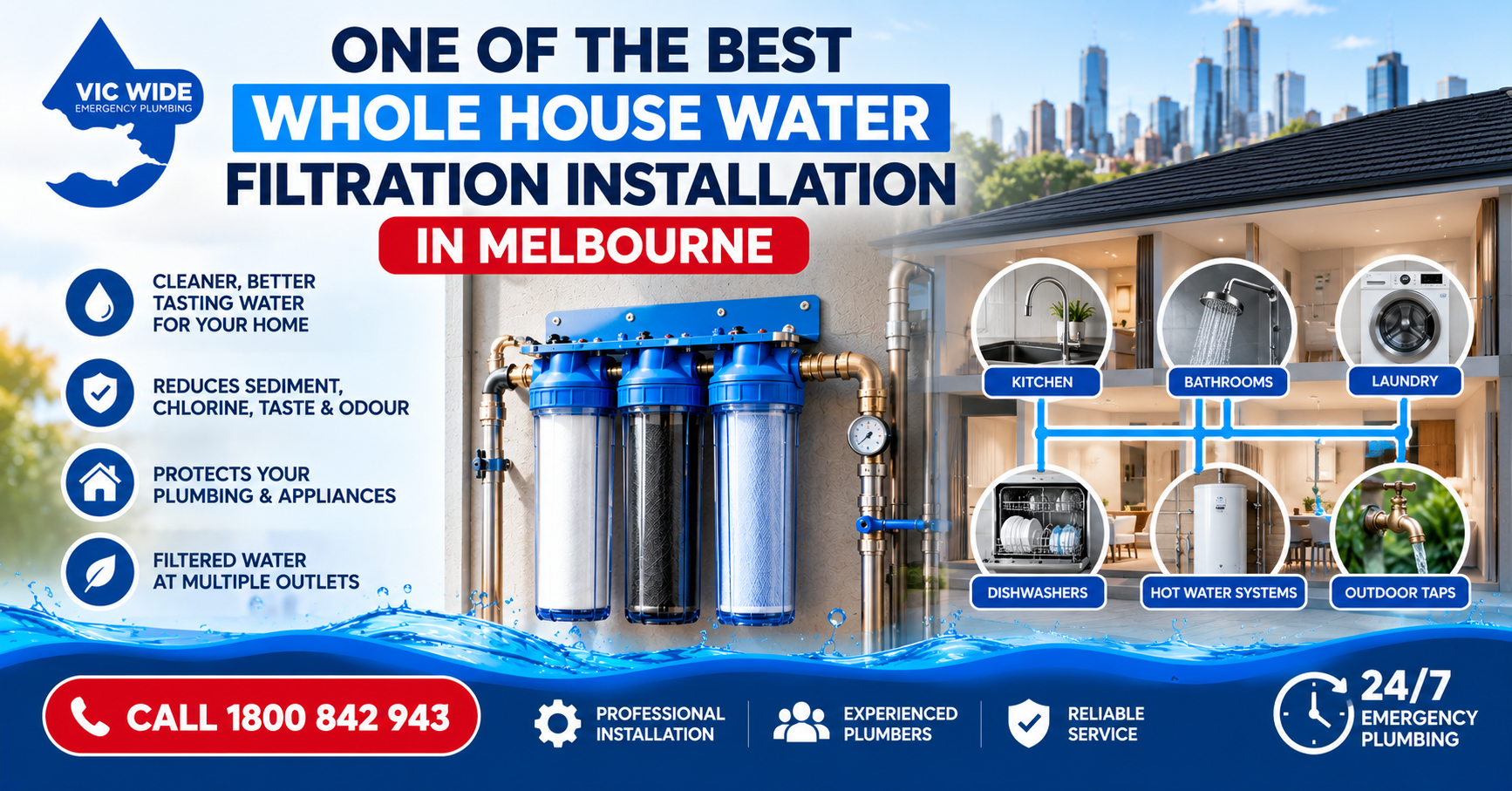
Clean water is an essential part of everyday life. From drinking and cooking to showering, washing clothes and cleaning, Melbourne households rely on water throughout the day. If you are looking to improve water quality across your home, a whole-house water filtration system may be worth considering.
Unlike an under-sink filter that typically treats water at one selected tap, a whole-house filtration system is installed on the incoming water supply. This allows water to pass through the filtration unit before reaching connected household outlets.
For homeowners considering whole-house water filtration installation in Melbourne, understanding how these systems work, their potential benefits and their installation requirements can help you make an informed decision.
What Is a Whole-House Water Filtration System?
A whole-house water filtration system treats incoming water before it is distributed through a property’s internal plumbing.
Depending on the system design, filtered water may be supplied to kitchen taps, bathroom basins, showers, laundry taps and other connected fixtures.
These systems are available in different configurations, including multi-stage filtration units. Each stage uses a particular filtration medium designed to target specific particles or substances.
The filtration results depend on the equipment selected, the incoming water conditions and the manufacturer’s specifications.
How Does a Three-Stage Water Filtration System Work?
A three-stage whole-house filtration system passes water through multiple filtration stages. The exact function of each stage depends on the product, but a typical arrangement may include the following.
Stage 1: Sediment Filtration
The first stage commonly targets suspended particles such as sand, dirt, rust and silt.
Reducing these particles may help limit sediment entering the household plumbing system. The filter’s effectiveness depends on its design and filtration rating.
Stage 2: Mineral-Particle Reduction
The second stage may target selected mineral particles or other substances, depending on the filtration media used.
Homeowners should check the manufacturer’s specifications to understand what this stage can reduce. Not every mineral filter softens hard water or prevents scale build-up.
Stage 3: Improving Taste and Odour
The final stage may use activated carbon or another filtration medium to help improve chlorine-related taste and odour.
The results vary depending on the filter technology, incoming water quality and cartridge condition.
Before choosing a filtration unit, confirm the purpose of each stage and review any documented performance claims.
Benefits of Installing Whole-House Water Filtration
The main advantage of whole-house filtration is that it can provide broader coverage than a filter installed at a single tap.
1. Filtration Across Multiple Household Outlets
When installed on the incoming water supply, a suitable system can treat water before it reaches connected outlets throughout the property.
Depending on the plumbing layout, this may include kitchen taps, bathroom fixtures, showers and laundry connections.
2. Reduced Sediment in Household Water
A filtration system designed to capture sediment may help reduce particles such as rust, sand and dirt entering connected plumbing.
The level of reduction depends on the system’s specifications and the condition of the incoming water.
3. Potential Improvement in Taste and Odour
Certain filtration media, including suitable activated carbon filters, can help reduce chlorine-related taste and odour.
Results depend on the selected product and its operating conditions.
4. A Convenient Whole-Home Approach
Instead of relying only on a filter attached to one kitchen tap, homeowners can consider a system designed to serve multiple connected outlets.
This may be useful for households that want broader filtration coverage, provided the equipment is suitable for their plumbing arrangement and water requirements.
5. Consideration for Water-Using Appliances
Some homeowners choose filtration to reduce selected particles before water reaches washing machines, dishwashers and other connected equipment.
However, filtration does not guarantee that appliances will remain free from scale or mechanical faults. Water hardness, appliance design and maintenance also affect performance.
Whole-House vs Under-Sink Water Filtration
Choosing between these options depends on where you want filtered water.
| Feature | Whole-house filtration | Under-sink filtration |
|---|---|---|
| Installation location | Main incoming water supply | Usually beneath the kitchen sink |
| Water coverage | Multiple connected outlets | Typically one selected outlet |
| Common purpose | Broader household filtration | Drinking and cooking water |
| Installation planning | May require assessment of main plumbing | Usually more localised |
| Maintenance | Access to central filter unit | Access inside the sink cabinet |
| Best suited to | Households seeking wider filtration coverage | Households focusing on a particular tap |
Some properties may benefit from using both systems, particularly when the household wants broader filtration and additional treatment for drinking water. However, a combined setup is not necessary for every home.
What Should Melbourne Homeowners Consider Before Installation?
Before selecting a whole-house filtration system, assess the property’s plumbing and the household’s water-quality requirements.
Water Quality and Filtration Requirements
Consider whether your main concern is sediment, chlorine-related taste and odour, mineral content or another specific substance.
Different filters target different substances. If you have a particular concern about your water quality, appropriate water testing may help guide your choice.
Available Installation Space
The system needs sufficient space near the incoming water supply. The location should also allow safe access for inspection, cartridge replacement and servicing.
Plumbing Configuration
The installer should assess the existing pipework, water entry point and outlets that need to be served. Apartments, townhouses and properties with shared plumbing may require additional checks.
Maintenance Requirements
Filter cartridges need to be replaced according to the manufacturer’s recommendations. Consider the ongoing cost and availability of replacement cartridges before purchasing a system.
Installation Costs and Inclusions
When comparing quotes, check the equipment supplied, installation work, any required plumbing modifications, maintenance expectations and documented warranty conditions.
Using an appropriately licensed plumber where required under Victorian regulations helps ensure that plumbing work is carried out in accordance with applicable requirements.
Why Choose Vic Wide Emergency Plumbing?
Vic Wide Emergency Plumbing provides plumbing services across Melbourne and surrounding suburbs.
If you are considering a whole-house water filtration installation, understanding your property’s plumbing layout and the system’s filtration capabilities is an important first step.
Before proceeding, consider the number of outlets you want to serve, the available installation space and the type of filtration your household requires.
Vic Wide Emergency Plumbing can discuss your plumbing requirements and help you understand the considerations involved in selecting a suitable installation.
Summary: Is Whole-House Water Filtration Right for Your Home?
A whole-house water filtration system may be a suitable option for Melbourne homeowners who want water filtered before it reaches multiple connected household outlets.
A three-stage system may combine sediment filtration with other treatment stages designed for specific particles or substances. However, the actual results depend on the equipment, incoming water conditions and maintenance.
Before making a decision, compare whole-house and under-sink options, review the manufacturer’s specifications and consider installation and ongoing servicing costs.
If you are exploring water filtration options for your Melbourne property, contact Vic Wide Emergency Plumbing to discuss your plumbing requirements.
Frequently Asked Questions
1. What is a whole-house water filtration system?
It is a filtration unit connected to the incoming water supply that treats water before it travels to connected household outlets. The coverage depends on the plumbing layout and installation design.
2. Is whole-house water filtration worth installing in Melbourne?
It may be worthwhile for households seeking filtration across multiple connected outlets. Suitability depends on your water-quality concerns, the selected system, installation costs and maintenance requirements.
3. What does a three-stage water filtration system remove?
The answer depends on the product. A system may include stages designed to capture sediment, target selected substances and improve chlorine-related taste or odour. Always check the manufacturer’s specifications.
4. Does whole-house filtration provide filtered water to showers and bathrooms?
It can when those outlets are connected downstream of the filtration unit. Confirm the intended coverage with the installer before proceeding.
5. Can whole-house filtration prevent limescale?
Not necessarily. Sediment and mineral-particle filters do not automatically soften hard water or prevent scale formation. Check whether the selected system is specifically designed and documented to address water hardness.
6. How often should water filter cartridges be replaced?
Replacement intervals vary according to the filter design, water quality, household consumption and manufacturer’s recommendations. Follow the instructions supplied with your system.
7. Can I use a whole-house filter and an under-sink filter together?
Yes. Some households combine both systems to meet different filtration needs. Whether this is necessary depends on the products selected and the household’s water-quality requirements.
8. Does whole-house water filtration qualify for a Victorian Energy Upgrades rebate?
Do not assume that water filtration equipment qualifies for a Victorian Energy Upgrades (VEU) rebate. Check the current official program requirements before relying on any rebate claim.
Contact Vic Wide Emergency Plumbing
Need plumbing assistance in Melbourne or surrounding suburbs? Get in touch with Vic Wide Emergency Plumbing to discuss your requirements.
Phone: 1800 842 943
Email: info@vicwideemergencyplumbing.com.au
Website: https://www.vicwideemergencyplumbing.com.au/
Service Area: Melbourne and surrounding suburbs
Emergency Plumbing: Available 24/7
Contact the team to discuss your plumbing needs and explore the options that may suit your property.
-
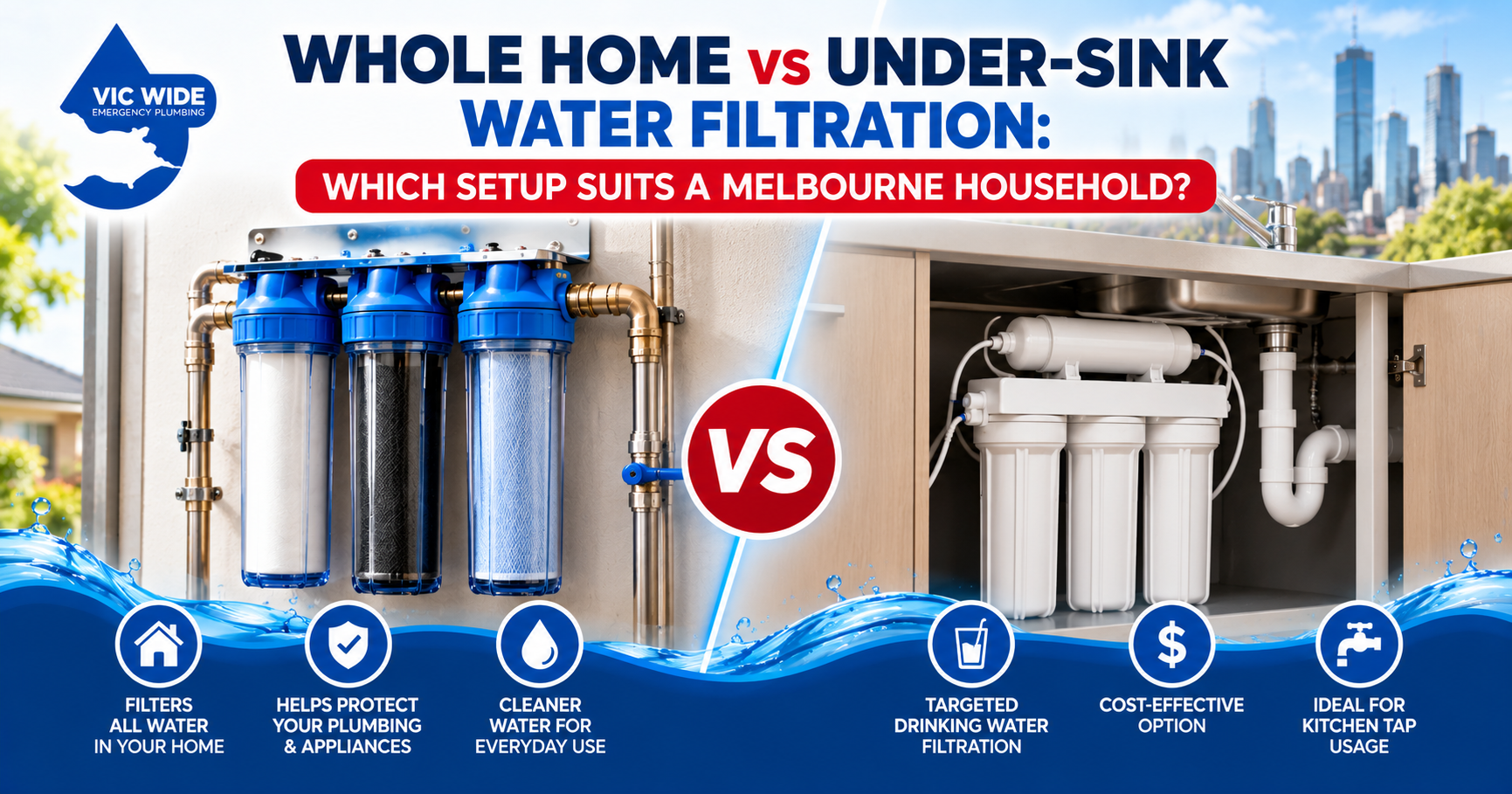 October Oct 2026Whole Home vs Under-Sink Water Filtration: Which Setup Suits a Melbourne Household?
Choosing a water filtration system involves more than selecting the right filter. You also need to consider where the water will be filtered, which household outlets require treatment, and how much maintenance the system will need. For Melbourne homeowners, two common options are whole-home water filtration and under-sink water filtration. Both can be useful, but […]
Read More -
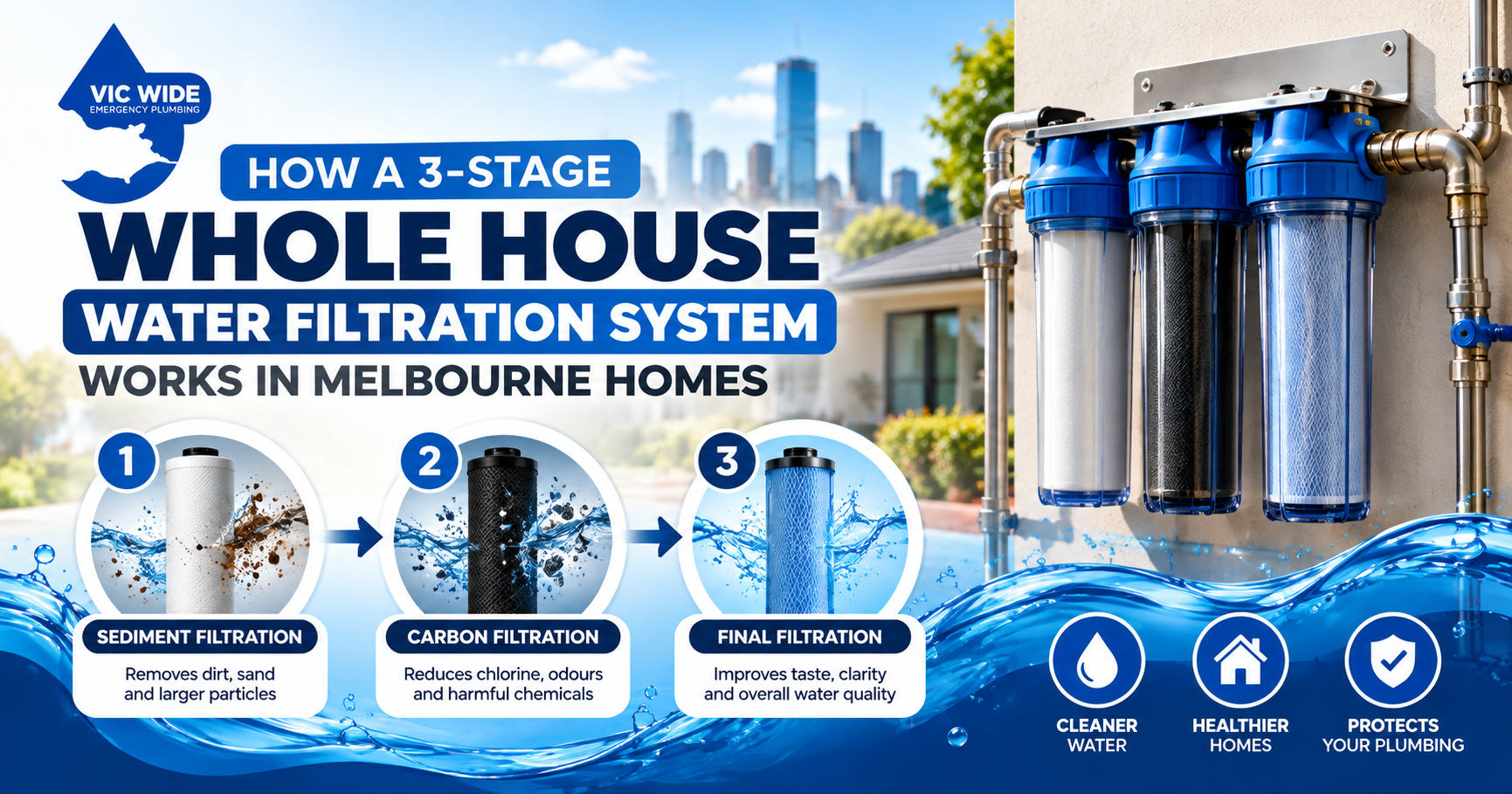 October Oct 2026How a 3-Stage Whole House Water Filtration System Works in Melbourne Homes
Melbourne’s tap water is generally safe to drink, but that doesn’t mean it’s perfect by the time it reaches your kitchen. Chlorine taste and smell, fine sediment from ageing pipes and the occasional cloudy flush after mains work are common complaints across Melbourne homes. A whole house water filtration system tackles these issues at the […]
Read More -
 October Oct 2026Common Plumbing Problems Requiring a Plumber in Melbourne
Plumbing problems can occur unexpectedly and quickly disrupt your daily routine. From leaking pipes and blocked drains to hot water failures and low water pressure, even a minor issue can become more serious if it is left unresolved. For homeowners, landlords and business owners, knowing when to contact a professional plumber can help prevent further […]
Read More