



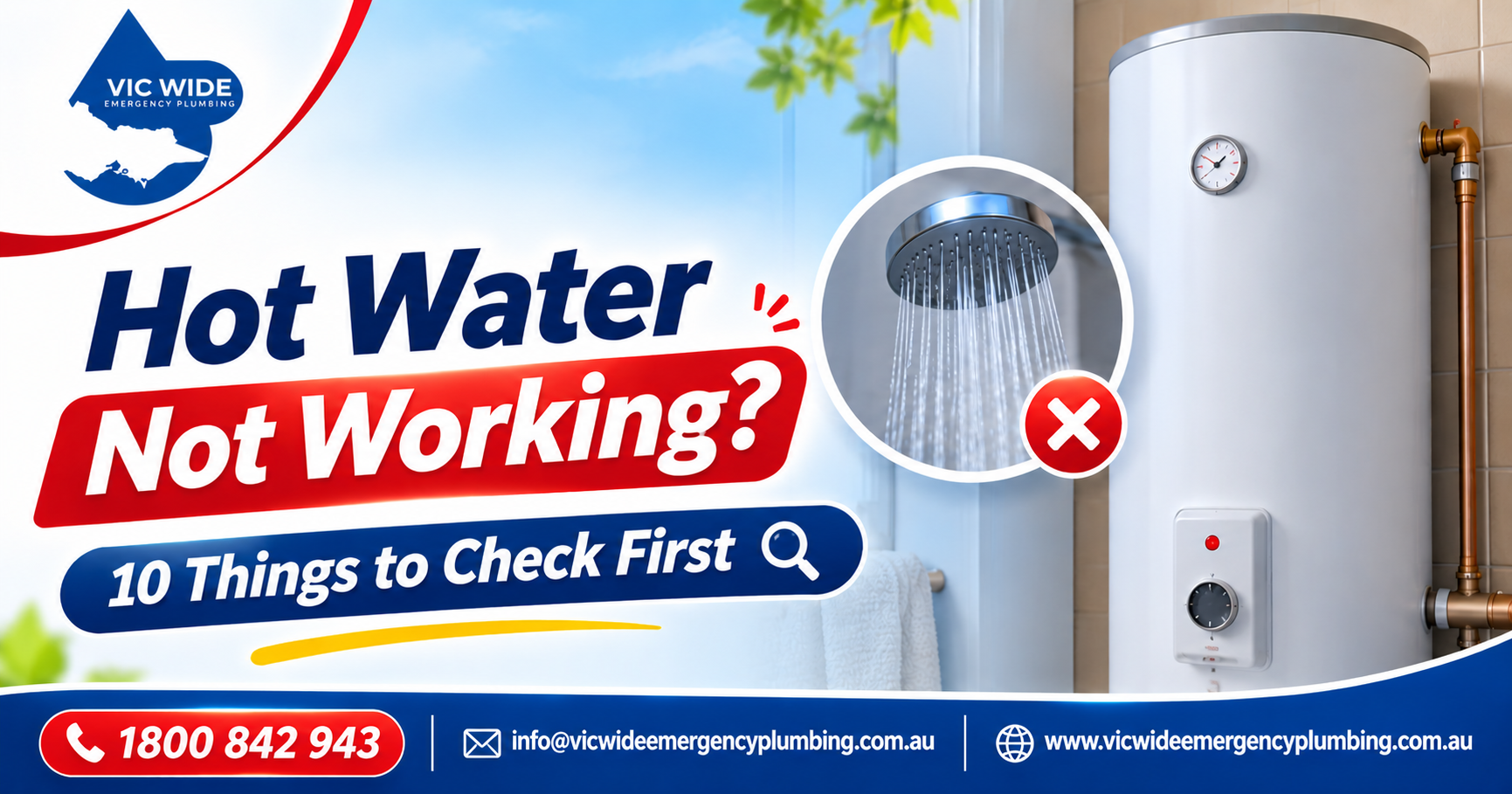
There’s nothing more frustrating than turning on the shower and discovering there’s no hot water. Whether you’re dealing with a cold shower, inconsistent water temperature or a hot water system that has stopped working completely, identifying the possible cause is the first step towards getting it fixed.
A hot water problem can affect everyday activities such as showering, washing dishes, cleaning and running a business. Fortunately, some issues can be identified through simple external checks before arranging a professional inspection.
Australian properties use different types of hot water systems, including electric storage, gas, solar and heat-pump units. Each system operates differently, so the reason for a breakdown can vary.
Before assuming your water heater needs replacing, here are 10 things to check when your hot water stops working.
Why Has My Hot Water Stopped Working?
Hot water systems can stop operating for several reasons. Common causes include interrupted electricity, a tripped safety switch, gas supply problems, faulty thermostats, damaged heating elements, water leaks or worn internal components.
The symptoms you experience can help narrow down the possible problem.
Common Hot Water Problems and What They May Mean
| Possible cause | Common symptoms | Recommended action |
|---|---|---|
| Power interruption | Water remains cold | Check the external power supply |
| Tripped circuit breaker | Heater stops operating | Inspect the switchboard safely |
| Gas supply issue | Heater won’t ignite | Check whether gas is available |
| Pilot light failure | Gas system stops heating | Follow manufacturer guidance |
| Thermostat fault | Water is too hot or too cold | Arrange professional inspection |
| Failed heating element | Electric heater produces cold water | Contact a qualified professional |
| Water supply issue | Reduced or no hot-water flow | Check for visible plumbing problems |
| Leaking pipe or valve | Moisture or water around the unit | Arrange plumbing assistance |
| Sediment or scale | Reduced heating performance | Consider professional servicing |
| Ageing equipment | Repeated breakdowns | Assess repair or replacement |
Important: Avoid repeatedly resetting a tripped circuit breaker or attempting to dismantle your water heater. Recurring electrical problems may indicate a fault that requires professional attention.
1. Check Whether Your Hot Water System Has Power
If your property has an electric storage or heat-pump hot water system, an interruption to the electricity supply may explain why the water is no longer heating.
A power outage, switched-off isolator or electrical fault can prevent the system from operating normally.
Things to look for:
- A recent power outage in your area
- A tripped circuit breaker
- An external hot water isolator that has been switched off
- Other electrical appliances that are not working
- A blank display or control panel
You can check whether the household has power and whether the accessible switchboard indicates a tripped circuit. If a breaker trips again after being reset, leave it off and arrange an inspection by a licensed electrician.
Electrical components inside a hot water system should never be opened or repaired as a DIY task.
2. Look for a Tripped Circuit Breaker or Safety Switch
A tripped circuit breaker or safety switch can interrupt the electricity supply to your hot water unit.
Check your switchboard for a switch that appears to be in a different position from the others. If you can safely identify the relevant circuit, follow normal household procedures for a single reset.
What to do:
- Check whether the hot water circuit appears to have tripped.
- Only attempt a reset if it is safe to do so.
- Allow the system time to heat the water.
- If the switch trips again, leave it off.
- Contact a qualified professional to investigate the cause.
Repeatedly resetting the circuit is not a solution. The underlying problem could involve wiring, a heating element, an isolator or another electrical component.
3. Check for a Gas Supply or Pilot Light Problem
If you use a gas hot water system, an interruption to the gas supply or an ignition problem may prevent the unit from heating water.
Gas storage and continuous-flow systems rely on gas burners and ignition components to operate.
Possible warning signs include:
- Cold water despite normal water flow
- The gas appliance failing to ignite
- A pilot light that has gone out
- An error message on the controller
- Other gas appliances not operating
Only follow the manufacturer’s instructions for checking or relighting a pilot light if your particular model permits it.
If you notice a gas smell, do not attempt to relight the appliance or investigate the fault yourself. Move away from the area and follow the appropriate gas emergency procedures.
Gas hot water installations and repairs should be handled by a licensed gasfitter.
4. Find Out Whether the Heating Components Are Working
Your hot water system may have power or gas but still fail to produce heated water. In this situation, a faulty heating component or internal control may be responsible.
Electric storage systems use heating elements, while gas systems rely on burners and associated controls.
Signs of a possible heating fault include:
- Water remains completely cold.
- Water becomes slightly warm but never reaches the expected temperature.
- Hot water runs out much sooner than usual.
- The system takes longer to heat water.
- The unit makes unusual noises.
- The system switches off unexpectedly.
Do not remove covers or attempt to access the internal components yourself.
A professional inspection can help establish whether an individual component needs repair or whether the system has a more significant problem.
5. Could a Faulty Thermostat Be Affecting the Temperature?
The thermostat regulates the temperature of the water inside a hot water system. If it develops a fault, the water may become too cold, excessively hot or inconsistent.
Common signs include:
- Water temperature changing unexpectedly
- Hot water that never reaches the desired temperature
- Water becoming excessively hot
- The heater operating continuously
- The system switching on and off irregularly
Temperature settings need to balance water hygiene with scald prevention. Australian guidance generally recommends storing hot water at 60°C to help control Legionella bacteria, while temperature control at outlets is important to reduce scalding risks. Applicable requirements vary by system and installation.
Do not adjust internal thermostat settings without understanding the manufacturer’s requirements. A qualified professional can inspect the thermostat and check whether the system is operating safely.
6. Check Whether Water Is Reaching the System Properly
Sometimes the hot water problem is related to the plumbing supply rather than the heating unit.
A restricted water supply, closed isolation valve, plumbing fault or leak may affect how water reaches the system.
Start by checking whether your cold-water taps are working normally.
Look for these possible signs:
- Lower-than-usual water pressure
- Reduced water flow from taps
- Recently completed plumbing work
- Visible leaking pipes
- Water collecting around the hot water unit
- Changes in water supply throughout the property
If both hot and cold water pressure have dropped, the issue may involve the property’s water supply or plumbing network.
A plumber can investigate whether a restriction, damaged pipe or faulty connection is affecting the system.
7. Inspect the Area for Signs of a Water Leak
Water around your hot water system should never be ignored. A leaking connection, pipe, tank or valve may affect the unit’s performance and potentially cause property damage.
Without touching hot or pressurised components, look around the outside of the system for visible signs of moisture.
Potential warning signs include:
- Water collecting underneath the tank
- Dripping connections or pipes
- Moisture around fittings
- Rust or corrosion
- Damp flooring or nearby walls
- Unusual water discharge
Some systems are designed to discharge water through specific valves under certain conditions, so not every drip indicates the same fault.
If you notice a significant leak, turn off the water supply if it is safe to do so and contact a plumber. Keep away from wet electrical equipment and do not attempt repairs yourself.
8. Has Your Household Used All the Stored Hot Water?
Not every loss of hot water means something has broken.
Storage hot water systems contain a limited amount of heated water. If several people shower one after another or multiple appliances use hot water, the available supply may run out.
This can also happen in businesses such as restaurants, accommodation facilities and commercial premises where hot water demand is higher.
Consider these questions:
- Have several people used the shower recently?
- Has hot water been used more frequently than usual?
- Are commercial appliances consuming large quantities of hot water?
- Is the current tank capacity suitable for your property?
- Does the hot water return after the system has had enough time to reheat?
If the issue occurs occasionally after heavy use, the system may simply need time to recover.
However, if you regularly run out of hot water despite normal usage, the unit may require servicing or a capacity assessment.
9. Look for Signs of Ageing, Sediment or Scale Build-Up
Over time, hot water systems can become less efficient due to ageing components, corrosion, sediment or mineral scale.
The likelihood and type of build-up can depend on the system design and local water conditions.
Signs that your system may need attention include:
- Repeated breakdowns
- Unusual noises during operation
- Visible rust or corrosion
- Longer heating times
- Inconsistent water temperatures
- Increasing energy consumption
- Frequent hot water shortages
- Repeated leaks
If your unit is older and requires frequent repairs, it may be worth comparing the cost of continued maintenance with the cost of replacing it.
A plumber can assess the condition of the system and explain which option is more practical.
10. Know When It’s Time to Call a Professional Plumber
Basic external checks can help identify some common hot water problems. However, if your system continues to produce cold water or shows signs of damage, professional assistance is the safest next step.
Contact a qualified professional if you notice:
- A gas smell near the appliance
- Significant water leakage
- A burning smell from electrical equipment
- Repeatedly tripping circuit breakers
- Water that becomes dangerously hot
- Persistent loss of hot water
- Unusual operating noises
- Visible corrosion or damaged components
- Repeated system shutdowns
Avoid attempting these repairs yourself:
- Opening electrical panels
- Repairing gas connections or burners
- Removing heating elements
- Bypassing safety devices
- Altering electrical wiring
- Dismantling pressurised components
- Working on electrical equipment in wet conditions
The right professional may be a licensed plumber, electrician or gasfitter, depending on the problem and the type of hot water system.
Should You Repair or Replace Your Hot Water System?
Once the cause of the problem has been identified, the next decision is whether repairing the existing unit or installing a replacement makes more sense.
A minor fault in a relatively new system may only require a component repair. However, an older unit with recurring breakdowns, major corrosion or a leaking tank may be better suited to replacement.
| Your situation | Option worth considering |
|---|---|
| One isolated component failure | Repair |
| Newer system with a minor fault | Repair |
| Frequent breakdowns | Replacement assessment |
| Significant tank corrosion | Replacement assessment |
| Major tank leak | Replacement assessment |
| High operating costs | Energy-efficiency assessment |
| Increased household or business demand | Capacity assessment |
Are Heat Pump Hot Water Systems Worth Considering?
If you are replacing an older electric hot water system, a heat-pump model may be worth considering.
Heat-pump systems transfer heat from the surrounding air to heat water and can use considerably less electricity than conventional electric resistance systems.
The best option depends on your property, available installation space, household or business demand, electricity supply and budget.
Before choosing a replacement, compare the purchase price, installation requirements, running costs, warranty and any available rebates or incentives.
How Can You Prevent Future Hot Water Problems?
Regular attention to your hot water system can help identify developing problems before they turn into unexpected breakdowns.
Here are some practical ways to look after your unit:
- Arrange inspections and servicing when recommended by the manufacturer.
- Check the surrounding area for visible leaks.
- Pay attention to unusual noises.
- Look out for rust or corrosion.
- Monitor changes in water temperature.
- Keep the area around the unit accessible.
- Arrange repairs when you first notice warning signs.
- Review system capacity if your household or business demand increases.
- Consider energy efficiency when planning a replacement.
Choosing the correct system size and arranging suitable maintenance can help support reliable hot water performance.
Frequently Asked Questions About Hot Water Problems
1. Why is my hot water not working, but my cold water is?
If cold water is working normally but hot water is unavailable, the problem may involve the heater’s power supply, gas supply, thermostat, heating element, ignition system or an internal component. A qualified professional can identify the exact cause.
2. Why has my hot water suddenly stopped working?
A sudden loss of hot water can be caused by a power interruption, tripped circuit breaker, gas supply problem, faulty heating component, thermostat issue or water leak. Start with safe external checks and arrange professional assistance if the problem continues.
3. How long does it take for hot water to come back?
The recovery time depends on the system’s type, capacity and condition. Storage systems need time to heat the water in the tank, whereas continuous-flow systems heat water as it passes through the unit.
4. Is it safe to reset my hot water system?
A single reset of an accessible switch or breaker may be appropriate if it can be done safely. However, if the breaker trips again, leave it off and arrange an inspection rather than repeatedly resetting it.
5. Should I repair or replace my hot water system?
Repair may be suitable when the fault is isolated and the system is otherwise in good condition. Replacement may be more practical when the unit has frequent breakdowns, significant corrosion, major leaks or poor efficiency.
6. Can a plumber repair a hot water system?
Yes. A qualified plumber can diagnose and repair many hot water and plumbing faults. Depending on the issue, the work may also require a licensed electrician or gasfitter.
7. Why does my hot water run out so quickly?
Possible reasons include high water usage, insufficient tank capacity, a heating problem, thermostat issues or sediment build-up. If the problem keeps happening, arrange a system assessment.
8. What should I do if my hot water system is leaking?
If you notice a significant leak, turn off the water supply if it is safe to do so and contact a plumber. Avoid touching wet electrical equipment or attempting to repair hot or pressurised components.
9. Can a faulty thermostat make water too hot?
Yes. A malfunctioning thermostat or temperature-control component may cause water to become excessively hot or fluctuate unexpectedly. Have the system inspected rather than adjusting internal settings yourself.
10. How can I prevent my hot water system from breaking down?
Follow the manufacturer’s maintenance recommendations, monitor the system for leaks and unusual noises, watch for corrosion and arrange professional attention when performance changes.
Need Help With a Hot Water System That Isn’t Working?
Losing hot water can be inconvenient, especially when the problem happens unexpectedly. While checking the external power supply, gas availability, water flow and visible leaks may help identify a possible cause, internal system faults should always be assessed by an appropriately qualified professional.
Vic Wide Emergency Plumbing provides plumbing assistance across Melbourne and surrounding suburbs. Whether you are experiencing a hot water problem, leaking pipe, blocked drain or another plumbing issue, our team can help assess the situation and recommend the appropriate next steps.
Contact Vic Wide Emergency Plumbing:
- Phone: 1800 842 943
- Email: info@vicwideemergencyplumbing.com.au
- Website: https://vicwideemergencyplumbing.com.au/
Vic Wide Emergency Plumbing – Reliable Plumbing Support Across Melbourne.
-
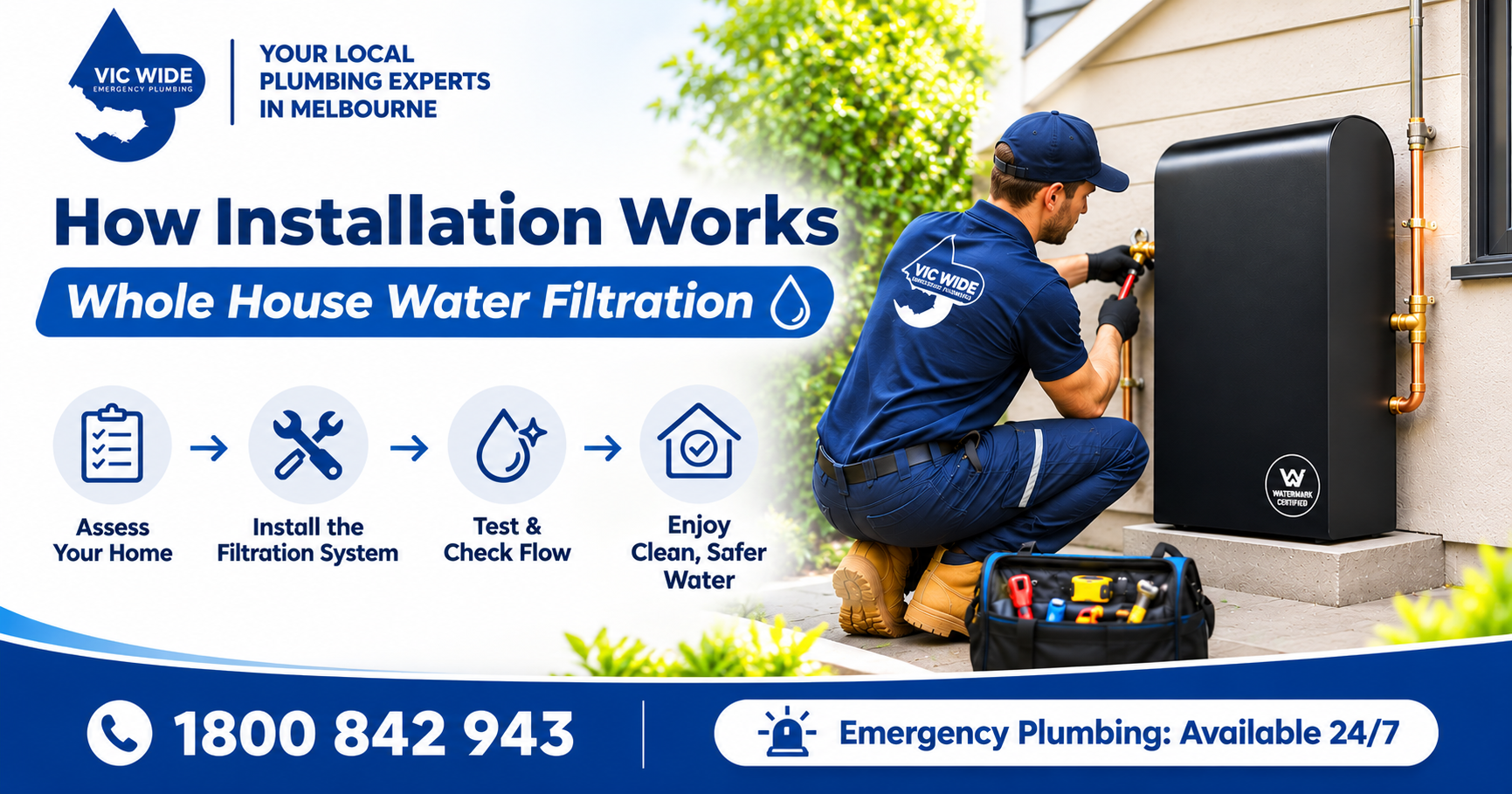 November Nov 2026How Does Whole-Home Water Filtration Installation Work? A Step-by-Step Guide
Having clean, filtered water throughout your home can make everyday activities more convenient. From drinking and cooking to showering and washing, a whole-home water filtration system is designed to treat water as it enters your property, helping provide filtered water from multiple taps. But how does the installation process work? Does a plumber need to […]
Read More -
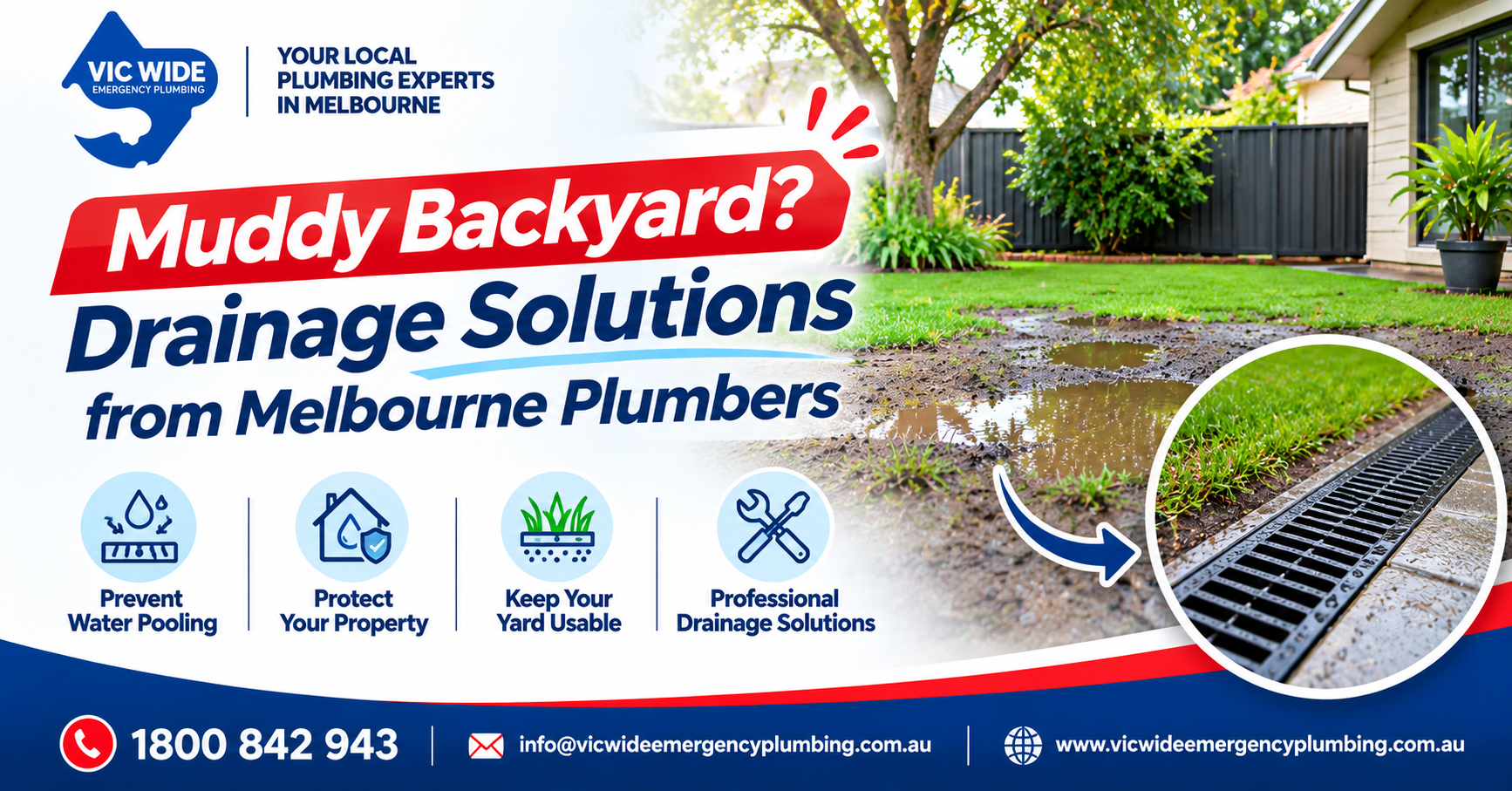 November Nov 2026Muddy Backyard? Drainage Solutions from Melbourne Plumbers
A beautiful backyard is something every homeowner wants to enjoy throughout the year. Whether you have a lawn for the family, a garden to relax in or an outdoor entertaining area, a dry and healthy yard makes a big difference. But what happens when your backyard becomes muddy and waterlogged every time it rains? Standing […]
Read More -
 November Nov 2026Eco-Friendly Plumbing Solutions: Save Water and Money at Home
With rising water costs and growing awareness of environmental sustainability, more Australian homeowners are looking for practical ways to reduce water consumption without compromising everyday comfort. One of the easiest ways to make your property more sustainable is by choosing eco-friendly plumbing solutions. From fixing leaking taps and installing water-efficient fixtures to exploring greywater systems […]
Read More