




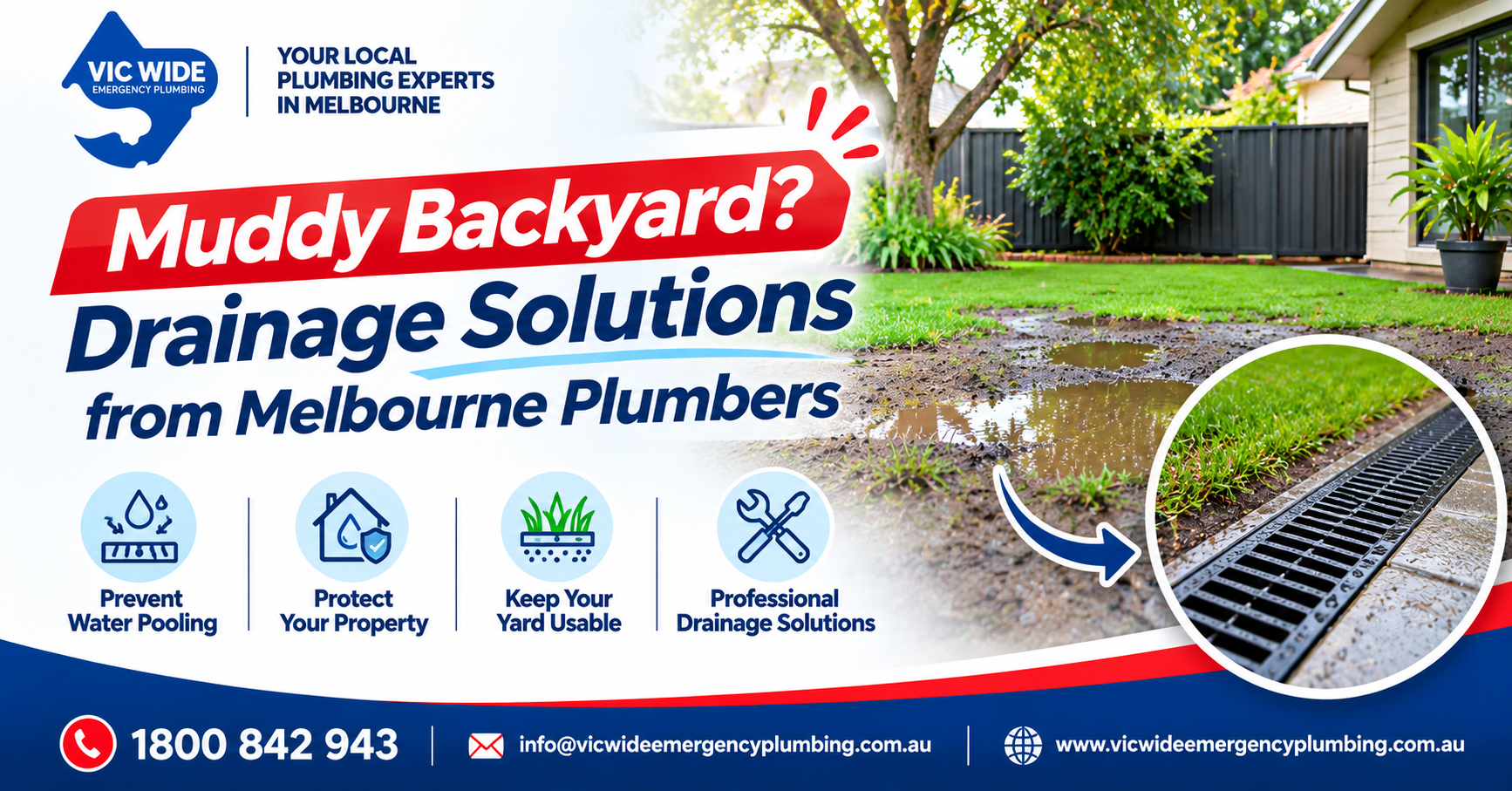
A beautiful backyard is something every homeowner wants to enjoy throughout the year. Whether you have a lawn for the family, a garden to relax in or an outdoor entertaining area, a dry and healthy yard makes a big difference.
But what happens when your backyard becomes muddy and waterlogged every time it rains?
Standing water, soggy grass and muddy patches can make outdoor spaces difficult to use, particularly during Melbourne’s wetter months. Beyond affecting the appearance of your property, ongoing drainage problems can also damage plants, affect soil conditions and potentially contribute to moisture problems around your home’s foundations.
The good news is that there are practical ways to manage excess water and improve backyard drainage.
At Vic Wide Emergency Plumbing, we understand how frustrating a constantly muddy backyard can be. Our plumbing and drainage expertise can help identify the cause of water accumulation and determine suitable drainage solutions for your property.
Whether you have a small garden or a large backyard, choosing the right drainage system can help create a healthier, drier and more usable outdoor space.
Why Does Your Backyard Stay Muddy?
One of the most common reasons for a permanently soggy backyard is poor drainage. When rainwater cannot flow away or soak into the ground effectively, it collects on the surface, leaving sections of your garden wet and muddy.
Several factors can contribute to this problem.
1. Poor ground slope
The natural slope of your yard plays an important role in how rainwater moves. If the ground is flat or slopes towards your home, water may collect in low-lying areas instead of draining away.
2. Heavy clay soil
Some Melbourne properties have clay-heavy soil, which absorbs water slowly. After rainfall, this can leave the ground saturated for extended periods.
3. Compacted soil
Regular foot traffic, vehicles and landscaping activities can compact the soil. This reduces the space available for water to move through the ground.
4. Blocked or inadequate drainage
Blocked stormwater pipes, poorly positioned drains or an undersized drainage system can prevent rainwater from flowing away efficiently.
5. Excessive surface runoff
Water flowing from roofs, driveways, patios and neighbouring areas can accumulate in your backyard if there is no suitable drainage path.
Identifying the underlying cause is essential before choosing a drainage solution. In some cases, improving the ground slope may be enough, while other properties may require a professionally installed drainage system.
French Drains: A Practical Solution for Waterlogged Gardens
A French drain is a popular option for managing excess groundwater and reducing water accumulation in gardens and lawns.
It generally consists of a trench containing gravel or another suitable drainage aggregate, with a perforated pipe installed to collect and redirect water towards an appropriate discharge point.
As water enters the gravel-filled trench, it flows into the perforated pipe and is carried away from the problem area.
Benefits of French Drains
- Improved garden conditions: Helps reduce excess moisture around lawns, plants and garden beds.
- Reduced water pooling: Collects groundwater before it builds up on the surface.
- Protection around the home: Can help manage water near foundations when correctly designed and positioned.
- More usable outdoor space: Helps reduce muddy areas and improve the condition of your backyard.
French drains can be particularly useful where water collects below the ground or along specific sections of a property. However, the system needs a suitable outlet and correct installation to work effectively.
Dry Well Systems: Managing Excess Rainwater Underground
A dry well is another drainage option for properties experiencing recurring water accumulation.
Unlike a French drain, which collects and transports water through a pipe, a dry well temporarily stores collected water underground and allows it to gradually soak into the surrounding soil.
A typical dry well is created by excavating a suitable area and installing a structure or chamber surrounded by permeable drainage material. Rainwater is directed into the system, where it can disperse into the surrounding ground.
Advantages of Dry Well Systems
- Reduces surface water: Helps manage rainwater that would otherwise collect in low-lying areas.
- Uses underground space: Keeps the drainage system largely out of sight.
- Supports groundwater infiltration: Allows suitable collected rainwater to gradually enter the surrounding soil.
- Can be a long-term option: When properly designed for the property’s soil and groundwater conditions, a dry well can provide ongoing drainage support.
Dry wells are not suitable for every property. Soil permeability, groundwater levels, available space and local drainage requirements must be considered before installation.
Trench Drains and Swales: Suitable for Sloped or Uneven Backyards
If your backyard has uneven ground or experiences water runoff from higher areas, trench drains and swales may be worth considering.
Trench Drains
Trench drains are narrow channels installed at ground level to collect surface water and direct it towards a suitable drainage outlet.
They are commonly used along driveways, patios, paved areas and sections of the yard where rainwater tends to accumulate.
Key benefits include:
- Collecting surface water efficiently.
- Redirecting runoff away from problem areas.
- Helping prevent water from accumulating near outdoor structures.
- Providing a practical drainage option for paved and landscaped spaces.
Trench drains are available in different materials and designs. Regular cleaning is important to prevent leaves, dirt and other debris from blocking the channel.
Swales
A swale is a shallow, landscaped channel designed to guide rainwater across a property towards a suitable drainage or infiltration area.
Unlike conventional underground drainage pipes, swales can become an attractive part of your garden design.
You can use river stones, native plants and carefully selected landscaping to create a natural creek-bed appearance.
Benefits of swales include:
- Managing surface water runoff.
- Slowing down the movement of rainwater.
- Supporting water infiltration where soil conditions allow.
- Adding an attractive landscaping feature to your backyard.
Swales work particularly well where the property’s natural slope can be used to guide water safely away from buildings and other vulnerable areas.
Rain Gardens: Turn Excess Water into a Garden Feature
Instead of treating every wet area as a problem, you may be able to incorporate rainwater management into your landscaping with a rain garden.
A rain garden is a shallow, planted depression designed to collect rainwater temporarily and allow it to gradually soak into the ground.
It generally uses suitable soil mixtures and carefully selected plants that can tolerate changing moisture conditions.
How Rain Gardens Help with Drainage
1. Water absorption
The basin-shaped design collects rainwater and gives it time to infiltrate into the surrounding soil.
2. Better water management
Rain gardens can help reduce surface runoff by temporarily holding excess rainwater after rainfall.
3. Healthier plant growth
Suitable plants can tolerate wet and dry conditions, helping create a more resilient garden environment.
4. Improved soil conditions
As water gradually moves through suitable soil, the garden can support better growing conditions compared with areas that remain continuously waterlogged.
Are Rain Gardens Suitable for Every Backyard?
Not necessarily. Rain gardens are generally more appropriate for managing moderate surface runoff where the soil and site conditions allow water to infiltrate.
They may not solve severe waterlogging caused by high groundwater levels, very poorly draining clay soil or other underlying drainage problems.
A professional assessment can help determine whether a rain garden is suitable or whether an additional drainage system is required.
Which Backyard Drainage Solution Is Right for Your Property?
Every property has different drainage requirements. The best solution depends on the cause of water accumulation, soil conditions, ground levels and the amount of rainwater that needs to be managed.
| Drainage solution | Best suited for |
|---|---|
| French drain | Collecting and redirecting groundwater |
| Dry well | Temporarily storing and dispersing suitable rainwater underground |
| Trench drain | Collecting surface water from paved or low-lying areas |
| Swale | Guiding surface runoff across sloped or landscaped areas |
| Rain garden | Managing moderate runoff through temporary collection and infiltration |
A combination of drainage methods may sometimes be required to achieve the best outcome.
Why You Should Address Backyard Drainage Problems Early
Ignoring a constantly muddy backyard can lead to more than an untidy lawn.
Ongoing water accumulation may contribute to:
- Damage to grass, plants and garden beds.
- Soil erosion and unstable ground conditions.
- Increased mosquito breeding opportunities where standing water persists.
- Moisture issues around outdoor structures.
- Water entering areas close to your home’s foundations.
- Reduced use of your outdoor entertaining and recreational spaces.
Addressing the cause early can help prevent the problem from becoming more complicated and expensive to manage.
How Vic Wide Emergency Plumbing Can Help
A waterlogged backyard is not something you have to put up with every winter. The right drainage solution can make your outdoor space more comfortable, functional and easier to maintain.
At Vic Wide Emergency Plumbing, we provide plumbing and drainage services across Metro Melbourne. Our team can help assess drainage concerns, identify potential causes of water accumulation and recommend suitable solutions for your property.
Whether you are dealing with persistent water pooling, blocked drainage or other plumbing concerns, getting professional advice is an important first step.
Our aim is to help you manage drainage problems effectively and protect your property from avoidable water-related issues.
Frequently Asked Questions
1. Why does my backyard become muddy every time it rains?
Poor drainage, compacted soil, clay-heavy ground, inadequate slope and blocked stormwater drains can all contribute to water collecting in your backyard.
2. What is the best drainage solution for a waterlogged backyard?
It depends on the cause of the problem. French drains, dry wells, trench drains, swales and rain gardens are possible options. A site assessment can help determine the most suitable approach.
3. Are French drains effective in clay soil?
French drains can help collect and redirect water in properties with clay soil. However, because clay absorbs water slowly, the system needs appropriate design and a suitable discharge point.
4. How does a dry well work?
A dry well collects rainwater underground and allows it to gradually infiltrate into the surrounding soil. Its suitability depends on soil permeability, groundwater levels and available space.
5. What is the difference between a French drain and a trench drain?
A French drain is generally installed below ground to collect groundwater, while a trench drain is usually a surface-level channel designed to collect and redirect surface runoff.
6. Can landscaping solve backyard drainage problems?
Landscaping changes such as improving ground levels, creating swales or installing a rain garden may help manage surface water. However, serious drainage problems may require additional underground drainage work.
7. Can poor backyard drainage affect my home’s foundations?
Yes. Persistent water accumulation close to a building can contribute to moisture-related problems and may affect foundation conditions over time. Water should be directed away from the property appropriately.
8. How can I prevent water from pooling in my backyard?
Keep drainage outlets clear, maintain gutters and downpipes, address compacted soil and ensure the ground directs water away from your home. Persistent pooling should be professionally assessed.
9. Do rain gardens work in Melbourne?
Rain gardens can be suitable for some Melbourne properties, depending on soil conditions, rainfall runoff, available space and site drainage requirements. They are not suitable for every waterlogging problem.
10. When should I call a professional plumber for backyard drainage?
Contact a professional if water remains in your backyard long after rainfall, drains frequently overflow, water collects near your home or you notice recurring drainage problems.
Summary: Enjoy a Drier and Healthier Backyard
A muddy backyard can affect your property’s appearance, damage garden areas and make it difficult to enjoy your outdoor space. The first step towards fixing the problem is understanding why water is collecting and choosing a drainage solution that suits your property.
French drains, dry wells, trench drains, swales and rain gardens can all play a role in managing excess water when properly designed and installed.
If your backyard in Melbourne is constantly waterlogged, Vic Wide Emergency Plumbing can help you explore suitable plumbing and drainage solutions.
Don’t let a muddy backyard take away your outdoor space. Get professional assistance and take the first step towards a drier, more usable garden.
Contact Vic Wide Emergency Plumbing
- Phone: 1800 842 943
- Email: info@vicwideemergencyplumbing.com.au
- Website: www.vicwideemergencyplumbing.com.au
- Service Area: Metro Melbourne
- Emergency Plumbing: Available 24/7
Get in touch with Vic Wide Emergency Plumbing for professional plumbing and drainage assistance in Melbourne.
-
 November Nov 2026Eco-Friendly Plumbing Solutions: Save Water and Money at Home
With rising water costs and growing awareness of environmental sustainability, more Australian homeowners are looking for practical ways to reduce water consumption without compromising everyday comfort. One of the easiest ways to make your property more sustainable is by choosing eco-friendly plumbing solutions. From fixing leaking taps and installing water-efficient fixtures to exploring greywater systems […]
Read More -
 November Nov 2026Greywater Systems: A Homeowner’s Guide to Reusing Water Efficiently
Water conservation is becoming increasingly important for Australian households. With changing weather conditions, rising water costs and growing awareness of sustainability, many homeowners are exploring smarter ways to reduce water consumption. One solution gaining attention is a greywater system. These systems collect and reuse wastewater from selected household activities, helping reduce the amount of fresh […]
Read More -
 November Nov 2026Signs of a Blocked Drain: 7 Warning Signs Every Melbourne Homeowner Should Know
A blocked drain is one of the most common plumbing problems faced by homeowners. It can start with something as simple as water draining slowly from your kitchen sink, but if left unattended, the blockage may become more serious and lead to unpleasant odours, overflowing water or damage to your plumbing system. Recognising the early […]
Read More