



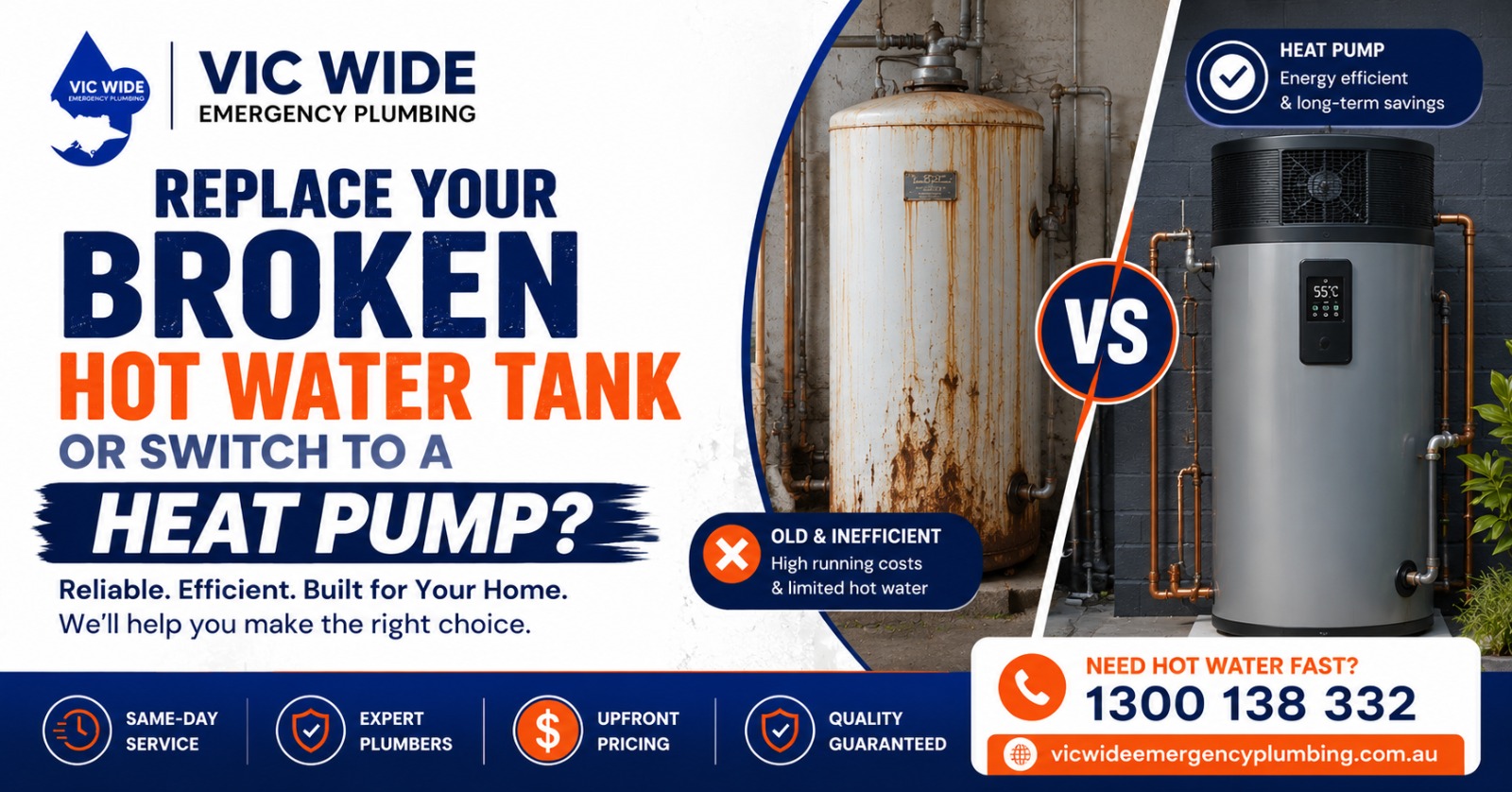
A failing hot water system can quickly turn from a minor inconvenience into a major household problem. If your hot water tank has stopped working, is leaking, producing rusty water, or struggling to keep up with daily demand, you may be asking an important question:
Should you replace your existing hot water tank like-for-like, or upgrade to a modern heat pump system?
For homeowners across Melbourne, Victoria, and nearby suburbs including Bendigo, Ballarat, Geelong, Somerville, Moe, and surrounding regions, making the right choice can help improve energy efficiency, reduce running costs, and provide reliable hot water for years to come.
At Vic Wide Emergency Plumbing, experienced plumbers help homeowners assess their current hot water systems and determine the most suitable replacement option based on household needs, budget, and long-term savings goals.
Signs Your Hot Water Tank May Need Replacement
Many traditional hot water tanks gradually lose efficiency as they age. While some issues can be repaired, certain warning signs often indicate that replacement is the better investment.
Common signs include:
- Rusty or discoloured hot water
- Water leaking from the tank
- Inconsistent water temperatures
- Rising energy bills
- Strange noises coming from the system
- Reduced hot water capacity
- Frequent repairs and breakdowns
- A system more than 10 years old
Ignoring these warning signs can lead to unexpected failures and potential water damage.
Option 1: Replace Your Existing Hot Water Tank
For some households, replacing an old hot water unit with a similar model may be the most practical solution.
Benefits of Like-for-Like Replacement
Lower Initial Cost
Traditional gas or electric storage systems generally have a lower upfront purchase and installation cost compared to heat pump systems.
Faster Installation
Replacing an existing unit with a similar model often requires fewer plumbing modifications, resulting in a quicker installation process.
Familiar Performance
Many homeowners prefer a system that operates similarly to their previous unit, especially when their household hot water needs remain unchanged.
Suitable for Certain Properties
Some homes may have space limitations or installation requirements that make a direct replacement the most practical option.
Option 2: Upgrade to a Heat Pump Hot Water System
Heat pump technology has become increasingly popular throughout Victoria as homeowners look for energy-efficient alternatives.
Unlike traditional electric water heaters that generate heat directly, heat pumps transfer heat from the surrounding air to heat water, making them significantly more energy efficient.
Advantages of Heat Pumps
Lower Running Costs
Heat pumps use substantially less electricity compared to conventional electric storage systems, helping reduce ongoing energy expenses.
Energy Efficiency
Modern heat pumps are designed to deliver reliable hot water while consuming less energy, making them an environmentally friendly choice.
Long-Term Savings
Although the upfront investment may be higher, reduced operating costs can provide savings over the life of the system.
Consistent Hot Water Supply
Modern heat pump systems are designed to meet the needs of busy households while maintaining efficient performance.
Future-Focused Technology
As energy efficiency standards continue to evolve, many homeowners view heat pumps as a smart long-term upgrade.
Which Option Is Right for Your Home?
The best solution depends on several factors:
Household Size
Larger families often benefit from systems that can efficiently handle higher hot water demand.
Budget
While a traditional replacement may cost less initially, a heat pump can offer long-term operational savings.
Property Layout
Available installation space and existing plumbing infrastructure can influence system selection.
Energy Goals
Homeowners looking to reduce energy consumption often consider heat pump technology as part of their broader sustainability goals.
Age of Existing System
If your current system is nearing the end of its lifespan, upgrading may provide better long-term value.
Professional Hot Water Solutions Across Victoria
Whether you need an emergency replacement or are planning an energy-efficient upgrade, professional advice can help ensure the right system is chosen for your home.
Vic Wide Emergency Plumbing assists homeowners throughout:
- Melbourne
- Geelong
- Ballarat
- Bendigo
- Somerville
- Moe
- Mornington Peninsula
- Western Suburbs
- Northern Suburbs
- Eastern Suburbs
- South Eastern Suburbs
- Regional Victoria
Their experienced team can assess your existing system, explain available options, and provide reliable hot water solutions tailored to your household requirements.
Why Professional Installation Matters
Installing a hot water system involves more than simply connecting pipes.
Professional installation helps ensure:
- Correct system sizing
- Safe plumbing connections
- Compliance with Victorian regulations
- Optimal energy efficiency
- Reliable long-term performance
- Manufacturer warranty protection
A properly installed system can provide years of dependable hot water while helping minimise future maintenance issues.
Conclusion
When a hot water tank fails, homeowners have an important decision to make. Replacing a traditional unit may offer a lower upfront cost and quicker installation, while upgrading to a heat pump can provide improved energy efficiency and potential long-term savings.
The right choice depends on your home’s hot water usage, budget, energy goals, and existing plumbing setup.
If you’re dealing with a failing hot water system in Melbourne, Geelong, Ballarat, Bendigo, Somerville, Moe, or surrounding Victorian suburbs, professional guidance can help you select the most suitable solution and restore reliable hot water as quickly as possible.
Frequently Asked Questions
1. How long does a hot water tank usually last?
Most traditional hot water storage systems typically last between 8 and 15 years, depending on usage, water quality, and maintenance.
2. Are heat pumps more efficient than electric hot water systems?
Yes. Heat pump systems generally use significantly less electricity than conventional electric storage water heaters, making them a popular energy-efficient option.
3. Can a leaking hot water tank be repaired?
Minor issues may sometimes be repairable, but a leaking tank often indicates internal deterioration that may require replacement.
4. How do I know if a heat pump is suitable for my property?
A professional assessment can determine whether your property has the appropriate space, ventilation, and conditions for efficient heat pump operation.
5. Should I repair or replace my old hot water system?
If your system is older, frequently breaking down, or becoming inefficient, replacement may be more cost-effective than ongoing repairs.
-
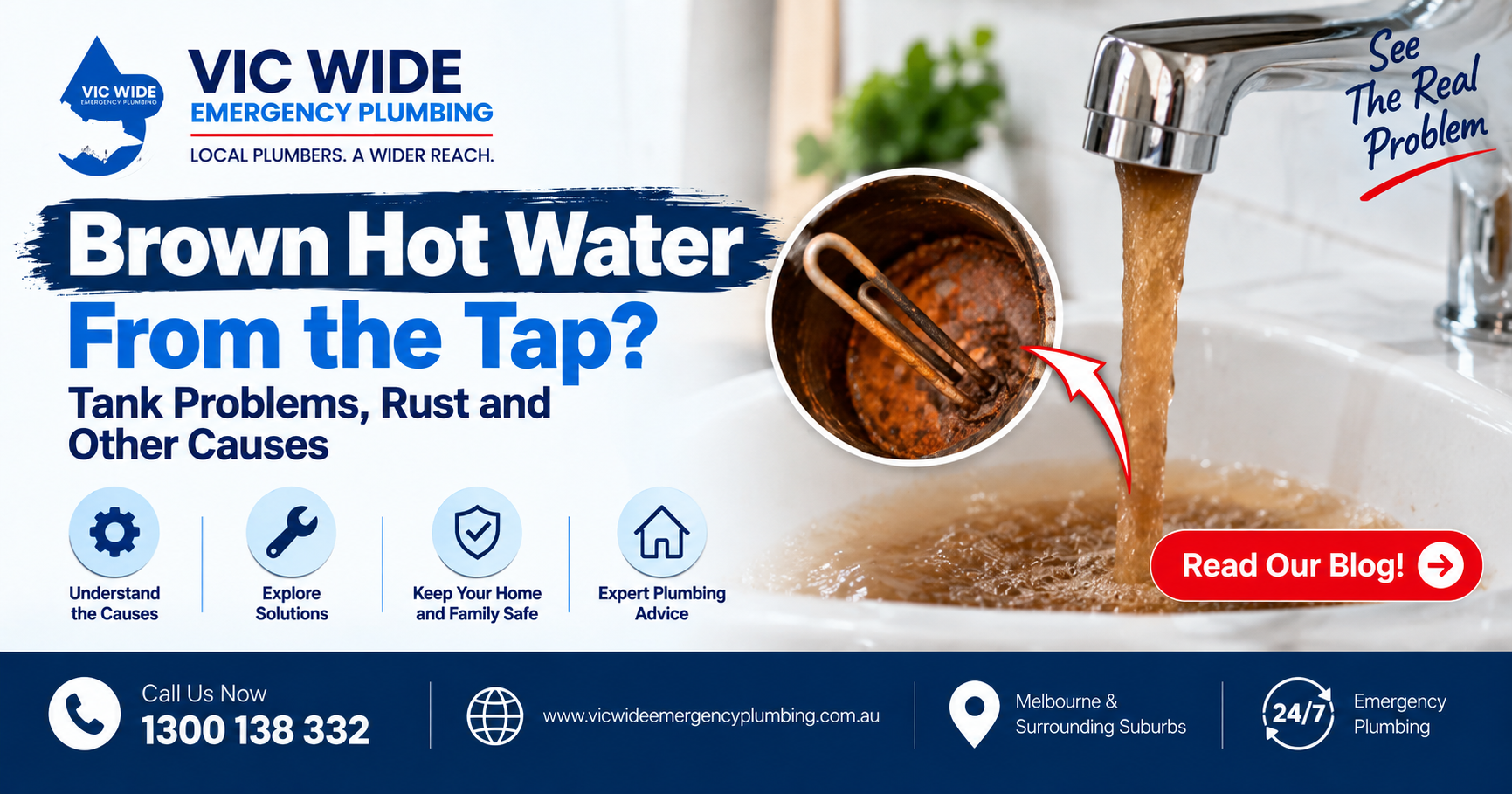 September Sep 2026Why Is My Hot Water Brown? Causes and Solutions for Melbourne Homes
Turning on the tap and seeing brown water can be concerning, especially when you expect clean, clear hot water. If you are asking, “Why is my hot water brown?”, the issue may be connected to rust, sediment, corrosion or ageing components within your hot water system or plumbing. Brown hot water is more common in […]
Read More -
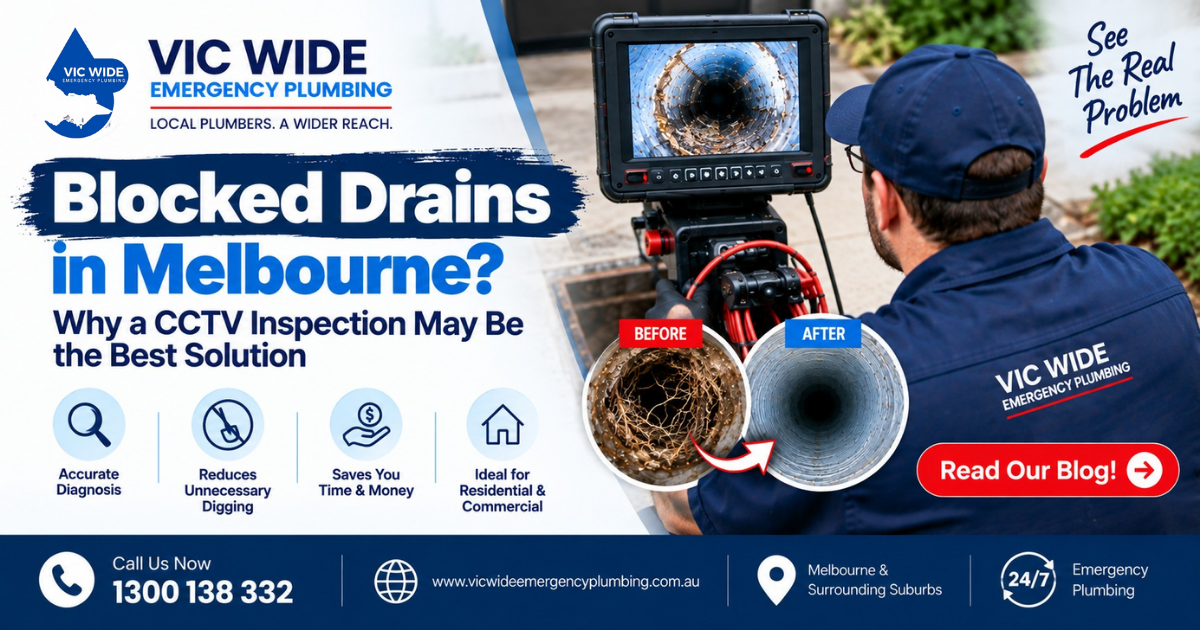 September Sep 2026Blocked Drains in Melbourne? Why a CCTV Inspection May Be the Best Solution
Blocked drains are a common plumbing problem in Melbourne homes and businesses. While a plunger or drain cleaner may provide temporary relief, recurring blockages often indicate a deeper issue that cannot be identified from the surface. A CCTV drain inspection uses a specialised camera to examine the inside of drainage pipes. This technology helps plumbers […]
Read More -
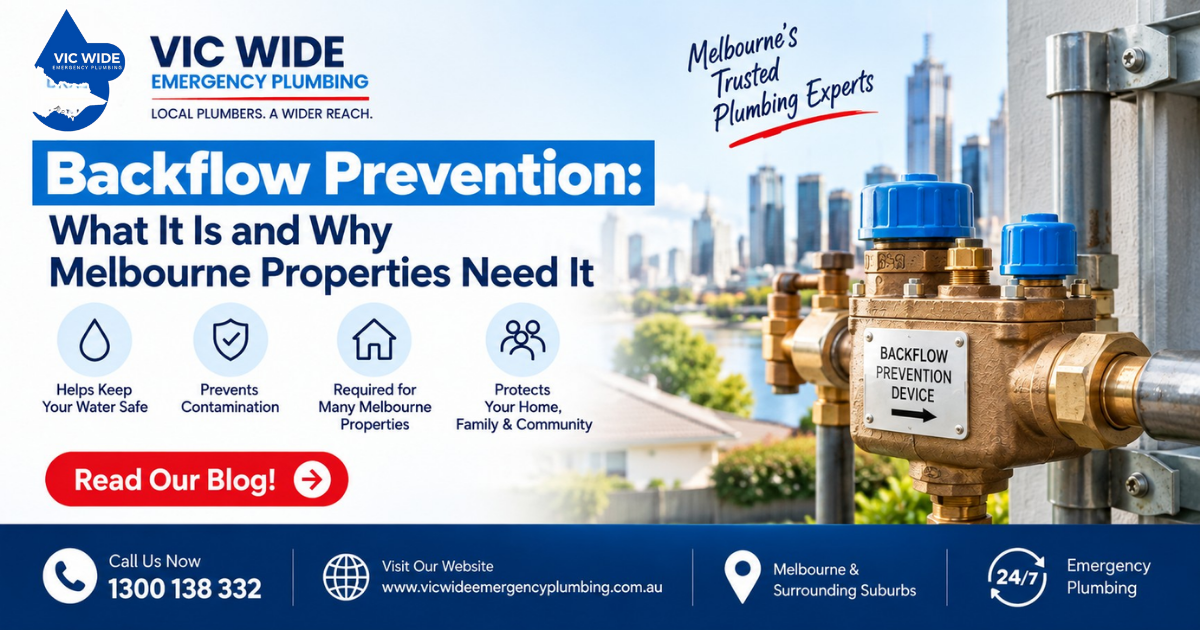 September Sep 2026Backflow Prevention: What It Is and Why Melbourne Properties Need It
Water is essential for every home, business and commercial property. However, if contaminated water flows backwards into the clean water supply, it can create serious health and safety risks. This is known as backflow, and backflow prevention devices are designed to help stop it from happening. For Melbourne property owners, understanding backflow prevention is important […]
Read More