



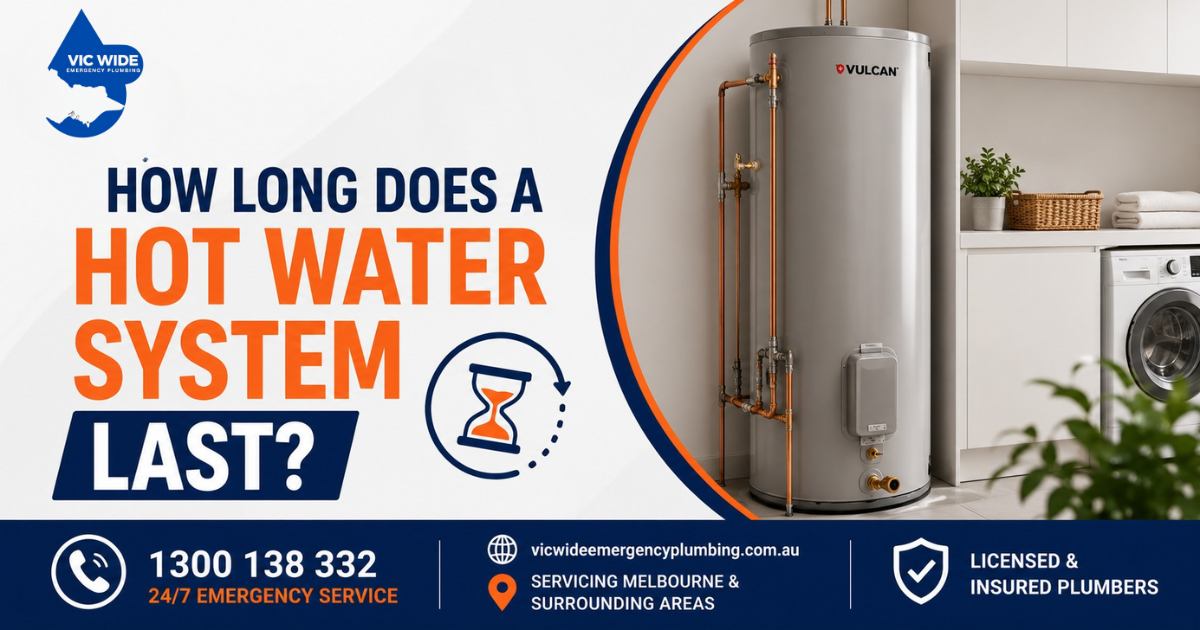
A reliable hot water system is one of the most important appliances in any home. Whether you’re taking a warm shower on a cold Melbourne morning, washing dishes, or doing laundry, you rely on your system every single day. But like every household appliance, hot water systems have a limited lifespan.
One of the most common questions homeowners ask is:
“How long does a hot water system last?”
The answer depends on several factors, including the type of system, maintenance, water quality, installation quality, and usage habits.
At Vic Wide Emergency Plumbing, we help Melbourne homeowners install, repair, maintain, and replace hot water systems throughout Melbourne and surrounding suburbs. This comprehensive guide explains everything you need to know about the lifespan of different hot water systems, signs of failure, maintenance tips, and when it’s time for a replacement.
Table of Contents
- Average Lifespan of Hot Water Systems
- Lifespan by Hot Water System Type
- Factors That Affect Hot Water System Life
- Signs Your Hot Water System Is Failing
- Repair or Replace?
- How to Extend the Life of Your Hot Water System
- Why Professional Installation Matters
- Why Melbourne Water Quality Matters
- Choosing the Right Replacement System
- Why Choose Vic Wide Emergency Plumbing
- Frequently Asked Questions
- Final Thoughts
Average Lifespan of a Hot Water System
On average, a residential hot water system lasts:
| Hot Water System Type | Average Lifespan |
|---|---|
| Electric Storage Tank | 8–12 Years |
| Gas Storage Tank | 8–12 Years |
| Continuous Flow Gas | 15–20 Years |
| Heat Pump System | 12–20 Years |
| Solar Hot Water | 15–20+ Years |
With regular servicing and professional maintenance, many systems exceed these averages.
Electric Hot Water Systems
Electric storage systems remain one of Australia’s most common choices because they are affordable and easy to install.
Expected Lifespan
8–12 years
Electric systems usually fail due to:
- Heating element wear
- Thermostat failure
- Internal corrosion
- Tank rust
- Sediment build-up
If your electric hot water system is over 10 years old and requires frequent repairs, replacement is often more cost-effective.
Gas Hot Water Systems
Gas systems heat water much faster than electric systems and generally have lower running costs.
Average Lifespan
8–15 years
Common issues include:
- Burner problems
- Gas valve failure
- Pilot light issues
- Heat exchanger wear
- Corrosion
Annual servicing significantly extends the lifespan.
Continuous Flow (Tankless) Systems
Continuous flow systems only heat water when needed.
Because they don’t continuously store hot water, they generally last much longer.
Expected Lifespan
15–20 years
Benefits include:
- Endless hot water
- Higher efficiency
- Lower energy bills
- Compact size
- Reduced maintenance
Heat Pump Hot Water Systems
Heat pump systems are becoming increasingly popular throughout Melbourne due to energy savings and government rebates.
Expected Lifespan
12–20 years
Heat pumps use ambient air to heat water, making them significantly more energy-efficient than traditional electric systems.
Advantages include:
- Lower electricity bills
- Environmentally friendly
- Government rebate eligibility
- Long service life
- Excellent energy efficiency
Professional installation ensures maximum efficiency and longevity.
Solar Hot Water Systems
Solar hot water systems have one of the longest lifespans.
Average Lifespan
15–20+ years
Solar collectors often last even longer with proper maintenance.
Although the initial investment is higher, long-term savings are substantial.
What Affects the Lifespan of a Hot Water System?
Several factors determine how long your system will last.
1. Water Quality
Melbourne generally has good water quality, but mineral deposits can still accumulate over time.
Hard water causes:
- Scale build-up
- Reduced efficiency
- Heating element damage
- Faster corrosion
2. Installation Quality
Poor installation can shorten a system’s lifespan by several years.
Professional installation ensures:
- Correct water pressure
- Proper pipe sizing
- Safe electrical connections
- Correct gas installation
- Manufacturer warranty compliance
3. Maintenance
Routine servicing helps identify small issues before they become expensive repairs.
Regular maintenance includes:
- Pressure valve testing
- Thermostat inspection
- Heating element checks
- Tank flushing
- Leak inspection
- Safety valve testing
4. Household Usage
Large families naturally use more hot water.
Heavy daily demand means:
- More heating cycles
- Increased wear
- Higher energy usage
- Shorter system lifespan
5. Tank Corrosion
Storage systems eventually corrode internally.
Most tanks contain a sacrificial anode that protects the tank from rust.
Replacing this anode every few years can significantly extend the life of your system.
Signs Your Hot Water System Needs Replacement
Many systems give warning signs before complete failure.
Watch for:
Rusty Water
Brown or rusty water often indicates internal tank corrosion.
Strange Noises
Popping, banging, or rumbling sounds usually mean sediment has built up inside the tank.
Water Leaks
Leaks around the base of the tank often indicate irreversible internal damage.
Inconsistent Water Temperature
If your hot water frequently turns cold or fluctuates, components may be wearing out.
Rising Energy Bills
Older systems become less efficient and consume more electricity or gas.
Frequent Repairs
If repairs are becoming regular, replacement is usually the smarter investment.
Repair or Replace?
Consider replacing your system if:
- It is over 10–15 years old
- Repairs are becoming expensive
- Energy bills continue increasing
- Water pressure is poor
- The tank is leaking
- Rust is visible
Repairs are worthwhile for newer systems with minor component failures.
How to Make Your Hot Water System Last Longer
You can extend your system’s lifespan with simple maintenance.
Schedule Annual Servicing
Professional inspections catch problems early.
Flush the Tank
Removing sediment improves efficiency and protects heating components.
Replace the Anode Rod
A new sacrificial anode prevents internal rust.
Check Pressure Relief Valves
Faulty valves increase stress on the tank.
Fix Small Leaks Immediately
Small leaks can quickly become major failures.
Don’t Ignore Warning Signs
Early repairs are almost always cheaper than emergency replacements.
Why Professional Installation Matters
Professional installation offers:
- Maximum efficiency
- Longer equipment lifespan
- Better safety
- Manufacturer warranty protection
- Compliance with Australian standards
Incorrect installation often leads to premature failures and expensive repairs.
Upgrading to a New Hot Water System
If your current unit is nearing the end of its lifespan, upgrading can provide:
- Lower running costs
- Better energy efficiency
- Faster hot water recovery
- Improved reliability
- Reduced maintenance
- Government rebate opportunities (for eligible heat pump systems)
Modern systems also occupy less space while delivering better performance.
Why Choose Vic Wide Emergency Plumbing?
At Vic Wide Emergency Plumbing, we specialise in reliable hot water services across Melbourne and surrounding suburbs.
Our services include:
- Hot water system installation
- Emergency hot water repairs
- Hot water system replacement
- Heat pump installation
- Gas hot water systems
- Electric hot water systems
- Continuous flow systems
- Routine maintenance and servicing
- Licensed and insured plumbers
- 24/7 emergency plumbing support
We work with leading brands and ensure every installation meets Australian safety and plumbing standards.
Frequently Asked Questions
How often should I service my hot water system?
A professional service every 12 months helps maintain efficiency, improve safety, and extend the system’s lifespan.
Can a hot water system last more than 20 years?
Yes. Some solar and continuous flow systems can exceed 20 years with excellent maintenance and favourable operating conditions.
What is the most energy-efficient hot water system?
Heat pump and solar hot water systems are generally the most energy-efficient options, helping reduce electricity consumption and long-term running costs.
Should I repair a leaking hot water tank?
If the leak is coming from the tank itself, replacement is usually the best solution. Minor leaks from valves or fittings may be repairable.
How do I know when it’s time to replace my hot water system?
Signs include frequent breakdowns, rusty water, inconsistent temperatures, rising energy bills, unusual noises, and a system that’s over 10–15 years old.
-
 November Nov 2026Hot Water Not Working? 10 Checks to Try Before Calling a Plumber
There’s nothing more frustrating than turning on the shower and discovering there’s no hot water. Whether you’re dealing with a cold shower, inconsistent water temperature or a hot water system that has stopped working completely, identifying the possible cause is the first step towards getting it fixed. A hot water problem can affect everyday activities […]
Read More -
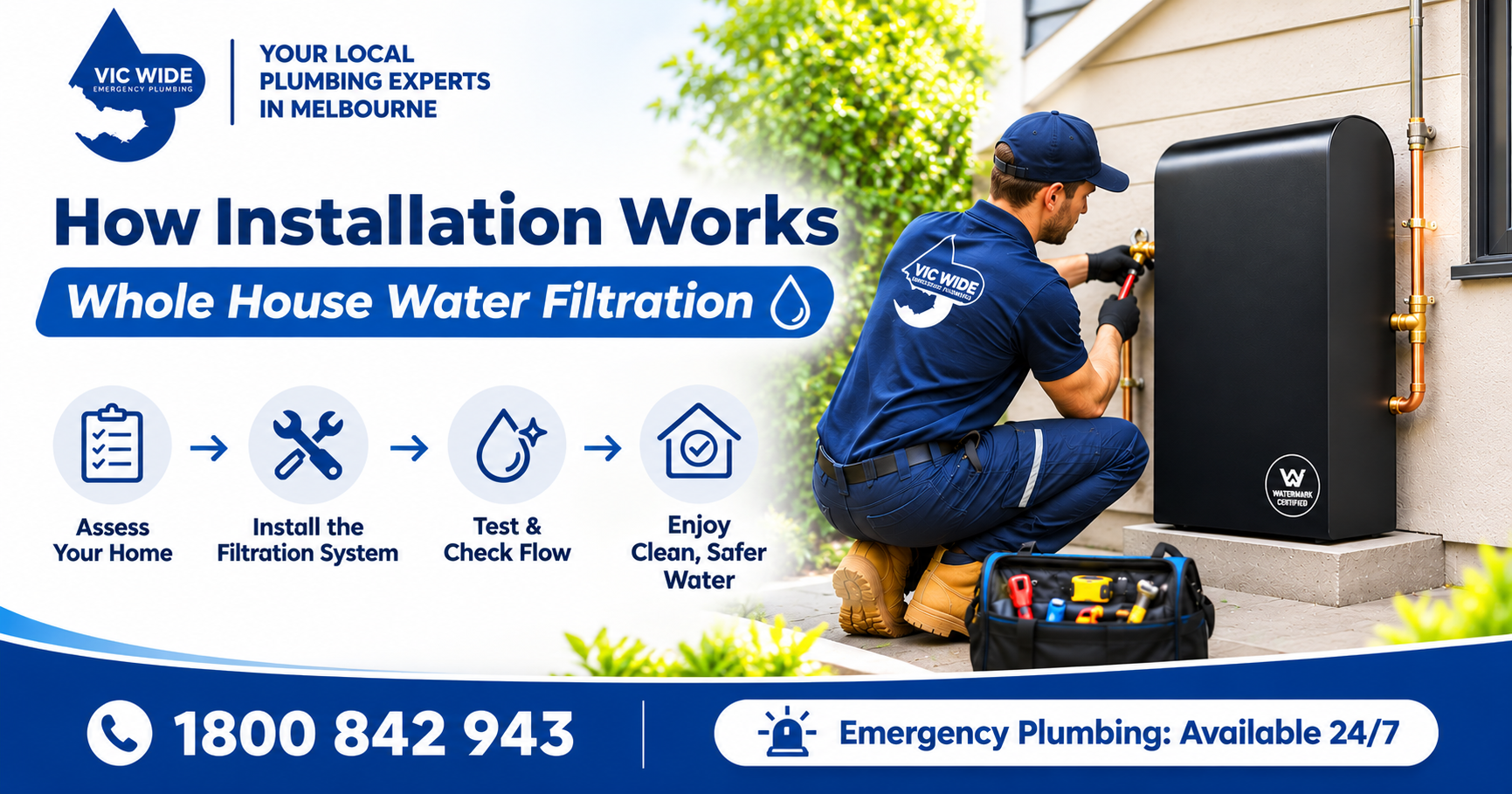 November Nov 2026How Does Whole-Home Water Filtration Installation Work? A Step-by-Step Guide
Having clean, filtered water throughout your home can make everyday activities more convenient. From drinking and cooking to showering and washing, a whole-home water filtration system is designed to treat water as it enters your property, helping provide filtered water from multiple taps. But how does the installation process work? Does a plumber need to […]
Read More -
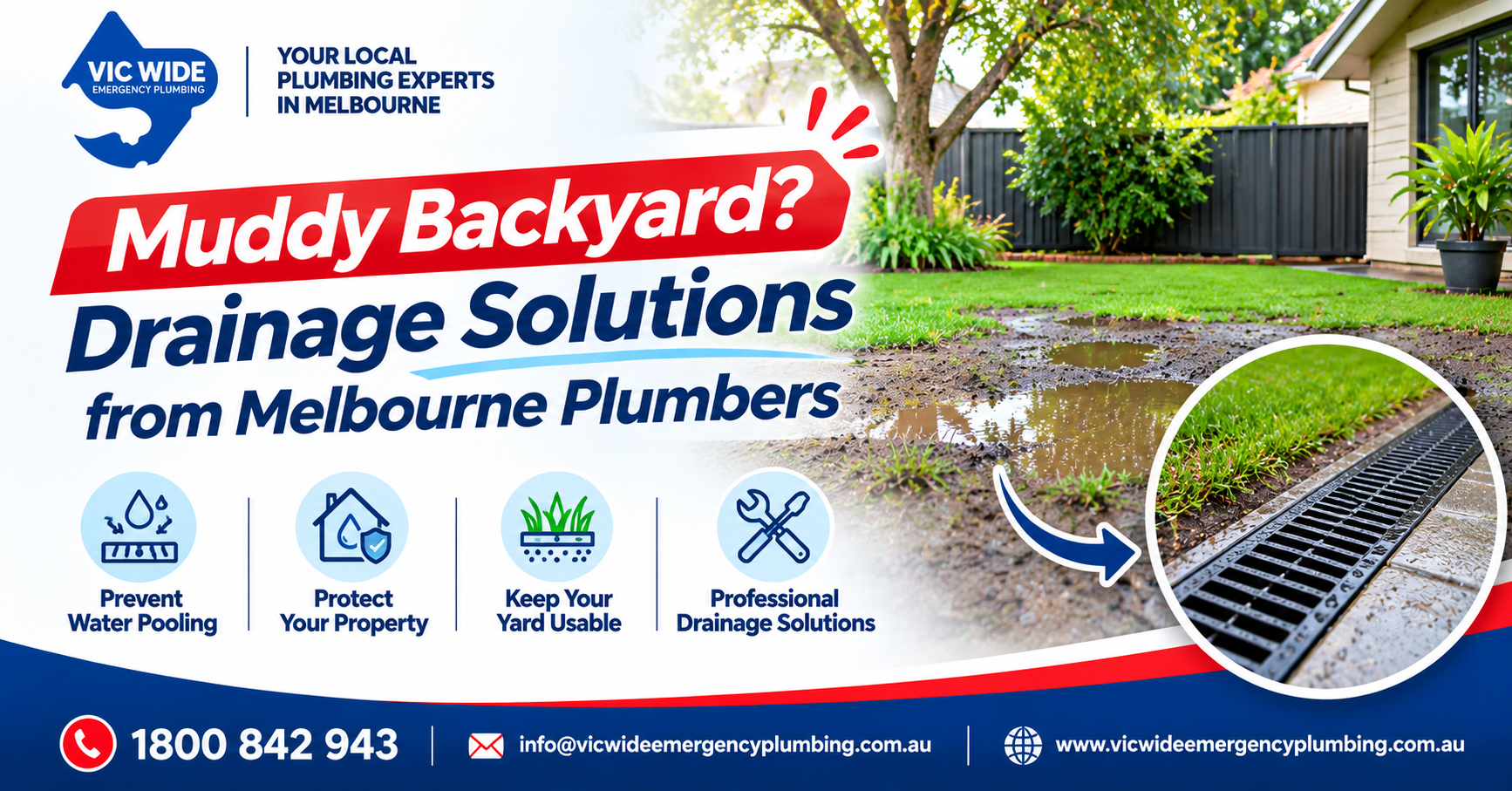 November Nov 2026Muddy Backyard? Drainage Solutions from Melbourne Plumbers
A beautiful backyard is something every homeowner wants to enjoy throughout the year. Whether you have a lawn for the family, a garden to relax in or an outdoor entertaining area, a dry and healthy yard makes a big difference. But what happens when your backyard becomes muddy and waterlogged every time it rains? Standing […]
Read More