If your taps bang when you turn them off, your plumbing fittings fail frequently, or your hot water system seems to require repairs earlier than expected, high mains water pressure could be part of the problem.
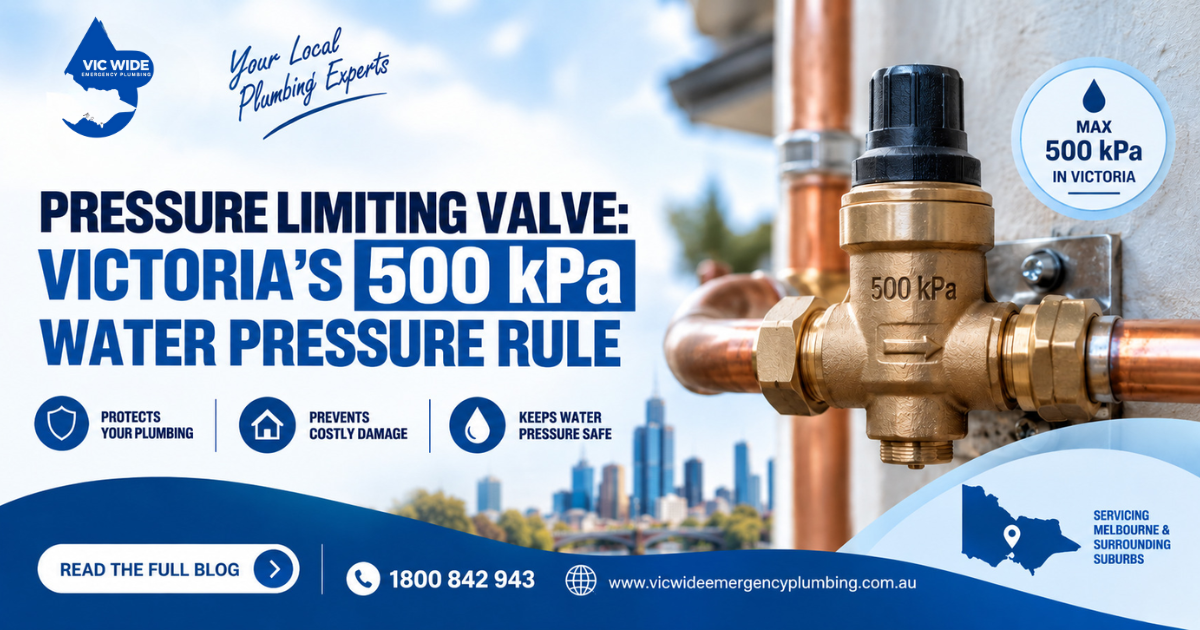
In Victoria, plumbing standards place a 500 kPa maximum on static water pressure at outlets within a building, excluding fire service outlets. Where pressure is above this limit during applicable plumbing work, a pressure limiting or pressure reducing valve may be required to bring the system within the permitted range.
Understanding how the 500 kPa rule works, when a pressure limiting valve (PLV) is required and how excessive pressure can affect your plumbing can help you protect your home’s water system.
Key Points About Victoria’s 500 kPa Water Pressure Rule
- Under AS/NZS 3500.1:2021, clause 3.3.4, and the Victorian plumbing requirements referenced in Practice Note CW-03, static water pressure at outlets within a building must not exceed 500 kPa, except at fire service outlets.
- Where a pressure test identifies pressure above 500 kPa during relevant plumbing work, a licensed plumber may need to install a pressure limiting valve or pressure reducing valve.
- Excessive water pressure can contribute to water hammer and place additional stress on taps, fittings, pipes and hot water systems.
- A pressure limiting valve is different from a pressure and temperature relief valve (TPR valve) fitted to a hot water system.
- The requirement does not necessarily mean every existing, unrenovated home must have a PLV retrofitted solely because its pressure is high. The regulatory requirements depend on the plumbing work being carried out and the circumstances of the property.
What Is a Pressure Limiting Valve?
A pressure limiting valve (PLV) is designed to control incoming mains water pressure before it reaches the plumbing fixtures throughout a property.
The valve is generally installed near the point where the mains water supply enters the property, often around the water meter.
By controlling incoming pressure, a PLV can help reduce excessive pressure on:
- Taps
- Toilets
- Washing machines
- Dishwashers
- Plumbing fittings
- Pipes
- Hot water systems
A PLV is a mechanical plumbing component and does not require an electrical power supply.
Three Plumbing Valves That Are Often Confused
Pressure limiting valves, pressure reducing valves and pressure & temperature relief valves perform different functions.
| Device |
What It Does |
Typical Location |
| Pressure Limiting Valve (PLV) |
Limits incoming mains water pressure to a set level |
Near the water meter or property entry point |
| Pressure Reducing Valve (PRV) |
Reduces incoming water pressure and may provide adjustable pressure control |
Near the water meter or property entry point |
| Pressure & Temperature Relief Valve (TPR) |
Releases excessive pressure or temperature from a hot water system as a safety mechanism |
On the hot water system |
Understanding the difference is important because these valves are not interchangeable.
What Is the 500 kPa Water Pressure Rule?
The information provided for this article references AS/NZS 3500.1:2021, clause 3.3.4, together with the Victorian Plumbing Regulations 2018 and the Victorian Building and Plumbing Commission’s Practice Note CW-03.
The requirement states that static water pressure at an outlet within a building must not exceed 500 kPa, with a fire service outlet being the stated exception.
The requirement applies to both cold and heated water services and is particularly relevant when new plumbing work or alterations are undertaken.
Where a pressure test identifies pressure above the permitted level, the plumber has an obligation to advise the property owner and recommend an appropriate pressure limiting or reducing device where required.
Why Is Excessive Water Pressure a Problem?
High water pressure can place additional stress on plumbing components over time.
Water Hammer
One common symptom is water hammer. This can sound like banging, knocking or vibrating pipes when a tap, valve or appliance suddenly stops the flow of water.
Stress on Plumbing Fixtures
Excessive pressure can place additional strain on:
- Taps
- Flexible hoses
- Toilet components
- Pipe joints
- Valves
- Appliances
Impact on Hot Water Systems
Hot water systems can also be affected by excessive incoming pressure. High pressure may place additional strain on tanks, fittings and other components.
Always check the manufacturer’s installation and operating requirements, as warranty conditions can vary between systems and brands.
How Can You Tell If Your Water Pressure Is Too High?
High pressure is not always obvious. Your plumbing may appear to work normally while pressure remains above the recommended limit.
Some possible signs include:
Banging or Knocking Pipes
If your pipes make a loud banging noise when taps, washing machines or other valves close, water hammer may be occurring.
Frequent Plumbing Repairs
Repeated failures of taps, fittings or other components may warrant a professional pressure check.
Hissing or Humming Sounds
Unusual sounds from plumbing when water is running can sometimes be associated with pressure or flow issues, although there can be other causes.
Strong Water Flow
Unusually strong flow from taps may also indicate higher-than-expected pressure, although flow rate alone cannot confirm a pressure problem.
How Is Water Pressure Tested?
The most reliable way to determine your property’s mains pressure is through a pressure test using an appropriate pressure gauge.
A licensed plumber can measure the pressure at the relevant point and determine whether it is within the applicable requirements.
A pressure test can be particularly useful when:
- You are renovating
- New plumbing is being installed
- A hot water system is being replaced
- You are experiencing water hammer
- Plumbing fittings are failing repeatedly
- You suspect excessive mains pressure
Where Is a Pressure Limiting Valve Installed?
A PLV is generally positioned near the property’s water entry point, commonly around the water meter.
Its purpose is to regulate the incoming mains supply before water reaches the internal plumbing system.
Correct installation is important because the valve needs to be appropriately selected and installed for the property’s plumbing configuration.
Is a Pressure Limiting Valve Mandatory in Victoria?
The answer depends on the circumstances.
The 500 kPa requirement becomes particularly relevant when new plumbing work, alterations or other regulated plumbing work are being carried out.
If pressure testing identifies pressure above 500 kPa during applicable plumbing work, the plumber may be required to install a pressure limiting or pressure reducing valve to ensure the work complies with the relevant requirements.
An older home that has not undergone relevant plumbing work is not necessarily required to have a PLV retrofitted simply because its existing mains pressure is above 500 kPa.
If you are unsure about your property’s situation, a licensed plumber can assess the pressure and explain what applies to the work being undertaken.
Does a PLV Need to Be Installed During Renovations?
It may be required when plumbing work is being carried out and the measured pressure exceeds the applicable limit.
For example, plumbing alterations involving new fixtures, appliances or other plumbing work may trigger compliance requirements.
The exact requirements depend on the type and scope of the work, so your licensed plumber should assess the pressure as part of the plumbing installation.
What Happens If High Pressure Is Identified?
If a pressure test shows that the water pressure is above the applicable limit during regulated plumbing work, the plumber can recommend the appropriate pressure control device.
Depending on the plumbing configuration, this may involve:
- Testing the mains water pressure.
- Confirming the pressure reading.
- Assessing the existing plumbing arrangement.
- Selecting an appropriate pressure limiting or reducing valve.
- Installing the device correctly.
- Testing the system again after installation.
This helps ensure the plumbing installation meets the relevant requirements.
How Much Does a Pressure Limiting Valve Cost?
The cost of installing a PLV varies depending on the property and plumbing configuration.
Factors that can affect the total cost include:
- Valve type
- Accessibility
- Existing pipework
- Required modifications
- Labour
- Location of the water meter
- Additional plumbing work
Rather than relying on a fixed price, it is best to have a licensed plumber inspect the installation and provide a clear quote.
Pressure Limiting Valve vs Hot Water Relief Valve
These two components are sometimes confused.
A pressure limiting valve controls the pressure entering the property’s plumbing system from the mains supply.
A pressure and temperature relief valve, commonly associated with storage hot water systems, is a safety component designed to release excessive pressure or temperature from within the hot water system.
They perform different functions and should not be treated as substitutes for one another.
Pressure Limiting Valve Services in Melbourne
If you are experiencing high water pressure, water hammer or repeated plumbing fitting failures, Vic Wide Emergency Plumbing can help assess your plumbing system.
Our plumbing services may include:
- Water pressure testing
- Pressure limiting valve installation
- Pressure reducing valve installation
- Plumbing inspections
- Leak repairs
- Hot water plumbing
- General plumbing
- Emergency plumbing services
Our team services Melbourne and surrounding suburbs.
Frequently Asked Questions
What is the maximum water pressure allowed in Victoria?
The information referenced for this article identifies 500 kPa as the maximum static water pressure at an outlet within a building, other than a fire service outlet, under the applicable plumbing requirements.
What does a pressure limiting valve do?
A PLV controls incoming mains water pressure before it reaches the property’s internal plumbing fixtures.
Is a pressure limiting valve the same as a pressure relief valve?
No. A PLV controls incoming mains pressure, while a pressure and temperature relief valve on a hot water system provides a safety function by releasing excessive pressure or temperature.
How do I know if my home’s water pressure is too high?
Signs may include banging pipes, unusually strong water flow or repeated plumbing fitting failures. However, the only reliable way to confirm pressure is to have it measured with an appropriate gauge.
Where is a pressure limiting valve installed?
It is generally installed near the point where the mains water supply enters the property, often close to the water meter.
Does every Victorian home need a pressure limiting valve?
Not necessarily. The requirement depends on the property’s plumbing circumstances and the work being carried out. New or altered plumbing work must comply with the applicable requirements.
Can high water pressure damage a hot water system?
Excessive pressure can place additional stress on hot water system components. The system must also be installed and operated within the manufacturer’s specified requirements.
Can a plumber check my water pressure?
Yes. A licensed plumber can use an appropriate pressure gauge to test the mains water pressure and advise whether pressure control is required.
Summary
Victoria’s 500 kPa water pressure requirement is an important part of plumbing compliance and property protection. Excessive mains pressure can contribute to water hammer and place additional stress on plumbing fixtures, pipework and hot water systems.
A pressure limiting valve or pressure reducing valve can control incoming mains pressure where required. However, these devices should not be confused with the pressure and temperature relief valve fitted to a hot water system.
If you are renovating, installing new plumbing or experiencing signs of excessive water pressure, having your mains pressure professionally tested can help determine whether pressure control is required.
Need a Plumber in Melbourne?
Vic Wide Emergency Plumbing
📞 1800 842 943
🌐 www.vicwideemergencyplumbing.com.au
📧 info@vicwideemergencyplumbing.com.au
Serving Melbourne and surrounding suburbs | 24/7 Emergency Plumbing




 September Sep 2026Burst Pipes in Hoppers Crossing: What to Do Before the Plumber Arrives
 September Sep 2026Why Is My Hot Water Brown? Causes and Solutions for Melbourne Homes
 September Sep 2026Blocked Drains in Melbourne? Why a CCTV Inspection May Be the Best Solution