




Balcony leaks can be difficult to identify, especially in Melbourne apartments, townhouses and multi-storey properties. Water can travel beneath tiles, through grout, membranes and concrete slabs before appearing as a damp patch somewhere else.
This makes accurate balcony leak detection in Melbourne important. Instead of immediately removing tiles or damaging surfaces, professional leak detection methods can help identify where moisture is present and narrow down the likely source.
At Vic Wide Emergency Plumbing, we understand how quickly water leaks can lead to property damage. Our team can assist with plumbing-related leak detection and repairs across Melbourne and surrounding suburbs.
Call Vic Wide Emergency Plumbing on 1800 842 943 for assistance with plumbing leaks and water-related emergencies.
Why Is Professional Balcony Leak Detection Important in Melbourne?
Melbourne’s changing weather conditions, including heavy rainfall, cold winters and periods of hot weather, can place ongoing stress on balcony surfaces and waterproofing systems.
A small water-ingress problem can potentially lead to:
- Damp walls and ceilings
- Water entering internal rooms
- Damage to plaster, paint and building materials
- Mould and persistent musty smells
- Deterioration of concrete and surrounding surfaces
- More expensive repairs if the problem is left unresolved
The challenge is that the visible water stain is not always located directly above the actual entry point.
That is why professional balcony leak detection methods can be useful before repair work begins.
Common Balcony Leak Detection Methods
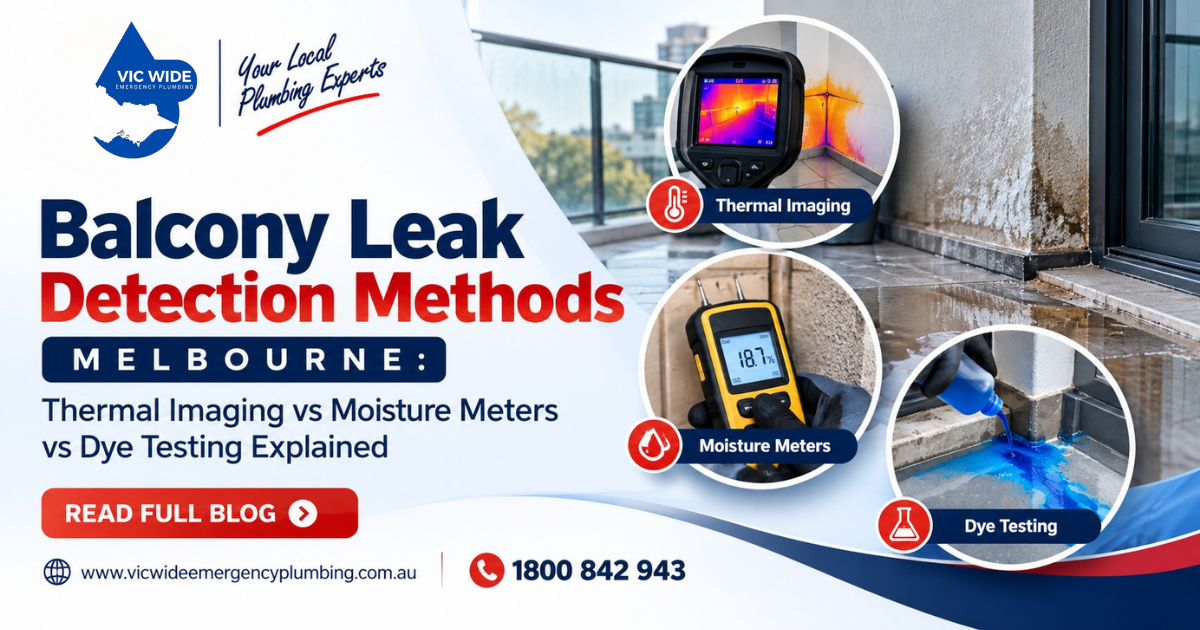
Three commonly discussed methods for investigating concealed moisture are:
- Thermal imaging
- Moisture meter testing
- Dye testing
Each method has a different purpose, and in more complicated cases, professionals may use more than one technique to investigate the problem.
1. Thermal Imaging for Balcony Leak Detection
Thermal imaging uses an infrared camera to identify temperature differences across a surface.
Where moisture is present beneath tiles, concrete or other building materials, the affected area can sometimes show a different thermal pattern from surrounding dry areas.
Benefits of Thermal Imaging
- Non-invasive
- Can cover larger areas relatively quickly
- Can help identify concealed moisture
- Does not normally require removing tiles
- Useful as an initial investigation method
Limitations of Thermal Imaging
Thermal imaging does not necessarily identify the exact point where water entered the building.
It can indicate an area of abnormal moisture or temperature variation, but further testing may be required to determine the source.
2. Moisture Meter Testing
A moisture meter can be used to measure moisture levels in suitable building materials such as walls, concrete, substrates and other surfaces.
This can help determine whether an area identified during an inspection contains elevated moisture.
Benefits of Moisture Meter Testing
- Provides measurable moisture readings
- Helps verify suspected wet areas
- Can assist with mapping moisture patterns
- Useful for investigating moisture in walls and ceilings
- Can complement thermal imaging
Moisture meter readings should be interpreted according to the material being tested and the type of meter being used.
When Can Moisture Meter Testing Help?
It can be particularly useful when:
- A wall or ceiling shows signs of water damage
- Moisture appears to be ongoing or recurring
- A thermal image indicates a possible wet area
- The source of moisture is not immediately visible
3. Dye Testing for Balcony Leaks
Dye testing involves introducing a suitable coloured dye into a suspected water-entry area under controlled testing conditions.
If the dye subsequently appears at another location, it can provide useful evidence about the path water is taking.
Advantages of Dye Testing
- Can provide visual evidence of a water pathway
- Useful when there are several possible entry points
- Can help investigate recurring or difficult-to-trace leaks
- May be useful before targeted repair work
Limitations
Dye testing can take longer than some initial detection methods and needs to be carried out under appropriate conditions. The results also need to be interpreted carefully.
Thermal Imaging vs Moisture Meters vs Dye Testing
| Method | Main Purpose | Invasive? | Typical Use |
|---|---|---|---|
| Thermal Imaging | Identifying potential moisture areas | No | Initial investigation |
| Moisture Meter | Measuring moisture levels | No | Confirmation and moisture mapping |
| Dye Testing | Tracing a suspected water pathway | Minimal | Source/pathway investigation |
There is no single detection method that is suitable for every balcony leak. The appropriate approach depends on the building, balcony construction, location of visible damage and suspected source of water entry.
Do You Need to Remove Balcony Tiles to Find a Leak?
Not necessarily.
Modern inspection methods can help investigate suspected moisture without immediately removing tiles or damaging the surface.
However, if testing identifies a likely source and repair work requires access to the underlying membrane, substrate or damaged area, some surface removal may eventually be necessary.
The aim of leak detection is to identify the problem before unnecessary demolition or repair work begins.
What Happens After a Balcony Leak Is Detected?
Finding the source is only the first step.
Depending on the cause, the required solution may involve plumbing repairs, drainage work, sealant repairs, waterproofing or other building-related work.
If the issue involves a failed balcony waterproofing membrane or building defect rather than a plumbing problem, a qualified waterproofing or building specialist may be required.
For plumbing-related leaks, Vic Wide Emergency Plumbing can help investigate and address issues such as water leaks, burst pipes, blocked drains and other plumbing emergencies.
How Much Does Balcony Leak Detection Cost in Melbourne?
The cost of investigating a balcony leak can vary depending on:
- Size and construction of the balcony
- Accessibility
- Complexity of the suspected leak
- Location of visible water damage
- Testing methods required
- Whether additional investigation is necessary
It is best to obtain an assessment rather than assuming that every leak requires the same type of testing or repair.
Can Leak Detection Find the Exact Source of a Balcony Leak?
Leak detection can help narrow down the location and possible pathway of water, but no single method can guarantee an exact source in every situation.
Thermal imaging, moisture measurements and controlled testing can provide more useful information when combined appropriately. The complexity of the building and the way water is travelling can also affect the investigation.
Frequently Asked Questions
How does thermal imaging detect balcony leaks?
Thermal imaging identifies temperature differences that may be associated with moisture beneath or within building materials. It can help identify areas requiring further investigation.
Are moisture meters useful for balcony leaks?
Yes. Moisture meters can provide readings that help identify areas with elevated moisture and can complement other inspection methods.
Do balcony tiles always need to be removed?
No. Non-invasive investigation methods can often be used before considering tile removal. However, surface removal may be required later if the underlying waterproofing or structure needs repair.
What causes balcony leaks?
Potential causes can include damaged waterproofing, failed joints or seals, drainage problems, cracks and other building or plumbing-related issues. The actual cause needs to be assessed at the property.
When should I call a professional?
If you notice recurring dampness, water stains, mould, leaking around a balcony or water entering an internal room, professional assessment is recommended before the damage becomes more extensive.
Protect Your Property From Water Damage
A balcony leak should not be ignored simply because the visible water damage appears small. Water can travel through concealed areas before becoming visible, making early investigation important.
If you are dealing with a plumbing leak or water-related emergency in Melbourne, contact Vic Wide Emergency Plumbing for assistance.
Vic Wide Emergency Plumbing
📞 1800 842 943
🌐 www.vicwideemergencyplumbing.com.au
✉️ info@vicwideemergencyplumbing.com.au
24/7 Emergency Plumbing | Melbourne & Surrounding Suburbs
-
 September Sep 2026Pressure Limiting Valve: Victoria’s 500 kPa Water Pressure Rule
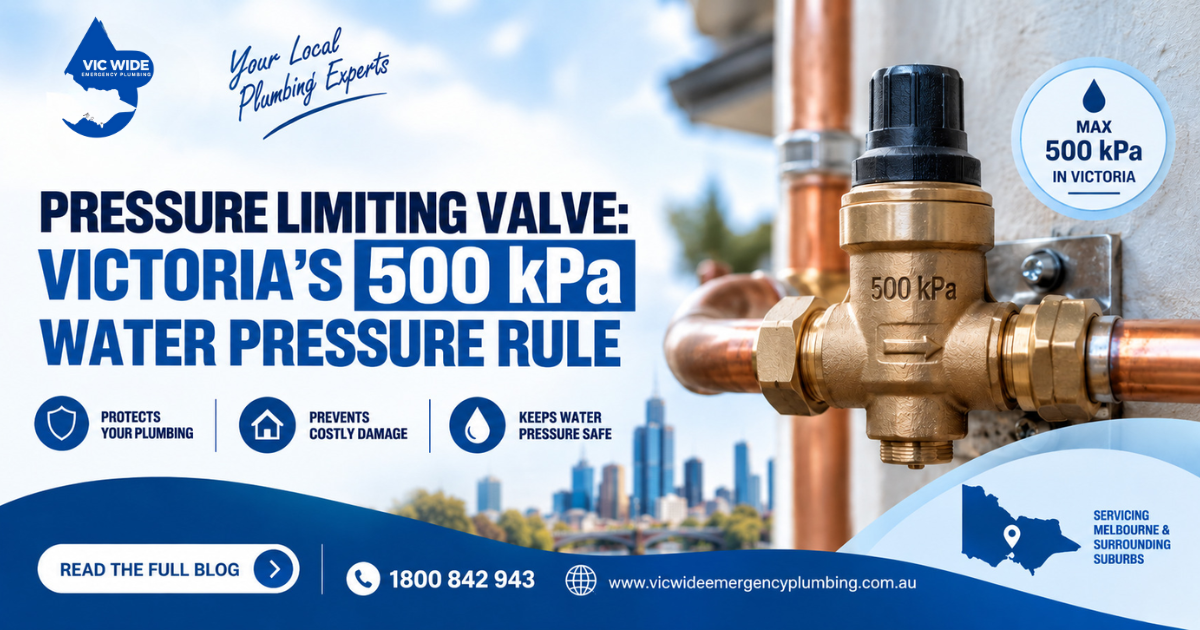
If your taps bang when you turn them off, your plumbing fittings fail frequently, or your hot water system seems to require repairs earlier than expected, high mains water pressure could be part of the problem. In Victoria, plumbing standards place a 500 kPa maximum on static water pressure at outlets within a building, excluding […]
Read More -
 September Sep 2026Burst Pipes in Hoppers Crossing: What to Do Before the Plumber Arrives
A burst pipe can quickly turn into a major plumbing emergency. Water can spread through walls, floors and ceilings within minutes, potentially causing significant damage to your Hoppers Crossing property. Knowing what to do before the plumber arrives can help reduce the amount of water escaping and minimise the risk of further damage. What Is […]
Read More -
 September Sep 2026Why Is My Hot Water Brown? Causes and Solutions for Melbourne Homes
Turning on the tap and seeing brown water can be concerning, especially when you expect clean, clear hot water. If you are asking, “Why is my hot water brown?”, the issue may be connected to rust, sediment, corrosion or ageing components within your hot water system or plumbing. Brown hot water is more common in […]
Read More