




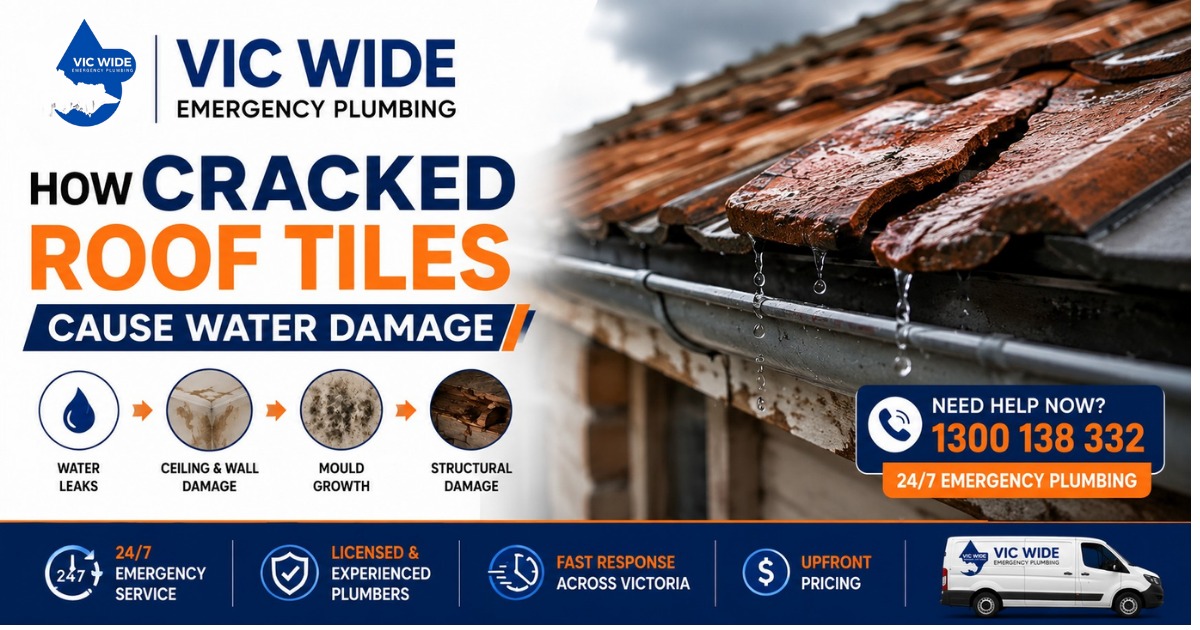
Your roof is your home’s first line of defence against Melbourne’s unpredictable weather. While a single Cracked Roof Tiles Cause roof leaks, ceiling stains, mould growth, and structural damage if left untreated.may seem like a minor issue, it can quickly develop into a major problem that leads to water leaks, ceiling damage, mould growth, and even structural deterioration. Across Melbourne, Geelong, Bendigo, Ballarat, Somerville, Moe, and regional Victoria, many homeowners only discover roof damage after water has already entered their property.
At VIC WIDE Emergency Plumbing, we understand how quickly a small roofing issue can become a costly emergency. As experienced plumbing and roof leak specialists servicing Victoria-wide, we regularly help homeowners identify and address water damage caused by cracked roof tiles before it escalates. Lets Read About Cracked Roof Tiles Cause
Why Do Roof Tiles Crack?
Roof tiles are designed to withstand harsh weather conditions, but over time they can become damaged due to:
- Severe storms and high winds
- Falling tree branches
- Hail damage
- Foot traffic during roof maintenance
- Age-related wear and deterioration
- Extreme temperature changes
- Poor installation or previous repairs
Even a hairline crack can allow water to penetrate beneath the tile and enter the roof cavity. Roofing experts across Victoria consistently identify cracked and displaced roof tiles as a common source of roof leaks and water intrusion.
Cracked Roof Tiles Cause : The Hidden Path of Water Damage
Many homeowners assume that if they don’t see water dripping from the ceiling, their roof is fine. Unfortunately, water often travels through the roof structure before becoming visible inside the home.
Stage 1: Water Enters Through Cracked Tiles
When rain falls on a damaged roof, water can seep through cracks and gaps in the tile surface. Once inside, moisture begins affecting roofing materials underneath the tiles.
Stage 2: Ceiling and Wall Damage
As water continues to infiltrate the property, it may cause:
- Ceiling stains
- Bubbling paint
- Peeling plaster
- Damp walls
- Sagging ceiling sections
Water stains on ceilings and walls are often one of the earliest visible signs of roof tile failure.
Stage 3: Mould Growth
Moist environments create ideal conditions for mould and mildew. Once moisture becomes trapped inside wall cavities or roof spaces, mould can begin growing rapidly.
Mould not only damages building materials but can also affect indoor air quality and create health concerns for occupants. Roofing professionals frequently warn that untreated roof leaks often lead to mould development within the home.
Stage 4: Structural Damage
When water damage continues unchecked, timber roof framing, battens, insulation, and other structural components can begin to deteriorate.
Long-term moisture exposure may result in:
- Timber rot
- Weakening roof structures
- Damaged insulation
- Compromised ceilings
- Expensive restoration work
Industry experts note that unresolved roof leaks can eventually lead to significant structural repairs and increased restoration costs.
Warning Signs Your Roof Needs Immediate Attention
Many Victorian homeowners are unaware of roof problems until substantial damage has occurred. Watch for these common warning signs:
- Water stains on ceilings
- Damp patches on walls
- Mould or mildew growth
- Dripping water during rainfall
- Cracked, broken, or missing roof tiles
- Sagging roof sections
- Rising humidity inside the home
- Debris or broken tile pieces around the property
- Overflowing gutters during rain
If you notice any of these symptoms, arranging a professional roof inspection as soon as possible can prevent further damage.
Melbourne Weather and Roof Damage
Victoria’s climate places significant stress on roofing systems.
Homes throughout Melbourne and regional Victoria experience:
- Heavy winter rainfall
- Strong winds
- Summer heatwaves
- Sudden temperature fluctuations
- Storm activity
These conditions can gradually weaken roofing materials and increase the likelihood of tile cracking, displacement, and water penetration. Weather-related damage is one of the leading causes of roof leaks across Victorian homes.
Why Early Repairs Save Money
One of the biggest mistakes homeowners make is delaying repairs because the leak appears minor.
A single cracked tile may cost very little to repair today, but ignoring the issue can lead to:
- Ceiling replacement
- Internal painting costs
- Mould remediation
- Structural timber repairs
- Insulation replacement
- Extensive roof restoration
Prompt maintenance and repairs help extend roof life and reduce the risk of expensive water damage throughout the property.
Professional Roof Leak Detection Matters
Roof leaks can be surprisingly difficult to locate. Water often travels considerable distances through the roof cavity before appearing inside the home.
Professional inspections can identify:
- Cracked or broken tiles
- Faulty flashing
- Ridge capping issues
- Gutter and drainage problems
- Hidden moisture damage
- Structural concerns
Accurate diagnosis ensures the root cause is addressed rather than simply treating visible symptoms.
Victoria-Wide Emergency Plumbing and Roof Leak Assistance
Contact VIC WIDE Emergency Plumbing, we understand the urgency of roof leaks and water damage. Our experienced team assists homeowners throughout Melbourne and surrounding suburbs including Geelong, Bendigo, Ballarat, Somerville, Moe, and many other Victorian locations.
Whether you’re dealing with a small leak, visible ceiling damage, or ongoing roof water intrusion, prompt action can help protect your property from costly long-term damage.
Final Thoughts
Cracked Roof Tiles Cause roof leaks, ceiling stains, mould growth, and structural damage if left untreated. may seem insignificant, but they can trigger a chain reaction of problems that affect every part of your home. What begins as a small crack can lead to water leaks, ceiling damage, mould growth, and structural deterioration if left untreated.
Regular roof inspections, preventative maintenance, and fast repairs are the most effective ways to protect your Melbourne or Victorian home from costly water damage. If you’ve noticed signs of a roof leak or suspect tile damage, acting early can save thousands of dollars in future repairs while protecting the safety and value of your property.
Frequently Asked Questions (FAQs) Cracked Roof Tiles Cause
1. How can I tell if a cracked roof tile is causing a leak?
Common signs include water stains on ceilings, damp walls, peeling paint, mould growth, and dripping water during or after rainfall. In some cases, the leak may not be visible immediately because water can travel through the roof cavity before appearing inside your home.
2. Can a single cracked roof tile really cause significant water damage?
Yes. Even a small crack can allow rainwater to enter your roof space. Over time, this moisture can damage insulation, ceilings, walls, timber structures, and encourage mould growth, leading to costly repairs if left untreated.
3. What causes roof tiles to crack in Melbourne and Victoria?
Roof tiles can crack due to severe weather, hailstorms, strong winds, falling branches, roof age, temperature fluctuations, and foot traffic during maintenance work. Melbourne’s changing weather conditions can place additional stress on roofing materials.
4. How quickly should cracked roof tiles be repaired?
Cracked roof tiles should be repaired as soon as they are discovered. Delaying repairs can allow water to penetrate deeper into the property, increasing the risk of structural damage, mould growth, and higher repair costs.
5. Do I need a professional inspection if I notice a roof leak?
Yes. Roof leaks are often difficult to trace because water may travel from the original entry point before becoming visible inside the home. A professional inspection can identify the exact source of the leak and recommend the most effective repair solution to prevent further damage.
-
 September Sep 2026Why Is My Hot Water Brown? Causes and Solutions for Melbourne Homes
Turning on the tap and seeing brown water can be concerning, especially when you expect clean, clear hot water. If you are asking, “Why is my hot water brown?”, the issue may be connected to rust, sediment, corrosion or ageing components within your hot water system or plumbing. Brown hot water is more common in […]
Read More -
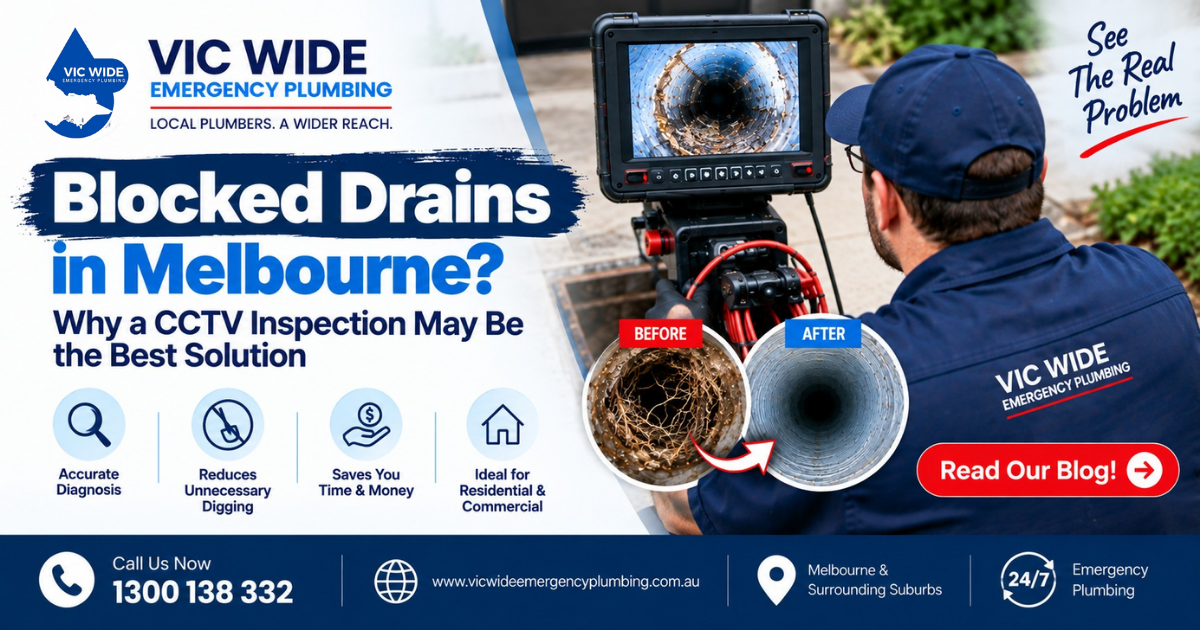 September Sep 2026Blocked Drains in Melbourne? Why a CCTV Inspection May Be the Best Solution
Blocked drains are a common plumbing problem in Melbourne homes and businesses. While a plunger or drain cleaner may provide temporary relief, recurring blockages often indicate a deeper issue that cannot be identified from the surface. A CCTV drain inspection uses a specialised camera to examine the inside of drainage pipes. This technology helps plumbers […]
Read More -
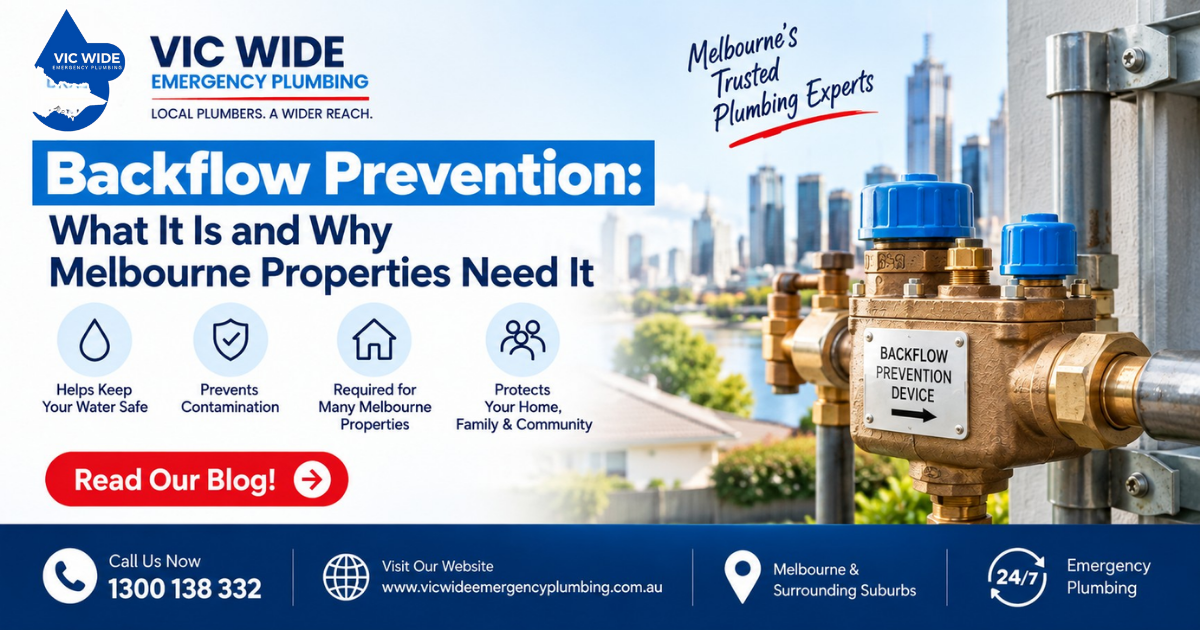 September Sep 2026Backflow Prevention: What It Is and Why Melbourne Properties Need It
Water is essential for every home, business and commercial property. However, if contaminated water flows backwards into the clean water supply, it can create serious health and safety risks. This is known as backflow, and backflow prevention devices are designed to help stop it from happening. For Melbourne property owners, understanding backflow prevention is important […]
Read More