



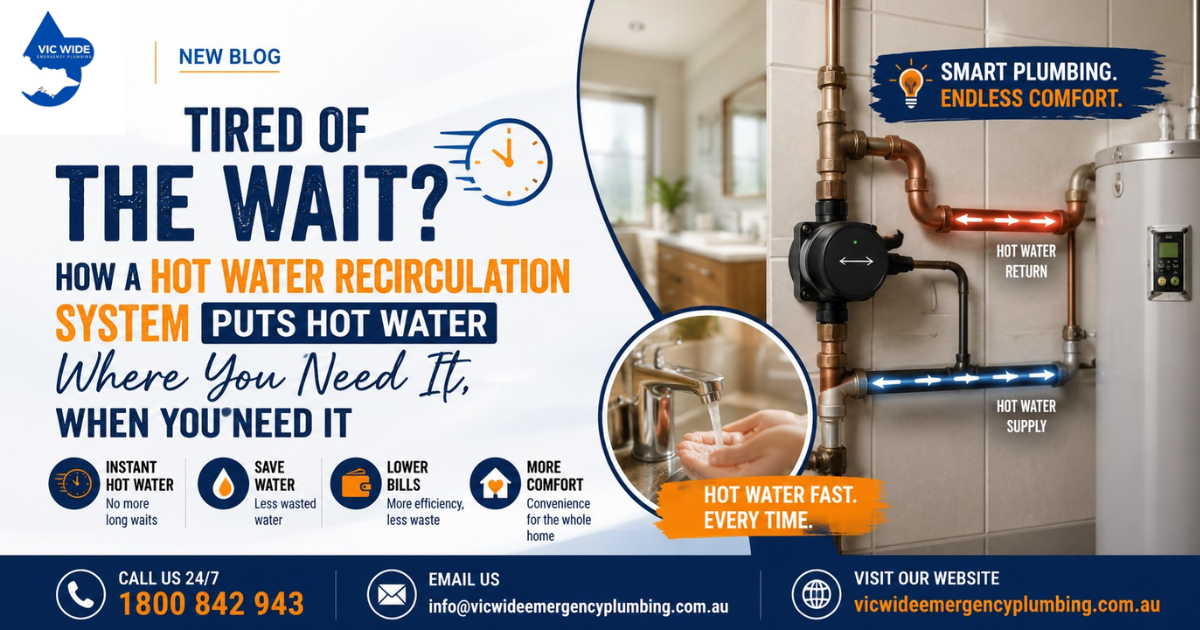
Waiting 30 seconds—or even several minutes—for hot water every time you turn on the tap is frustrating. Not only does it waste water, but it also increases utility bills and makes everyday tasks less convenient. If your home has long pipe runs or multiple bathrooms, a hot water recirculation loop could be the solution.
In this guide, we’ll explain how a recirculation loop works, who benefits from it, and whether it’s the right upgrade for your home.
What Is a Hot Water Recirculation Loop?
A hot water recirculation loop is a plumbing system that continuously or on-demand circulates hot water through your home’s pipes. Instead of waiting for cold water to clear from the pipes, hot water is already close to your taps, showers, and fixtures.
This means you’ll enjoy:
- Near-instant hot water
- Less water wasted down the drain
- Greater comfort throughout your home
- Improved convenience for everyday use
Why Does It Take So Long Tired of Waiting for Hot Water?
In many homes, especially larger or double-storey properties, hot water must travel a long distance from the water heater to the tap. While the hot water is making its way, the cooled water already sitting in the pipes must flow out first.
Common causes include:
- Long pipe runs
- Multiple bathrooms located far from the hot water unit
- Large homes with complex plumbing layouts
- Older plumbing systems
The longer the distance, the longer you’ll wait.
How Does a Recirculation Loop Work?
A recirculation system creates a continuous pathway between your hot water heater and your plumbing fixtures.
Using a small circulation pump, hot water is kept moving through the system so it’s always readily available when needed.
Depending on the setup, the pump may operate:
- Continuously
- On a timer
- Using a temperature sensor
- With an on-demand push button or motion sensor
Modern systems are designed to minimise energy use while maximising convenience.
Signs Your Home Could Benefit from a Recirculation Loop
You may benefit from a recirculation system if:
- You regularly wait more than 20–30 seconds for hot water.
- Your bathrooms are located a long way from the water heater.
- You have a multi-storey home.
- You notice significant water wastage while waiting for hot water.
- Your family frequently uses multiple bathrooms.
Benefits of Installing a Hot Water Recirculation System
Instant Hot Water
Enjoy faster access to hot water throughout your home.
Save Water
Instead of letting litres of cold water run down the drain, you’ll receive hot water almost immediately.
Lower Utility Costs
Reducing water waste can help lower your water bills.
Increased Home Comfort
No more waiting during cold mornings or busy family routines.
Improved Efficiency
Modern recirculation pumps use minimal electricity and can be programmed to run only when required.
Types of Hot Water Recirculation Systems
Dedicated Return Line
A dedicated return pipe sends unused hot water back to the heater. This is the most efficient solution and is ideal for:
- New home builds
- Major renovations
- Large residential properties
Retrofit Recirculation System
Designed for existing homes, retrofit systems use your existing plumbing and require minimal modifications.
They’re an excellent choice when adding new return pipework isn’t practical.
Is a Hot Water Recirculation Loop Solves Worth It?
For many homeowners, the answer is yes.
Although installation involves an upfront investment, the long-term benefits often outweigh the cost through:
- Water savings
- Improved comfort
- Reduced frustration
- Greater convenience
- Better overall plumbing efficiency
Large households typically see the greatest return.
Professional Installation Matters For Recirculation Loop Solves
A recirculation system must be properly designed and installed to perform efficiently.
A licensed plumber will ensure:
- Correct pump sizing
- Proper pipe insulation
- Safe operating temperatures
- Reliable system performance
- Compliance with Australian plumbing standards
Poor installation can reduce efficiency and increase energy use.
Why Choose Vic Wide Emergency Plumbing Recirculation Loop Solves?
At Vic Wide Emergency Plumbing, we provide professional hot water solutions across Melbourne.
Our experienced team can:
- Assess your home’s plumbing layout
- Recommend the best recirculation system
- Install quality components
- Repair and upgrade existing hot water systems
- Provide fast emergency plumbing services when you need them
Whether you’re building, renovating, or simply tired of waiting for hot water, we’re here to help.
Conclusion
If you’re constantly waiting for hot water, a recirculation loop can make a noticeable difference. By delivering hot water faster, reducing water waste, and improving daily comfort, it’s a practical upgrade for many Melbourne homes.
If you’re unsure whether your property is suitable, speak with the experts at Vic Wide Emergency Plumbing. We’ll help you find the most efficient solution for your home.
Frequently Asked Questions
Does a hot water recirculation system save water?
Yes. It significantly reduces the amount of cold water wasted while waiting for hot water to reach your taps.
Can a recirculation system be installed in an existing home?
Absolutely. Retrofit systems are designed specifically for existing homes and often require minimal plumbing modifications.
Does a recirculation pump use a lot of electricity?
No. Modern pumps are highly energy-efficient, especially when paired with timers or on-demand controls.
Is a recirculation loop suitable for every home?
Not always. Homes with very short pipe runs may see little benefit. A licensed plumber can assess whether it’s the right solution.
How long does installation take?
Most residential installations can usually be completed within a day, depending on your home’s plumbing layout.
-
 October Oct 2026Balcony Leak Detection Methods Melbourne: Thermal Imaging vs Moisture Meters vs Dye Testing
Balcony leaks can be difficult to identify, especially in Melbourne apartments, townhouses and multi-storey properties. Water can travel beneath tiles, through grout, membranes and concrete slabs before appearing as a damp patch somewhere else. This makes accurate balcony leak detection in Melbourne important. Instead of immediately removing tiles or damaging surfaces, professional leak detection methods […]
Read More -
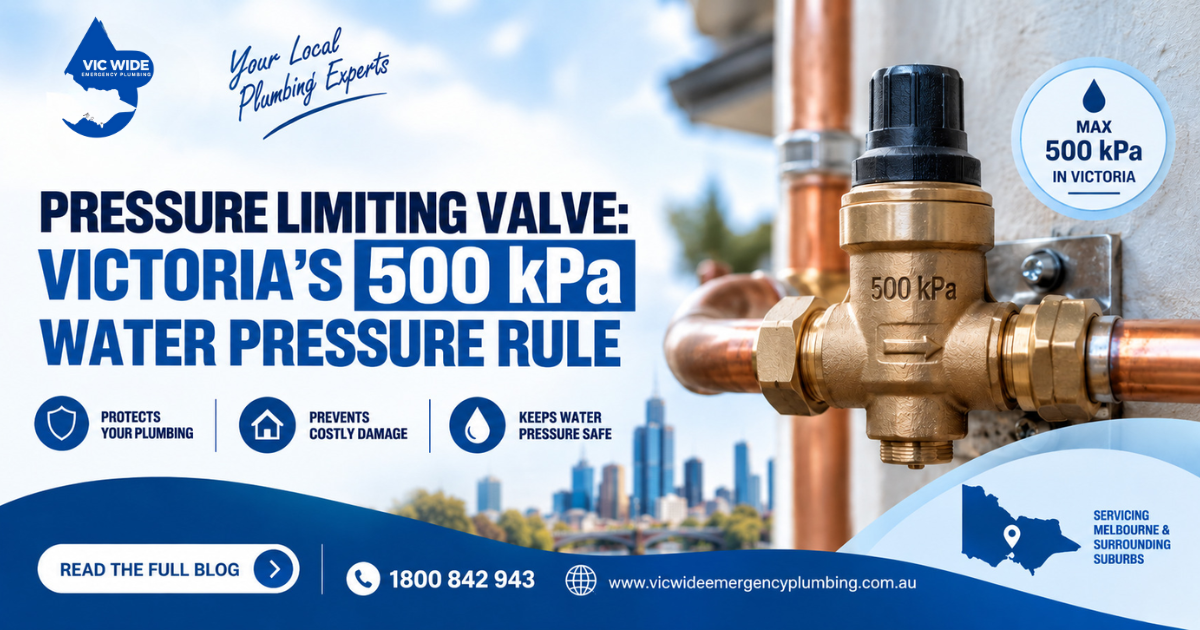 September Sep 2026Pressure Limiting Valve: Victoria’s 500 kPa Water Pressure Rule
If your taps bang when you turn them off, your plumbing fittings fail frequently, or your hot water system seems to require repairs earlier than expected, high mains water pressure could be part of the problem. In Victoria, plumbing standards place a 500 kPa maximum on static water pressure at outlets within a building, excluding […]
Read More -
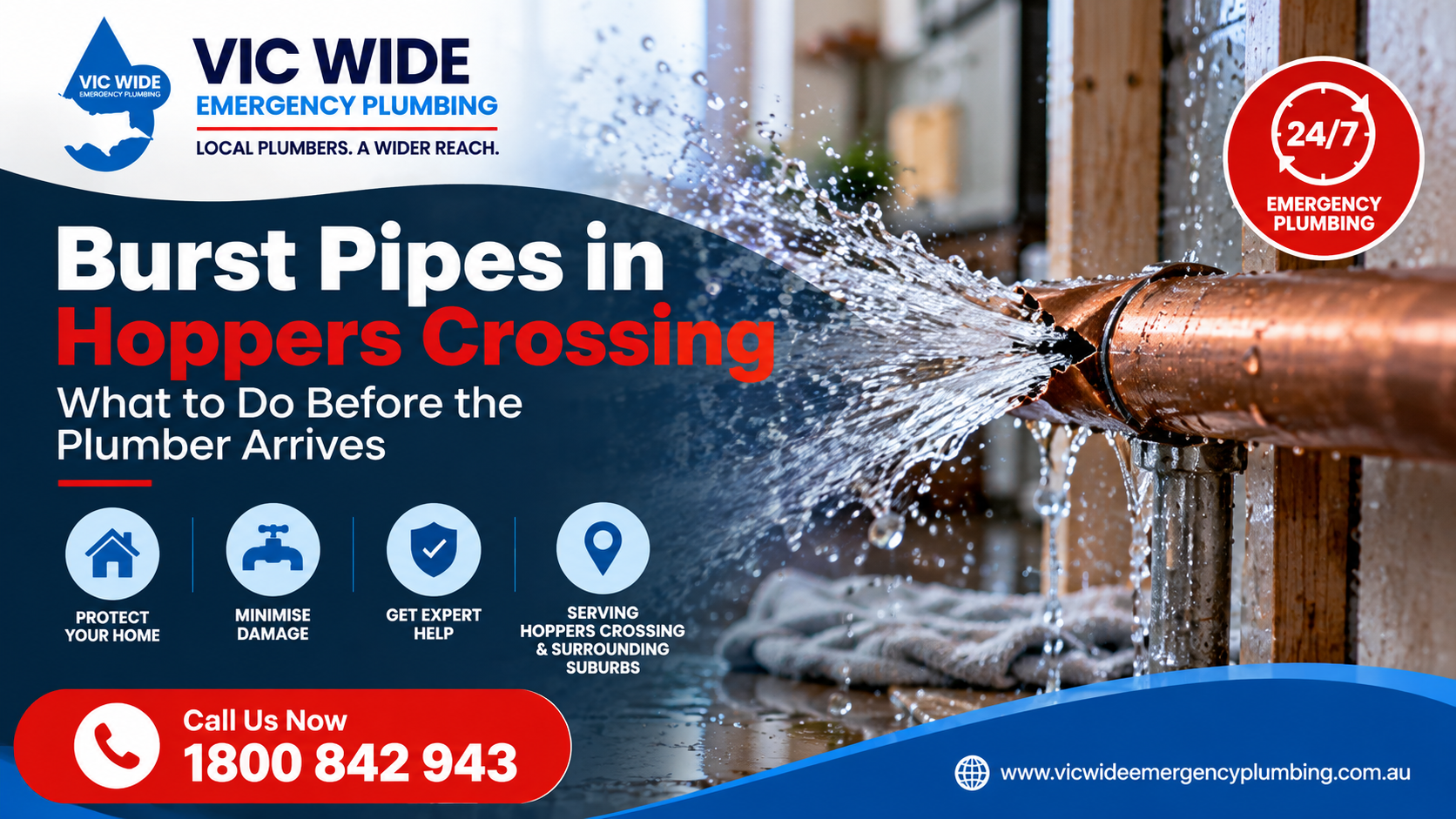 September Sep 2026Burst Pipes in Hoppers Crossing: What to Do Before the Plumber Arrives
A burst pipe can quickly turn into a major plumbing emergency. Water can spread through walls, floors and ceilings within minutes, potentially causing significant damage to your Hoppers Crossing property. Knowing what to do before the plumber arrives can help reduce the amount of water escaping and minimise the risk of further damage. What Is […]
Read More